A burst of pinks, reds, and golds is now set to follow Oaxaca through July. The state has unveiled “Sinfonía de colores” as the official image for Guelaguetza 2026, chosen from dozens of entries. At first glance, it looks like pure celebration—dancers, textiles, movement. Look longer, and it reads like a map, stitching eight regions into a single scene. Who painted it, how it was selected, and what it hints at for next summer’s Lunes del Cerro are where the story starts.
A new face for Oaxaca’s biggest July tradition
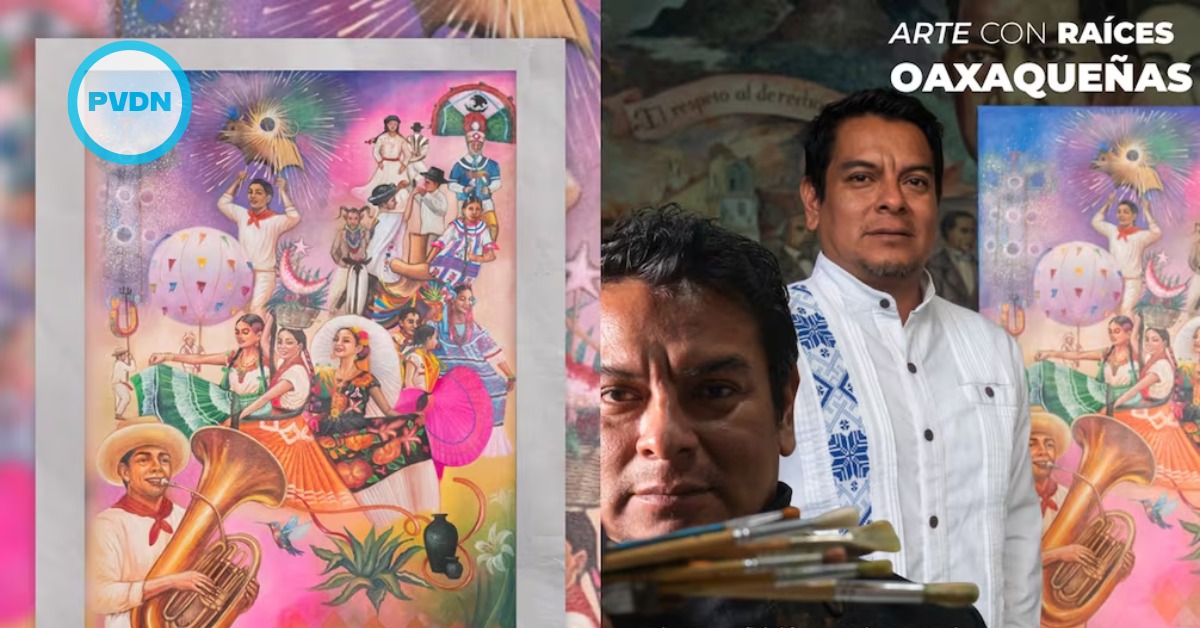
Months before Oaxaca’s streets fill with bandas and delegations, the Guelaguetza season usually begins with a single image. For 2026, that image is “Sinfonía de colores,” an oil-on-canvas painting selected to represent the 94th edition of the festival. The winning canvas measures 70 by 100 centimeters and leans into a realistic style. Governor Salomón Jara Cruz presented it on January 18, 2026. The early reveal puts a visual stake in the ground for July. The piece centers on women and men in motion, their regional outfits opening like fans across the canvas. It is, intentionally, easy to read from a distance. This is the picture that will land on posters, programs, and social feeds. It will circulate long before the first calenda winds through the historic center. For newcomers, especially expats still learning Oaxaca’s geography, the reveal functions like a gentle orientation. It says, without saying it, that Guelaguetza is not one show. It is eight regions meeting in one city, sharing what they carry.
“Sinfonía de colores” did not arrive as a casual commission. It won a statewide call that drew 41 entries. The brief was strict. Artists had to evoke the Lunes del Cerro and the cultural weight of Oaxaca. That structure matters because it shapes each year’s posters. Recent official images leaned on similar ideas. In 2025, the chosen work was titled “Lazos de fraternidad”. In 2024, the official image was “Calenda de la Hermandad,” rooted in the calenda procession. The call asks for dance and clothing. It also asks for food, music, and community life. The image must work on a street banner and a phone screen. There are limits, too, including a fixed size range and a hard deadline. A jury of arts and festival specialists makes the final pick. The verdict is final, by design. Thirty-five shortlisted works are expected to appear in a July group exhibition. In return, the state receives broad rights to reproduce the winning artwork. The artist receives recognition, formal credit, and a cash prize, to be delivered after July. For visitors, the result is a kind of official promise about what 2026 wants to highlight.
Reading Sinfonía de colores
On the canvas, the “symphony” is not a metaphor for sound alone. Valles Centrales is the stage, but it is not the whole story. The composition is built like music, with a crowded center and radiating color. Dancers stand at the heart of the scene, framed by skirts and huipiles that flare outward like petals. The palette is deliberately loud, and the effect is close to movement, even though the figures are still. That visual rhythm matches the way the festival works in real life. Delegations arrive from the Coast and the Isthmus. They also come from the Mixteca, the Papaloapan basin, and the mountain sierras. Each group brings a dance that carries local history. The word guelaguetza points to reciprocity. It is an exchange of support, made visible through gifts to the crowd. “Sinfonía de colores” folds that idea into cloth and gesture. It suggests a state held together by participation rather than uniformity. For expats watching from the sidelines, it’s a reminder. The show on the hill starts far from the hill.
The brief behind the painting helps explain its dense storytelling. The call for entries set the theme as “Guelaguetza 2026, Fiestas de los Lunes del Cerro”. It asked artists to paint more than dancers. The guidelines pushed for regional detail, from textiles and music to foodways and community traditions. They made space for Oaxaca’s 16 recognized Indigenous peoples and its Afro-Mexican communities. They also insisted on the state’s eight regions as a visible backbone. They also require the winner to cede reproduction rights for official promotion. Those expectations can feel restrictive. They also spark debate about how much freedom an “official” image should allow. Still, the structure is part of the point. The winning work becomes the face of July. The contest also feeds a collective show titled “Pinceladas de Tradición,” planned for the 2026 season. The winner is slated to receive a 50,000-peso award after the festivities. In short, the image is art with public consequences.
The artist behind the canvas
The artist behind “Sinfonía de colores” is Noel Gómez Lorenzo, from San Juan Colorado in coastal Jamiltepec. Profiles of his earlier work trace his start to childhood drawing, shaped by local stories. As a teenager, he moved to Oaxaca City to continue his studies. Later, he paired formal coursework with training in local cultural centers. He also took drawing and painting courses at the Casa de la Cultura de Oaxaca. Early on, he began exhibiting through school cultural exchanges and selling portraits. That mix shows in his style. He paints recognizable figures, then uses color to suggest emotion and motion. He has exhibited in Oaxaca and worked on murals. He has also painted religious themes, including works executed under heritage oversight in churches. Those experiences matter for a festival image. That interest in faces helps, because Guelaguetza is built on people, not props. The official poster must convey performance and memory simultaneously. “Sinfonía de colores” feels like a painter who knows movement. It holds detail without freezing the scene.
What it signals for July 2026
For expats living in Mexico, the official image is more than a nice reveal. It is an early marker that planning season has started, even if the full program comes later. Guelaguetza unfolds in Oaxaca de Juárez each July. Its signature shows are the Lunes del Cerro at the open-air Auditorio Guelaguetza on Cerro del Fortín. Tradition places them on the two Mondays after July 16, the feast day tied to the festival’s Catholic layer. If that rule holds, 2026 would point to July 20 and July 27. The official schedule arrives closer to the month. Even without tickets, July brings parades, markets, and concerts across the city. Either way, demand is predictable. Flights rise, hotel rooms shrink, and the city’s sidewalks become a moving queue. “Sinfonía de colores” is a reminder to arrive with context, not just a camera. Respect for community space goes a long way. Learn one dance. Notice one textile tradition. Then the poster’s color becomes a lived experience, not just a backdrop.