Oil contamination linked to the Gulf of Mexico spill has now reached at least 81 beaches across Veracruz, Tabasco, and Tamaulipas, according to environmental groups and coastal communities monitoring the affected shoreline.
The latest report points to contamination at 113 coastal sites between February and April. The affected area stretches from Paraíso, Tabasco, to Matamoros, Tamaulipas, covering more than 1,100 kilometers of Gulf coastline.
The new count keeps pressure on federal authorities and Petróleos Mexicanos, better known as Pemex, after earlier government statements suggested the affected beaches had been cleaned. Community groups say tar-like oil, known in Mexico as chapopote, is still appearing in several areas.
For many international residents in Mexico, the spill may feel distant from daily life. But it has become a national environmental story. It touches on beach safety, seafood, fishing communities, tourism, Pemex oversight, and how Mexico responds when industrial accidents reach public coastlines.
What changed in the Gulf oil spill
The key development is the scale now being reported by environmental groups. The latest monitoring identifies 81 beaches with visible oil residue in April. It also lists 113 affected sites across three Gulf states.
The contamination is not described as one continuous oil slick. Instead, groups report large and medium patches in some places, along with smaller fragments mixed into sand. That matters because small pieces are harder to remove and easier to miss during visual inspections.
The report also says oil has continued arriving in recent days at points including Punta San Juan, in Pajapan, Veracruz, and Barra de Tupilco, in Paraíso, Tabasco.
That raises a harder question for cleanup crews. If oil is still moving through the water or resting in sediments, beach cleaning alone may not be enough. Contamination can return after currents, winds, or northern cold fronts disturb the sea floor.
Why the 81 beaches matter
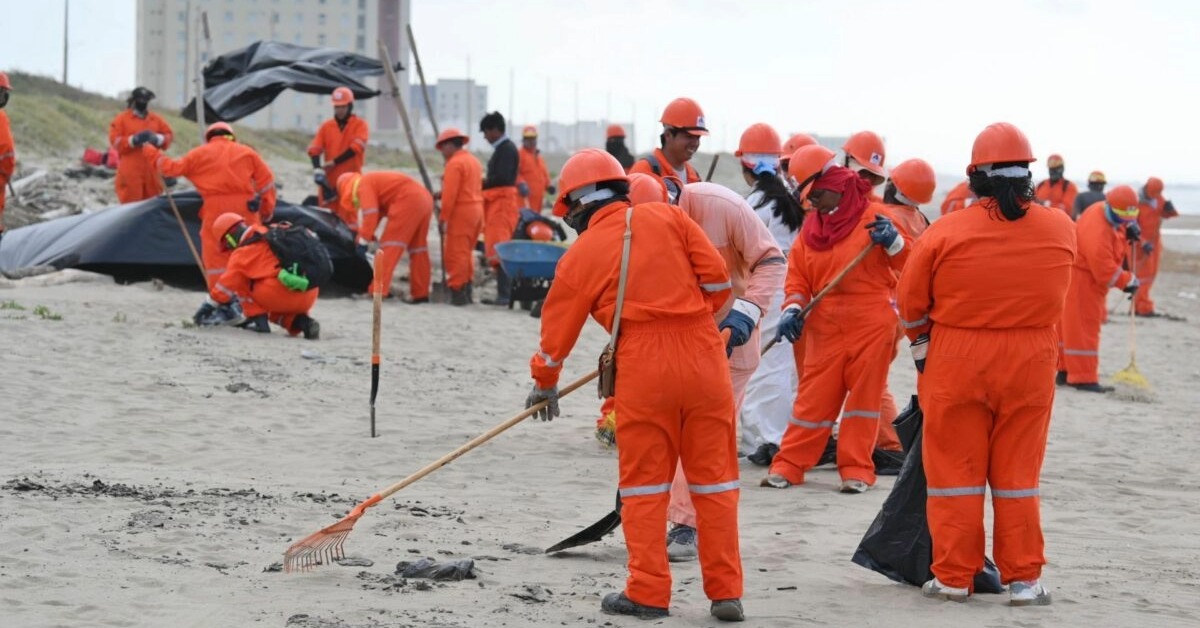
The number matters because it challenges the idea that the emergency is mostly over. Authorities have reported cleaning operations and inspections along the Gulf Coast. Environmental groups say those actions do not fully capture what communities are still seeing.
The affected coastline includes areas tied to fishing, small-scale tourism, mangroves, lagoons, reefs, and turtle nesting sites. These are not only environmental assets. They are part of local economies.
For fishing families, even the perception of contaminated seafood can cut income. For beach towns, uncertainty can affect visitors. For rural and Indigenous communities, response delays can make the damage feel uneven.
The groups behind the monitoring argue that official inspections have focused too much on what can be seen from the surface. They are calling for studies of water, sediment, marine life, and the smaller organisms that support the food chain.
That distinction is important. A beach may look clean after tar is removed, but oil contamination can persist in sand, rocks, mangroves, or shallow coastal waters.
The Pemex connection
Federal authorities have acknowledged that evidence points to a leak from a 36-inch Pemex oil pipeline in the Abkatún area of the Gulf. The spill was linked to events in February, before the public became aware of the wider coastal impact.
Pemex officials have said information about the incident did not move properly through the company’s internal chain. Three Pemex officials were separated from their posts while investigations continue.
Authorities have also referred the matter for legal review. The central question is not only what caused the leak. It is also whether the response was fast enough, transparent enough, and broad enough for the scale of the contamination.
Earlier explanations had included possible natural oil seepage and a possible vessel-related discharge. The later acknowledgment of a Pemex pipeline leak changed the public debate. It shifted attention toward accountability inside the state oil company and the government agencies responsible for oversight.
Cleanup is more complicated than removing tar
Oil cleanup is not finished when visible tar is removed from tourist beaches. Chapopote can break into smaller pieces, mix with sargassum, settle into sand, or stick to rocks and vegetation.
Mangroves are especially difficult. Their roots trap material, and extensive cleanup can further damage the ecosystem. Reefs and seagrass areas also require careful study because harm may not be visible from shore.
Environmental groups say dead marine animals have been recorded during the monitoring period, including turtles, dolphins, pelicans, a manatee, and fish. Authorities have disputed the idea of mass wildlife mortality, but the reports add pressure for an independent review.
For readers who live elsewhere in Mexico, the most practical concern is not panic. It is transparency. People need clear information about which beaches are affected, where cleanup has occurred, whether seafood is being tested, and what health guidance applies to local communities.
What it means for coastal communities and visitors
The affected areas are on Mexico’s Gulf coast, not the Pacific coast. This does not directly affect Puerto Vallarta, Riviera Nayarit, Los Cabos, or other Pacific destinations.
Still, the story matters beyond the Gulf. Mexico depends heavily on coastal tourism, fishing, and public confidence in beach safety. When environmental accidents are minimized or poorly explained, that confidence can weaken.
Visitors to affected Gulf areas should look for local advisories before swimming, fishing, or eating seafood from impacted communities. Residents should follow guidance from health and environmental authorities and avoid contact with visible oil residue.
The broader issue is whether Mexico can build a response system that moves faster than the contamination itself. That means early warnings, public maps, independent testing, clear seafood guidance, and compensation for families whose income is disrupted.
What comes next
The next phase will likely focus on three issues: the full extent of contamination, accountability for the Pemex-related leak, and long-term recovery for affected communities.
Environmental groups are asking for a wider plan that goes beyond beach cleaning. They want independent monitoring, public access to data, health studies, and restoration work for damaged coastal ecosystems.
Authorities have announced steps including inspections, cleanup operations, and the creation of a Gulf monitoring mechanism. The question now is whether those steps will satisfy communities that say the damage is still visible.
The Gulf spill has become more than a cleanup story. It is now a test of public trust, environmental oversight and the country’s ability to protect coastal communities when oil infrastructure fails.