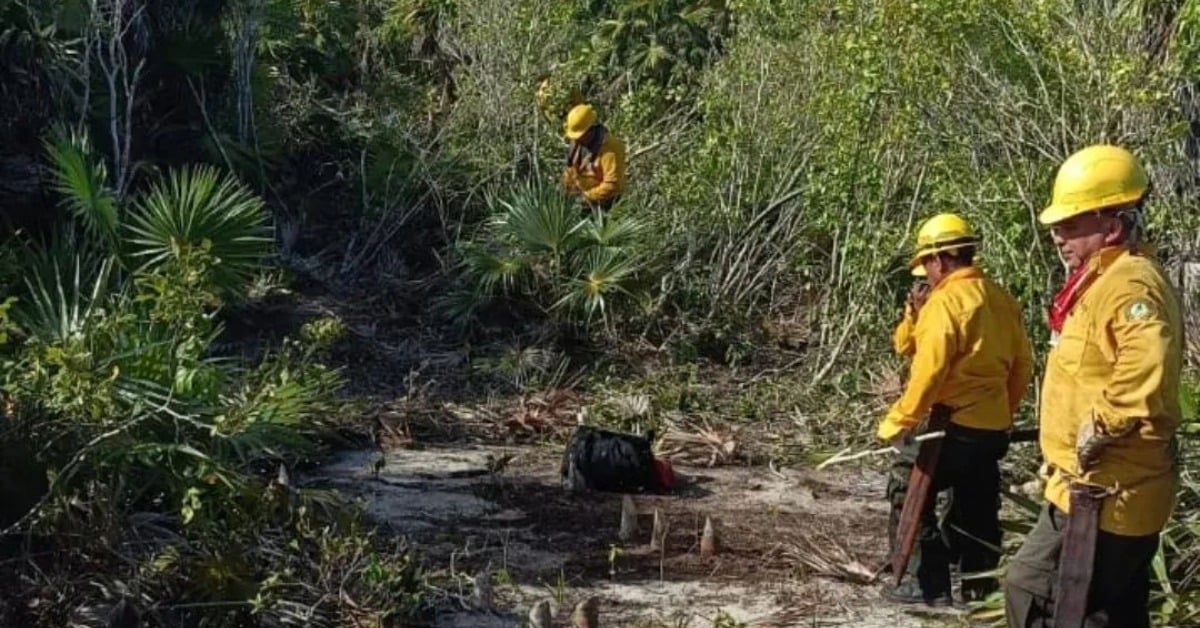
A fast-moving brush fire northwest of Holbox has burned about 150 hectares inside the Yum Balam Flora and Fauna Protection Area. Crews from all three levels of government are cutting firebreaks and dropping water while residents watch smoke columns rise over the mangroves. Officials say control has improved, but the blaze remains active in a remote section of the area, away from town. The fight now is to prevent it from spreading into sensitive nesting areas and maintain calm on tourism-heavy Holbox as the season progresses.
Holbox is used to dramatic skies. This week, the smoke joined them. State and federal crews say they have contained parts of a fire that has scorched roughly 150 hectares northwest of the island town, with water drops from a helicopter and long hours on the line. The work is slow and hot. It is also buying time.
Authorities have placed the fire in La Ensenada, approximately 20 kilometers from the town center, within the Yum Balam protected area. Officials trace the start to August 22, and say the location—brush and low forest far from roads—has made access the first battle.
Holbox wildfire 150 hectares
By Thursday, crews reported about 40 percent control and 30 percent liquidation. That means fire lines are holding in places, but hot spots and active edges remain. The National Forest Commission (CONAFOR) updates and state briefings confirm these figures.
More than 80 firefighters and support personnel are on the ground. Teams include CONAFOR brigades, Civil Protection units, CONANP staff, municipal firefighters, and federal forces. A Bell 407 helicopter has been making repeated bucket drops while boats shuttle crews across shallow waters to staging points.
Where it is and why that matters
Yum Balam is a living buffer for Holbox. It is home to mangroves, coastal scrub, and wildlife corridors that make the island famous. The burn area is situated in brushland northwest of town, away from hotels and houses, yet still within a fragile ecosystem. Officials have not ordered evacuations and are continuing to focus on perimeter control and mop-up operations.
Reporters and local outlets note the fire has reached or affected a turtle nesting zone, underscoring the need to keep flames out of dunes and beaches where eggs are laid. Conservation staff say access limits the use of heavy equipment; most of the work is done with hand tools, counter-fires, and careful line building.
What locals are seeing and what remains unknown
Tourism boat operators first spotted thick smoke near Cabo Catoche late last week and relayed the alerts that brought the first responders. That quick reporting helped shorten response times in a place where radios do not always reach. The cause remains under investigation, according to state statements.
Community voices and some media outlets have suggested that human involvement is tied to development interests in the reserve. Those are allegations, not findings. Authorities have not confirmed any cause, and investigators typically wait for cooler conditions before formal origin-and-cause work.
How the fight is unfolding
This is a brush fire driven by wind and dry fuels. Crews are cutting and widening control lines through thorny scrub, lighting counterfires where it is safe, and conducting reconnaissance flights to map the heat. A state status report listed specialized CONAFOR vehicles, Civil Protection units, four boats for access, and sustained helicopter water drops over the hottest fronts. Progress is uneven but steady.
Officials are repeating two key messages: the fire is active but being contained, and it is located in a remote section of the reserve, not in the town. That distinction matters for residents and visitors who rely on ferry schedules and beach access. It also matters for the reserve, where even minor burns can fragment habitat if they jump lines.
What comes next
The following 48 hours are about holding lines and finding hidden heat. If winds shift or embers spot ahead, crews will redeploy and re-anchor flanks. If the weather cooperates, they can deepen containment and start complete liquidation. Either outcome requires the same thing: people on the ground, steady air support, and clear communication with the island.
Holbox’s protected backcountry is burning, not its streets. The response is significant, coordinated, and ongoing. The reserve’s health depends on stopping growth now—and on a careful cause investigation once the ash is cold.