Most cartel coverage still starts with bosses, gunmen, and seizures. But a stronger frame begins elsewhere: at ports, on highways, inside customs forms, fuel invoices, mine camps, and payroll systems. Recent cases in Mexico point to the same pattern. Criminal power often works best when it blends into legal trade, hires ordinary intermediaries, and captures weak points in routine commerce. That shift changes how the story should be reported. It also changes why the story matters to people who live, work, and do business here.
Why the story starts in the middle
Most coverage of organized crime still begins with the visible end of the chain. It starts with arrests, gun battles, seizures, and the names of major bosses. That frame still matters, but it now misses too much of the story. A more useful starting point is the middle of the economy, where goods are classified, loaded, insured, moved, guarded, and paid for. In Mexico, the cartel economy increasingly appears in those ordinary spaces. It shows up at ports, inside customs paperwork, across trucking routes, around fuel depots, in subcontracted security, and in the labor systems that keep formal businesses running. That does not mean every company is captured. It means criminal power often inserts itself into legal trade, rather than standing outside it. For readers living in Mexico, that distinction matters. It explains why insecurity can look less like a distant underworld and more like a business cost. It can mean delayed deliveries, unusual fuel sources, road routes no one wants after dark, or a local employer suddenly operating under visible pressure.
This angle changes the questions a reporter should ask. Instead of asking only who leads a group, it asks who stamps the manifest, who controls the gate, who hires the drivers, who owns the trucks, who pays the guards, who handles payroll, and who benefits when rules are bent. Criminal groups do not need to replace the legal economy to profit from it. They only need leverage over chokepoints. A port, a highway corridor, a fuel terminal, a mine access road, or a warehouse can provide that leverage. Once a group can tax movement, redirect cargo, threaten workers, or falsify documents, it gains something more durable than a shipment. It gains routine income and local influence. That is why the old division between licit and illicit activity now feels too neat. In practice, the two can be fused by shell companies, coerced contractors, bribed officials, and frightened employees. The result is not chaos alone. It is a parallel form of order. That makes criminal control look less like a raid and more like infrastructure.
The paper trail behind fuel and cargo
The recent fuel smuggling probes make that pattern plain. The story is not only about stolen product. It is about classification, tax treatment, maritime logistics, and access to port facilities. Authorities have focused on shipments that were allegedly mislabeled to avoid taxes, moved through major seaports, and distributed through commercial channels after arrival. That turns the issue into a story about forms, invoices, and compliance as much as a story about contraband. A tanker still needs a route. A cargo still needs a consignee. A truck still needs a dispatcher. Someone still has to check the documents and wave the load through. When investigators focus on ports such as Guaymas, Tampico, and Ensenada, they are not just tracing a criminal shipment. They are tracing an ecosystem of brokers, transport links, storage points, and public officials. That is the reporting opportunity. It shows how a cartel can use the language of ordinary commerce to move value at scale. It also shows how risk gets pushed downward onto drivers, small businesses, and communities along the route.
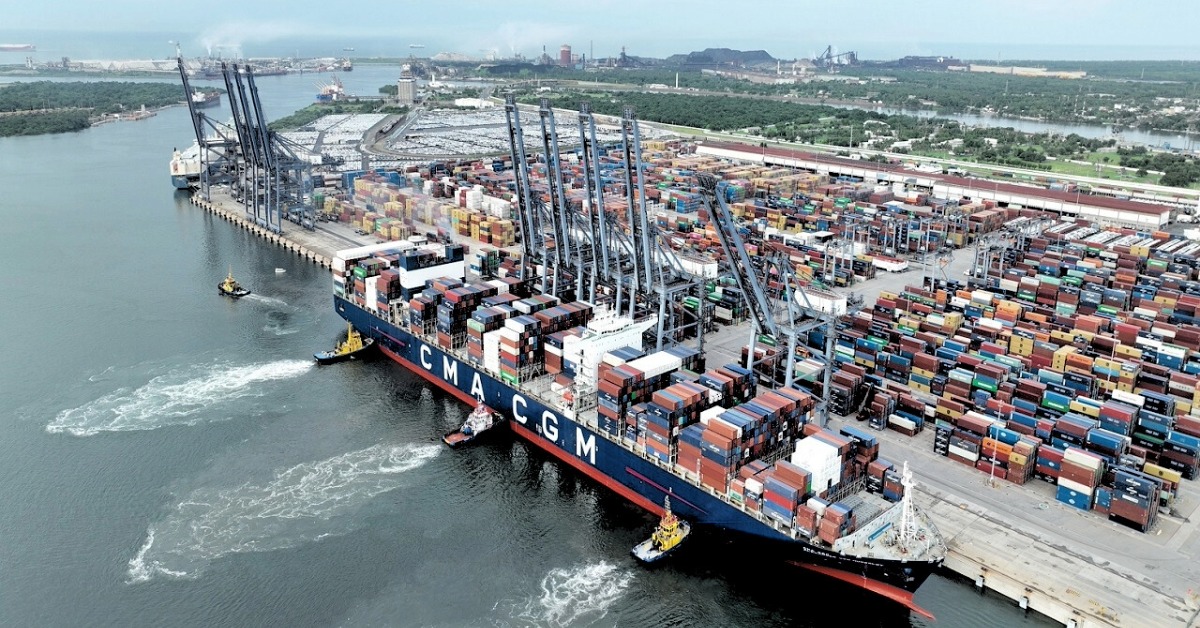
Ports matter because they sit where legal trade and criminal opportunity overlap. Mexico joined the UNODC-WCO container control effort to strengthen inspection and risk analysis at key maritime gateways. That is a reminder that the problem is broader than any one commodity. Containers can carry legitimate merchandise, precursor chemicals, weapons components, counterfeit goods, or dual-use materials. The same port that feeds regional growth can also become a sorting point for criminal networks that understand how overwhelmed inspection systems can be. That matters beyond the dock. Once a cargo clears the port, it enters the broader supply chain of warehouses, trucking firms, industrial parks, and retail distribution centers. Each handoff creates another point of vulnerability. Some actors are corrupt. Others are careless. Many are simply exposed. For expats and foreign investors, that distinction matters. The risk is not only spectacular violence. It is the quiet absorption of criminal pressure into everyday business routines. When that happens, an illegal economy is no longer hiding in the shadows. It is moving alongside legal trade, using its roads, papers, and payroll cycles.
The cross-border business of firepower
The same logic applies to ammunition. Public debate often focuses on the gunman and the weapon. The harder, more revealing story sits behind them. Ammunition moves through manufacturers, contractors, distributors, dealers, resellers, couriers, and border corridors before it reaches a criminal group. Recent scrutiny in the United States over military-grade rounds linked to cartel arsenals points to that less visible chain. The important question is not only where a round was fired. It is how it entered the civilian market, who handled it along the way, what oversight failed, and how a legal sale became part of a cross-border security crisis. That frame matters because it breaks the myth that cartel firepower appears from nowhere. It is assembled through transactions. It depends on price, access, transport, and weak enforcement. It also binds the Mexican story to the U.S. commercial system. Once seen this way, the border is not a clean dividing line between lawful and unlawful worlds. It is a corridor through which paperwork, inventory, and demand move in both directions.
That middle layer is also where workers feel the pressure first. On highways and industrial routes, trucking crews, dispatchers, private guards, and warehouse staff absorb the daily risk of robbery, extortion, and coercion. In remote project zones, camp managers, drivers, and subcontractors may face threats long before a company admits a security problem. Even when a business is not directly colluding, it may still adapt to criminal pressure. That can mean route changes, escort costs, off-book payments, missed shifts, or higher insurance bills. Over time, those adjustments function like a hidden tax on legal commerce. They raise prices, distort competition, and reward firms with better protection or better connections. This is one reason the story should not stay on the public security pages. It belongs in business coverage, labor coverage, and local reporting on how towns actually function. Readers who live in Mexico often notice the symptoms before they see the structure. A delayed shipment, a sudden shortage, a strange fuel discount, or a route everyone avoids can look isolated. Often, it is not isolated at all.
What the Sinaloa mine case reveals
The deaths linked to the Sinaloa mine case sharpen that point. A formal mining project is not an improvised criminal space. It is a fixed industrial operation with worker housing, transport schedules, access roads, security routines, machinery, contractors, and community relations. When armed groups penetrate that environment, the story is not only that violence reached a mine. The story is that criminal power targeted a lawful production system and the people who keep it working. Recent events in Concordia show how vulnerable that middle layer can be. Workers, supervisors, and support staff become exposed because they are part of a visible, organized flow of labor and assets. A mine cannot disappear overnight. Its personnel travel predictable routes. Its camps and service areas create fixed points of pressure. That makes such operations attractive to groups seeking leverage, intimidation, or territorial control. It also widens the meaning of cartel violence. The target is not just a rival group or a police force. It can also be the ordinary workforce inside a legal industry.
That is why the most durable frame for this subject starts with commerce, not mythology. The kingpin story will remain part of the picture, but it is no longer enough on its own. The better explainer begins with manifests, tax categories, shift rosters, port access, trucking routes, contractor chains, and cash flow. It asks how criminal groups turn weak oversight into recurring revenue. It also asks how that revenue then buys silence, labor, loyalty, or fear. For a broad audience, especially foreign residents trying to understand the country beyond headlines, this frame is more honest and more practical. It shows that organized crime is not only something that strikes from outside normal life. It can embed itself in the systems that move fuel, goods, wages, and people. Once that becomes visible, coverage changes. The story is no longer just about who commands violence. It is about who administers movement. In Mexico today, that may be the clearest way to understand how the shadow economy works, and why it has become so hard to separate from ordinary supply chains.