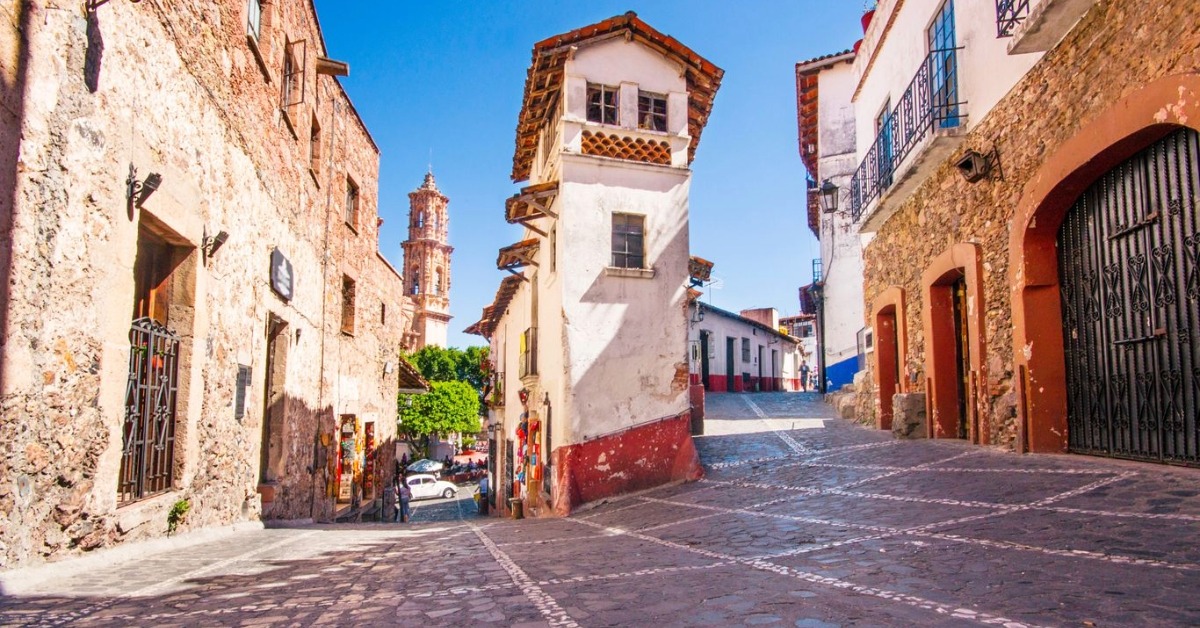
Taxco has long held a special place in Mexican tourism. It is known for its silver craftsmanship, colonial architecture, and a historic center that draws visitors seeking a slower, more traditional side of Mexico. That image still matters because tourism remains one of the town’s main economic lifelines.
But the latest report argues that the gap between Taxco’s image and its reality has grown too wide to ignore. It describes a municipality where criminal groups have shaped daily life for years through intimidation, extortion, disappearances, and attacks on people tied to transport, trade, and local business. The problem, according to the report, is not only that organized crime is present. It is that criminal power allegedly became embedded in local authority structures, weakening the town’s ability to protect residents and restore confidence.
That matters beyond Guerrero. For many international readers, Taxco may be known as a scenic stop or a cultural destination. The report suggests the more important story is how a place built on tourism and artisanal identity can be worn down when criminal groups move from the margins into the economy and public life.
How criminal control took hold
The report traces Taxco’s troubles back roughly two decades. In that account, different criminal organizations passed through or fought for influence, but the broader pattern remained the same. Violence did not stay limited to clashes between armed groups. It spread into daily commerce, transport, and local institutions.
Over time, extortion appears to have become one of the clearest expressions of that control. The report describes a town where criminal actors not only threatened businesses but also influenced the movement and pricing of basic goods. That kind of control has wider effects than a headline about shootings or kidnappings. It changes how people work, what they can sell, how they move through town, and how much trust they place in the local authority.
The most serious claim is that segments of local government failed to stop this pattern. They allegedly enabled it. The report describes past administrations in which municipal authorities were accused of tolerating or participating in criminal abuse. In that telling, the Municipal Police became part of the problem rather than a barrier against it.
That allegation is central to understanding why Taxco’s crisis looks deeper than a temporary security flare-up. A town can recover from isolated violence more easily than it can recover from a breakdown in public trust. Once residents believe that officials are compromised, every police patrol, every investigation, and every public reassurance becomes harder to accept.
Why the latest events matter
The report gained added weight because it appeared just days after one of the most serious recent episodes in Taxco. Federal officials said the lines of investigation into the abduction of Mayor Juan Andrés Vega Carranza and his father pointed to La Familia Michoacana. Both were later found alive after a coordinated operation.
That case did not create Taxco’s problems, but it sharpened them. When a sitting mayor and his father can be abducted, the message reaches far beyond City Hall. It signals that criminal actors still have operational capacity and confidence in a municipality already burdened by years of fear.
Recent official statements have also linked violence in Taxco to operations against extortion networks and criminal control over commercial goods. That is important because it suggests the fight is not only over territory. It is also over revenue, distribution, and leverage over the local economy.
For residents, that can mean higher daily risk and deeper uncertainty. For business owners, it can mean weaker sales, higher informal costs, and a reluctance to invest. For visitors, it can mean that even if they never directly encounter violence, the effects still shape the experience through transport disruptions, commercial pressure, and a persistent sense that the town is under stress.
The tourism cost is harder to measure, but easy to see
Tourism is especially vulnerable in a place like Taxco because the town’s appeal depends on its atmosphere as much as on its attractions. Visitors do not come only for a church, a plaza, or a silver shop. They come for the feeling of the place. Crime undermines that in ways that are not always captured by official numbers.
The report describes a city where violence and tourism have moved in opposite directions. That line captures a problem local business owners have faced for years. Even when hotels are open and shops are operating, insecurity can hollow out demand. Travelers may shorten trips, avoid overnight stays, or choose another destination entirely. Local residents may also limit movement, reducing normal commercial life in the center.
This does not mean Taxco has stopped receiving visitors. State authorities have continued to promote the town and have publicly framed tourism as a strategic priority. But promotion alone cannot restore confidence when the underlying complaint is that the rule of law has been weakened.
That tension now defines much of Taxco’s public image. On one side is the official effort to present a Pueblo Mágico with cultural value and tourism potential. On the other hand, a pattern of events suggests that residents, artisans, transport workers, and merchants are still bearing the cost of criminal control.
What authorities are doing now
State and federal authorities have taken visible steps in response to the security crisis. In 2024, Guerrero assumed control of security in Taxco after the arrest of 10 municipal police officers in cases tied to alleged kidnapping and forced disappearance. More recently, state officials have highlighted security and prevention actions aimed at residents, merchants, and tourists, including outreach around extortion and fraud.
Those steps matter because they show the state recognizes the scale of the problem. But they also underline how severe the loss of trust has become. When a higher level of government has to take over local security, it signals that the municipal system is not deemed sufficient.
The harder challenge is not only enforcement. It is rebuilding legitimacy. Taxco will need stronger investigations, functioning local institutions, and a clearer sense that public authority is not working under criminal pressure. Without that, every new operation may look temporary, and every calm period may feel fragile.
Why this story reaches beyond Taxco
For foreign residents and regular travelers to Mexico, Taxco’s crisis offers a broader lesson. Security stories are often framed as isolated outbreaks or battles between gangs. The greater risk is what happens when organized crime begins to influence transport, pricing, policing, and governance at the local level.
That kind of control reshapes ordinary life. It can make a tourist town less functional even before it becomes visibly unsafe. It can weaken confidence in local government even before formal institutions collapse. And it can trap communities in a cycle where economic dependence on tourism grows even as public trust declines.
Taxco’s importance is not only symbolic. It shows how difficult recovery becomes when a town’s economy depends on its image, but its residents live with a different reality. The latest report puts that contradiction at the center of the story. The next question is whether authorities can do more than contain the latest emergency and begin to reverse the more serious damage.