A hidden crossing on the Chiapas-Guatemala border shows how cartels turned everyday trade into a toll system, fueling a 20-year war.
A dirt-road gap in the mountains has become one of the most profitable “non-official” crossings on the Chiapas-Guatemala border. Locals use it to move coffee, corn, and spare parts. Criminal groups use the same stretch to move guns, drugs, and people—then charge everyone for the privilege. A recent security push exposed how disciplined that toll system was, how quickly power shifts when leaders flee, and why nearby towns keep emptying out after each round of violence.
A border that exists on paper
On maps, the boundary between Chiapas and Guatemala looks clean and final. On the ground, it often feels like a suggestion.
In the Sierra region, there are places where the “crossing” is less a checkpoint and more a shared routine—neighbors, family, and commerce moving back and forth as they always have. That reality is not new. What’s changed is who controls it, and what they charge for access.
One corridor in particular—between Santa Teresa Llano Grande on the Mexican side and Guailá on the Guatemalan side—has become a case study in how organized crime takes an everyday border and turns it into a revenue machine. The route runs through a tight chain of small communities across roughly 5.5 kilometers. The distance is short. The impact is not.
The corridor that moves everything
This is not a secret trail used once in a while. By local estimates cited in recent reporting, the flow can reach roughly 1,000 to 1,500 vehicles in a day: private cars, cargo trucks, and tractor-trailers. The cargo list reads like a snapshot of daily life and black-market life at the same time—corn and coffee alongside weapons and drugs, cement and auto parts alongside people being moved in the shadows.
The system works because it behaves like a fake customs office. Drivers pay “cuotas,” a toll set by whoever holds the route. For small loads—groceries, secondhand clothing, basic goods—the charge can be relatively low. For high-value shipments, it spikes sharply. A truck carrying new motorcycles or auto parts can be charged tens of thousands of pesos for a single crossing.
That toll economy is the point. Smuggling is not just about moving contraband. It’s about taxing everything that moves, including the legal, ordinary stuff that keeps towns functioning. When security forces later found more than a million pesos in cash linked to a single day of collections, it offered a rare glimpse of the scale: this was not petty extortion. It was a structured business.
Twenty years of shifting bosses
If you’re trying to understand why the Sierra has become so volatile, it helps to see the border as a prize that changes hands. Control brings money, recruits, intelligence, and leverage over entire towns.
The corridor’s history shows how criminal priorities evolve with markets. Around the turn of the century, fuel smuggling was a major driver, with Mexican gasoline moving south when price differences made it profitable. Years later, that flow reportedly reversed, with fuel being brought into Mexico and sold under the official price.
Then came the era when Mexico’s cartel conflicts began spilling more aggressively into Guatemala’s border departments. The corridor has been tied, in different moments, to the movement of armed groups and to major violent clashes across the line. Each shift leaves local people with the same dilemma: adapt, pay, or leave.
What makes the last several years distinct is the intensity of the fight for municipal control in Chiapas—especially around Frontera Comalapa and nearby mountain towns that sit on the Pan-American highway spine. This is not remote wilderness. It’s connected territory, and that connectivity is exactly what makes it valuable.
The CJNG model and the local affiliate network
In the most recent phase described in long-form reporting, the route fell for years under the control of the Jalisco New Generation Cartel, commonly known as CJNG, working through a local affiliate structure identified as the Cártel Chiapas y Guatemala. The arrangement matters. Big national cartels often need local networks that know the roads, the families, the politics, and the unofficial crossings. Those local groups can act as enforcers, administrators, and recruiters.
An associated armed wing, referred to as “Maíz,” has been linked in reporting to enforcement work in the region. The names can sound almost abstract until you see what control looks like on the ground: permanent roadblocks, interrogations of passengers, demands for IDs, and disappearances tied to who is suspected of being on the wrong side of the dispute.
When a criminal group can decide who moves between Frontera Comalapa and nearby cities—and who doesn’t—it stops being just a trafficking story. It becomes a story about governance by fear.
Control also leaves visible footprints. During operations in the corridor communities, authorities described finding modern fortified homes, surveillance systems, vehicles, and signs of wealth that stood out sharply against the surrounding towns. That contrast feeds a grim local logic: the route pays, and it pays fast.
The crackdown, the blowback, and the cross-border problem
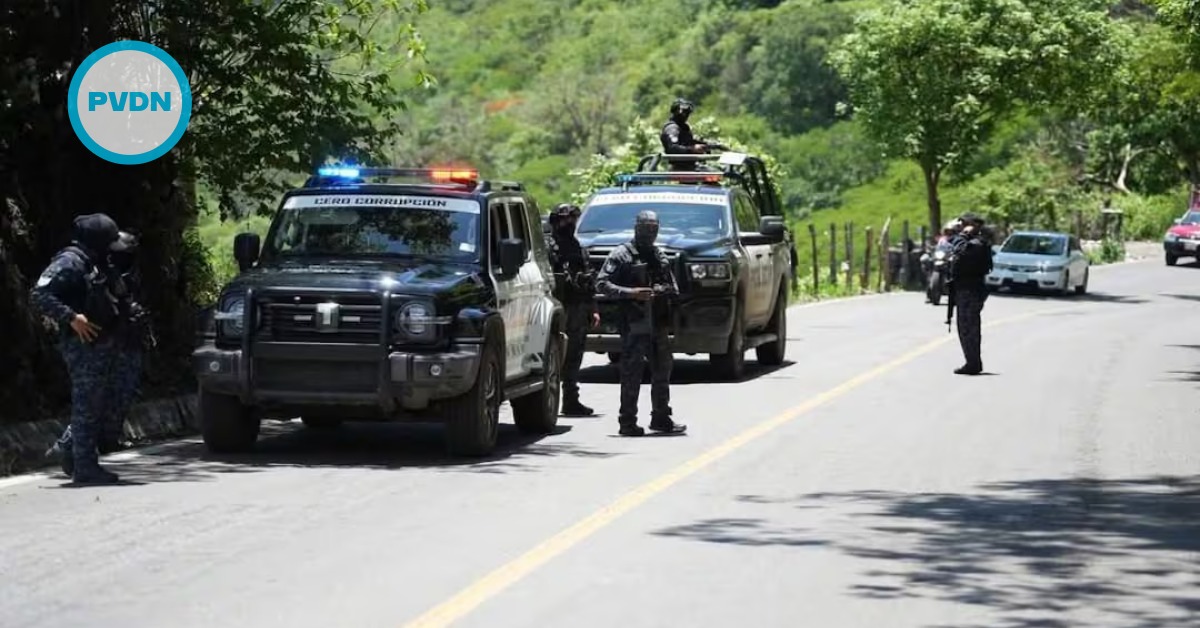
Chiapas has seen repeated security pushes. What’s notable in this case is the sequence: an operation ordered early in the new state administration’s term drew in federal forces alongside state units, including a newly created rapid-reaction group. Reports describe leaders fleeing quickly once the operation began, suggesting the presence of state force can still disrupt control—at least temporarily.
But the border has a way of punishing half-victories. Even after increased deployments, an ambush near the boundary in mid-2025 killed five state police officers, underscoring how quickly criminal groups can strike back and how dangerous these corridors become when power is contested.
The problem does not stay neatly on the Mexican side. A separate clash in 2025 escalated into a diplomatic issue when Mexican forces crossed into Guatemalan territory during a confrontation, prompting Mexico to issue a formal apology. That episode matters because it shows the limits of enforcement on a line that criminals treat as flexible. Coordination between governments is slow. Armed groups are not.
The human consequence is the most direct measure of failure. After bouts of violence, residents have crossed into Guatemala seeking safety, sometimes in the hundreds at a time. Earlier waves of flight from Chiapas into Guatemala were also documented in 2024, pointing to a pattern: when a corridor becomes a battlefield, towns empty first, explanations come later.
What this means for readers far from Chiapas
Most expats in Mexico will never set foot in Santa Teresa Llano Grande or the nearby hamlets tied to this route. But the story still lands close to home for anyone trying to understand how insecurity spreads.
First, these corridors are not only about drugs. They are about the taxation of daily commerce. When criminal groups charge a fee on corn, cement, livestock, and spare parts, that pressure ripples outward into prices, shortages, and the survival math of small businesses.
Second, the same routes used for cargo are used for migrants, and the same toll logic applies. When “cuotas” become normalized, everything becomes a fee-based system—including movement itself. That dynamic is part of why the southern border can swing rapidly between “calm” and crisis.
Third, the fight is not frozen in place. It adapts. When enforcement disrupts one corridor, flows shift to another. When one group loses ground, alliances rearrange. The Sierra’s geography—mountains, back roads, tree cover, and scattered communities—favors whoever can blend force with local knowledge.
For readers watching Mexico from the inside, the uncomfortable takeaway is this: border violence is not only a border story. It’s a model of how criminal governance works when the state shows up late, leaves early, or arrives divided.
What comes next
The corridor’s last two decades suggest a hard truth: “control” is rarely permanent, and “security operations” rarely end the business. At best, they scramble it.
If the state sustains pressure, the toll system can be disrupted and leadership can be displaced. If pressure fades, the corridor becomes a prize again—especially because the underlying demand remains: goods, people, weapons, drugs, and cash moving through the mountains.
The next chapter will likely hinge on something that rarely makes headlines but decides outcomes anyway: whether authorities can protect communities after the raids, not just during them. Without that, the border will keep doing what it has learned to do—function as a corridor for survival, and a corridor for predation, at the same time.