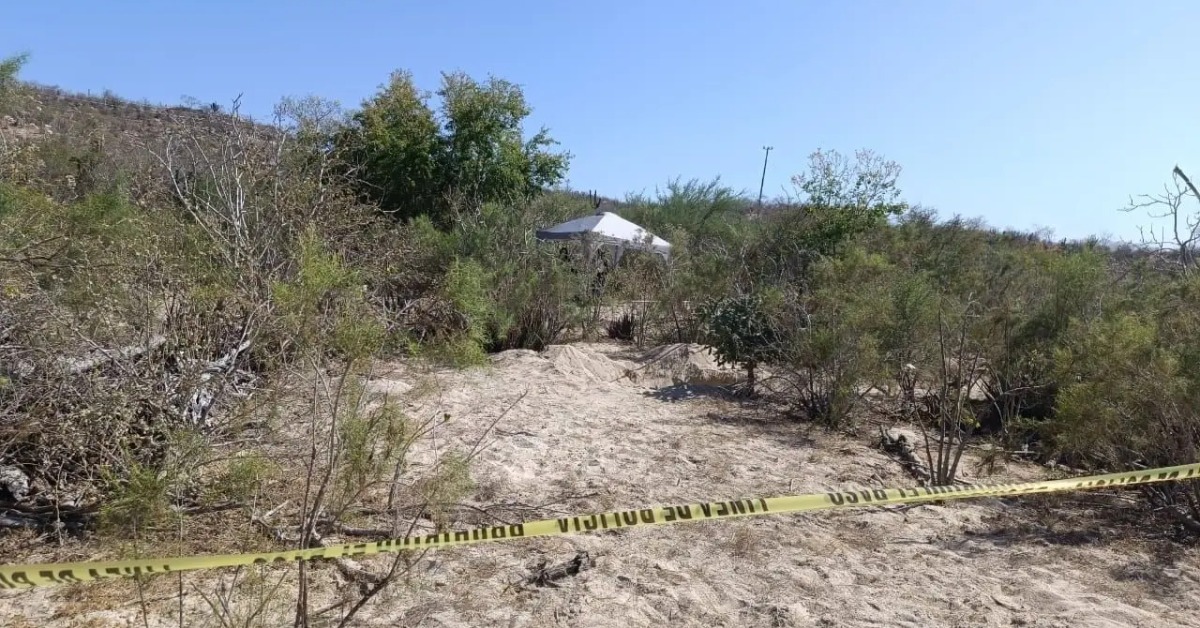
The discovery of human remains in the Santa Anita arroyo has opened another painful chapter in San José del Cabo’s missing-persons crisis. Search collectives working in the area reported a positive find on April 15 after receiving anonymous information that led them to the site. State prosecutors later confirmed that the location was a clandestine grave containing a human skeleton. Authorities and search personnel then moved in to process the area and recover the remains.
For many readers outside Mexico, the phrase clandestine grave can sound vague. In practice, it refers to a hidden, illegal burial site. These locations often become central to missing-person investigations because they may hold the only physical evidence left to identify a victim. In this case, clothing and physical details shared after the recovery could help families determine whether the remains might belong to a missing loved one. Formal identification, however, will depend on forensic work and genetic testing.
Why the handling complaint matters
The case drew wider attention because the recovery itself became part of the story. A local collective said the remains were being moved in a pickup truck after the official forensic vehicle could not complete the transport. Members of the group argued that the situation raised concerns about whether the remains were handled with the dignity and protections such cases require. The complaint added another layer of tension to a discovery that was already emotionally charged for families involved in search efforts.
State prosecutors later said the SEMEFO vehicle became stuck in the terrain, which delayed the procedure. The office said the site was processed under legal protocol and apologized to families and collectives present for the disruption. That response does not erase the dispute. It does, however, show how fragile trust can be in disappearance cases. Families often spend months or years searching. When a recovery happens, every step that follows is watched closely.
Why this case resonates beyond one site
This is not the first time Santa Anita has appeared in a disappearance investigation. In August 2025, authorities said remains found in the same arroyo area were identified through genetic testing and linked to two young men reported missing in Los Cabos. That history gives the latest discovery added weight. It suggests that the area has already figured into past efforts to locate the missing, and that any new recovery there will immediately raise concerns about broader patterns of violence and impunity.
The timing also matters. Earlier this month, searchers in La Paz reported five clandestine graves with multiple sets of remains. Taken together, those discoveries have kept public attention fixed on Baja California Sur, a state more often marketed for beaches and tourism than discussed through the language of disappearances and forensic recovery. For international residents, that contrast can be jarring. Stories like this are a reminder that the region’s public-safety picture includes a deeper crisis affecting local families every day.
Why search collectives remain at the center
Cases like this also help explain why search collectives have become so important in Mexico. Families do not simply wait for official updates. They organize, gather tips, walk remote ground, and often push investigations forward. In Santa Anita, the first alert came from people already doing that work. Their role did not end with the find. They also became public witnesses to the unfolding recovery.
That matters because identification is usually slow. A recovered body or skeleton does not immediately solve a case. Forensic teams must document the site, preserve evidence, compare remains with missing-person files, and often complete DNA analysis before any official confirmation is possible. Until then, the discovery remains suspended between evidence and identity. That is why every recovery can bring both hope and another round of anguish.
What happens next
The next steps are forensic, legal, and deeply personal. Prosecutors will continue processing the case, while specialists work to identify the remains. Families of missing people in Los Cabos will be watching for any sign that helps narrow the uncertainty. At the same time, the complaint over transport procedures may keep pressure on authorities to show that future recoveries are handled with greater consistency and care.
For now, the Santa Anita case stands as both a criminal investigation and a test of institutional trust. One hidden burial site has again exposed how much of Mexico’s disappearance crisis depends on the work of families, the limits of local capacity, and the long wait between a recovery and a name.