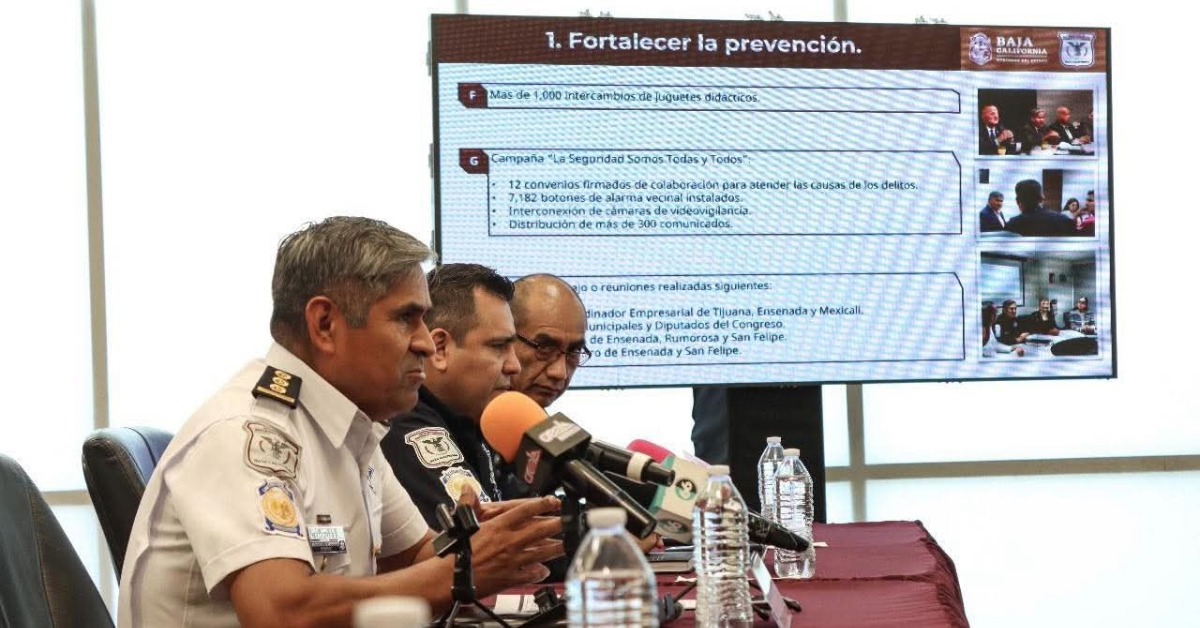
Mexicali, BC – State security officials removed two senior commanders of the Fuerza Estatal de Seguridad Ciudadana (FESC) after what was deemed an illegal operation in Zona Dorada Mexicali in the upscale Balboa Residencial and Montecarlo Residencial subdivisions. Oziel Arturo García Hernández, director of the FESC, and Edgar Felipe Razo Martínez, the local coordinator in Mexicali, were reassigned to other areas within the state’s Secretariat of Citizen Security pending further review.
Unauthorized raid and formal complaint
The action that triggered the shakeup occurred in the early hours of July 28, when roughly 30 state agents entered homes in the exclusive Zona Dorada area without a search warrant, according to multiple accounts. The operation prompted a criminal and administrative investigation after an investigative agent with the prosecutor’s office, Itzel Areli López Lara, and her husband filed a formal complaint alleging that officers carried out a home invasion involving robbery, forced entry and torture.
The complaint was logged under case file NUC 2025-20598 and named at least four state agents as participants in the unauthorized operation. Authorities have not publicly clarified whether the alleged abuses are being independently verified, but the complaint’s serious allegations have already cast a shadow over the regional security apparatus.
Internal tensions and unclear accountability
According to regional reporting, the order to carry out the raid came from Jorge Enrique Medina, general operational coordinator within the Secretariat of Citizen Security and the second-in-command to General Laureano Carrillo. Despite that, Medina has not been removed or formally flagged by the internal oversight body, raising questions among observers about selective accountability.
Sources close to the situation said García Hernández and Razo Martínez were surprised by their sudden reassignment, given that less than a month earlier they had been publicly introduced by General Carrillo as part of a leadership refresh in the security structure. The apparent decision to isolate consequences to the two commanders—while leaving the immediate superior who authorized the operation untouched—has deepened internal friction and stirred skepticism about whether the full chain of command will be reviewed.
Critics and watchdog voices have amplified the controversy on social media. A FESC-focused commentary page flagged the raid as an “apocryphal” operation carried out without legal authorization, alleging it included torture, extortion and theft, and questioning why only certain actors faced administrative repercussions.
Legal and political fallout
The investigation remains active, and the fate of the agents named in the complaint will likely depend on the outcome of both the criminal and administrative probes. Removal of the two commanders appears, so far, to be a preliminary move while authorities weigh broader structural responses. The lack of transparent public detail on the scope of the inquiry or on whether additional sanctions will reach higher up the chain has left local civic groups and business leaders watching for follow-through.
The episode comes amid a broader push by Baja California officials to project control over crime while maintaining rule-of-law credibility. The controversy over the illegal operation in Zona Dorada Mexicali risks undercutting that narrative if residents and external observers perceive enforcement as inconsistent or driven by internal politicking rather than clear legal standards.
What’s next
State authorities have not released a full public timeline for resolving the investigations, nor have they detailed whether the removed commanders will face further disciplinary action beyond reassignment. The pressure will now fall on the Secretariat of Citizen Security to show whether accountability will extend beyond lower-level personnel to include those who authorized and oversaw the operation. Transparency in the coming days will be critical to restoring confidence among Mexicali residents and ensuring that similar incidents do not recur.