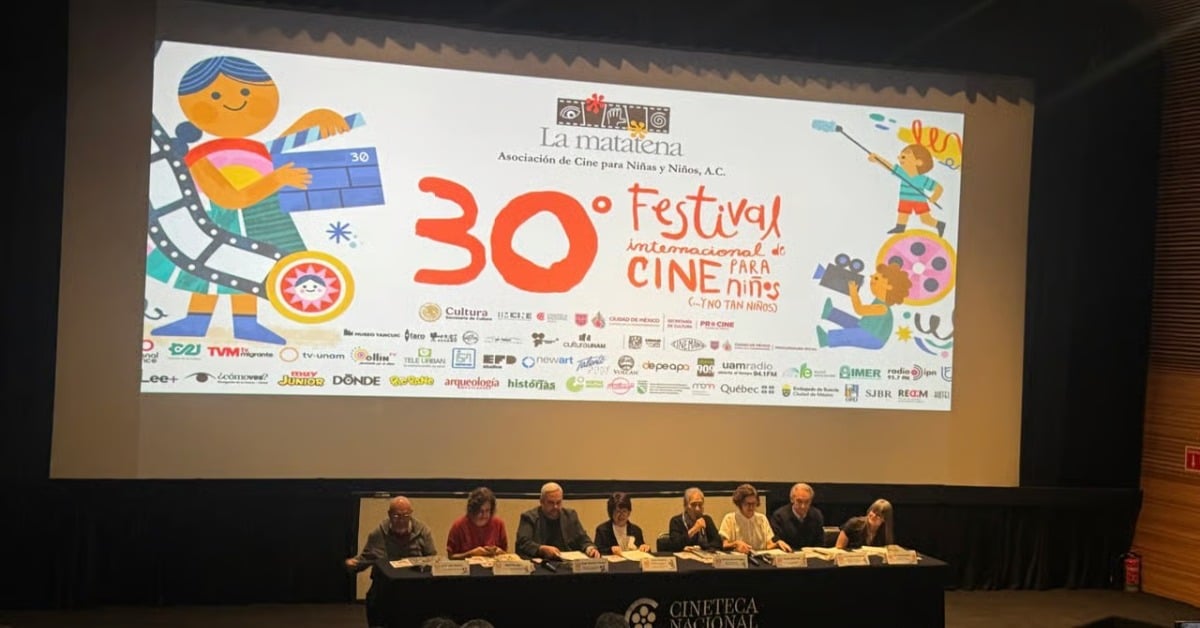
Mexico City – Mexico City turned a spotlight on young audiences this weekend as the 30th International Children’s Film Festival opened with a clear mission: make quality global cinema free and accessible to children across the capital. Organized by the nonprofit La Matatena A.C., the festival runs August 4–10 and is anchoring its milestone edition in a mix of traditional venues and community spaces to broaden reach.
Lines formed early outside the Cineteca Nacional, Faro cultural centers, and other partner sites, where families brought children to see animated and live-action films from more than 30 countries. The festival’s programming includes features, short films, and special works created by children, all presented in their original languages with Spanish subtitles to preserve authenticity while encouraging language exposure.
“This edition is very special,” said Liset Cotera, founder and director of La Matatena, at the press conference held in the Cineteca Nacional ahead of opening day. She emphasized that the festival is dedicating this year to early childhood and to children with diverse needs: including kids with autism, neurodivergent learners, and those with disabilities. “They have cultural rights and must be invited into the conversation. Cinema lets them see themselves and others in the world,” Cotera said.
The 30th anniversary edition is the largest yet, employing nine physical venues across the city and four public television channels to distribute content. In addition to the Cineteca Nacional, screenings will take place at Cinemanía, Museo Yancuic, and several FAROs (cultural community centers) such as Faro de Oriente, Faro Aragón, and Faro Miacatlán—as well as through collaborations with Canal Once, Capital 21, and Canal 22.
International Children’s Film Festival Mexico City isn’t just about passive viewing. Parallel to the screenings, the festival stage includes hands-on workshops in animation, storytelling, and film production aimed at empowering children not only to consume cinema, but to shape it. One flagship workshop, “Cuadro x Cuadro,” invites participants aged 6 to 13 to build their own stop-motion shorts using clay and cut-out techniques; the resulting pieces are slated for future festival editions. The educational track also includes moderated discussions that connect film themes—like migration, identity, and inclusion—to everyday experiences of young audiences.
City cultural officials credited the festival with reinforcing Mexico City’s image as a family-friendly cultural hub. Municipal representatives noted that bringing film to neighborhood FAROs and televising selections creates access for children who might otherwise be excluded by distance or cost. “This festival folds in the city’s diversity,” said a representative from the Cultural Secretariat. “It’s not just for kids in the center; it’s for children in every corner of town.”
Organizers highlighted the festival’s dual role: celebrating three decades of sustained programming while using cinema as a mirror for empathy and learning. The 2025 lineup features 60 film works from 31 countries, with special emphasis on voices that are too often underrepresented in mainstream children’s media. Themes such as early childhood development, community belonging, and neurodiversity show up not as token subjects but woven into narratives that invite conversation.
Parents and educators attending opening events remarked on how the festival’s format invites intergenerational engagement. “My daughter asked smart questions about the characters after the screening,” said one mother outside the Museo Yancuic venue. Teachers have been bringing small groups to select films as part of informal summer learning modules.
The festival’s structure also reflects an evolving view of audience development. La Matatena has long positioned children not as passive consumers but as active cultural participants. The organization invests in dubbing or subtitling high-quality international films so they can be understood without losing their source language rhythms. Through this, the festival works to widen the cinematic imagination of young viewers—showing them how different lives, languages, and storytelling styles coexist and converse.
As the week unfolds, the city can expect a blend of serious cultural engagement and playful celebration. Screenings will continue across venues; some of the most anticipated family-friendly events include a cross-cultural children’s film showcase, live Q&As with guest filmmakers, and community open-air presentations.
By the time the festival closes on August 10, organizers aim to leave a lasting ripple: more kids curious about film, more families connecting over stories, and more communities seeing themselves reflected on screen. The International Children’s Film Festival Mexico City is doing more than marking 30 years—it is reinforcing the idea that culture grows when it is shared freely, early, and with intention.