For Mexico’s ambitious interoceanic corridor, credibility is currency. And a single derailment has suddenly made the project feel riskier to the companies it wants to win over. Behind the headlines, the bigger question isn’t only what caused the crash, but what it reveals about the corridor’s readiness to function like a serious logistics platform. With operations disrupted and confidence shaken, the project now faces a test that spreadsheets can’t solve: proving it can be safe, predictable, and scalable.
The accident that changed the conversation
The Interoceanic Train was built to do something Mexico has wanted for more than a century: turn the Isthmus of Tehuantepec into a functioning bridge between oceans. The pitch is straightforward. Move freight between the Pacific port of Salina Cruz and the Gulf side near Coatzacoalcos fast enough—and reliably enough—that shippers see the corridor as a practical alternative for certain routes. At the same time, add passenger service that helps connect communities along a region long defined by distance, underinvestment, and uneven opportunity.
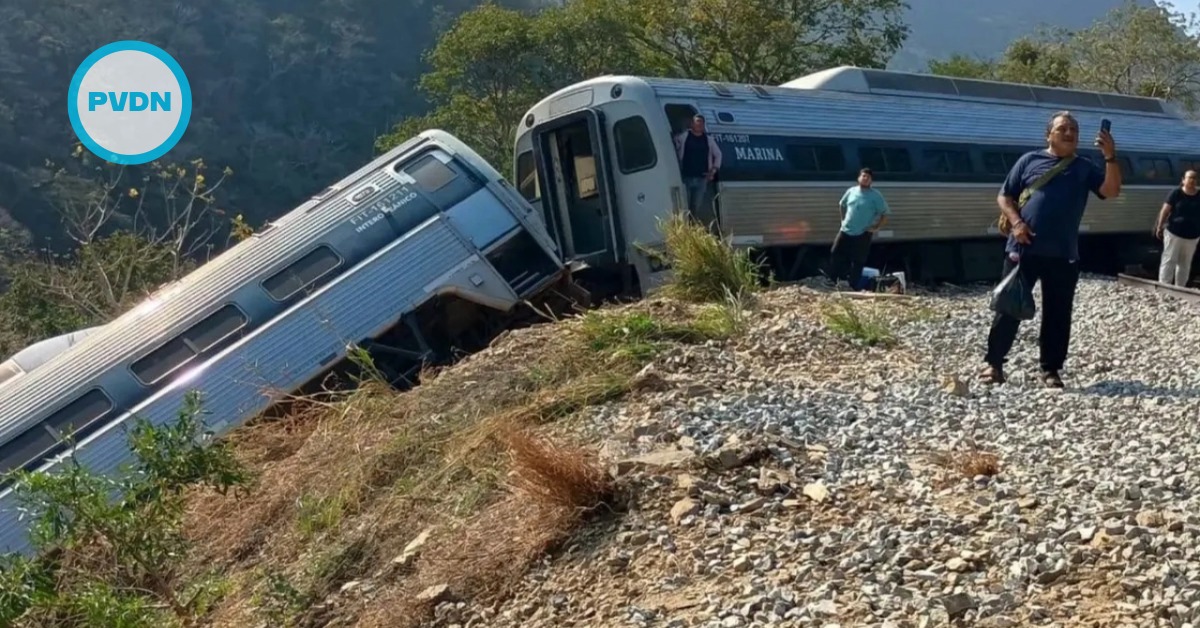
That narrative took a hard hit on December 28, when a passenger train derailed near Nizanda, Oaxaca. The crash killed 14 people and injured nearly 100 more. Around 250 people were onboard. Reports describe multiple cars leaving the track, with at least one falling into a ravine and others ending up precariously positioned. In human terms, it was a tragedy. In business terms, it was the kind of event that freezes decision-making, because it introduces a new question that every logistics manager, insurer, and risk committee has to answer: is this system ready to carry what we can’t afford to lose?
The derailment also forced a pause that’s bigger than a single route. When a project’s value proposition is speed and connectivity, downtime is more than inconvenience—it’s a direct assault on the promise.
Why businesses are hesitating
Companies don’t need perfection. They need predictability. For a corridor that wants to compete for freight, the baseline expectations are unglamorous: consistent schedules, clear safety protocols, dependable maintenance, and transparent incident reporting. A fatal derailment puts all of that under a microscope overnight.
The Interoceanic Train has been building momentum, but it is still early in its commercial life. The corridor has been courting corporate clients, and it has shown flashes of what the logistics dream could look like. A headline-grabbing example was a pilot move of roughly 900 Hyundai vehicles that crossed the isthmus in about nine hours—exactly the kind of proof-of-concept that attracts boardroom attention.
But the corridor’s business case is more fragile than the promotional language suggests. The service needs repeat customers, routine volumes, and the kind of operational rhythm that convinces companies they can plan around it. A crash like this doesn’t just raise fears about safety. It raises fears about hidden costs: delays, rerouted shipments, warehousing surprises, contractual penalties, and the internal hassle of explaining to leadership why a “strategic alternative” suddenly looks like an avoidable headache.
Even for expats who never plan to ship a container, this matters. When big projects wobble, the ripple effects often show up locally—in prices, in jobs that arrive later than promised, and in a region’s ability to attract the kind of investment that builds stable supply chains instead of one-off construction bursts.
The credibility gap isn’t only about the tracks
There’s a second layer to the damage: governance and trust. In the weeks after the derailment, attention has widened beyond the immediate cause to the broader question of oversight. Audits and reviews cited in public reporting have flagged issues over time, including gaps in planning, questions about materials and supervision, and concerns about inspections and documentation for equipment and operations. Separately, there are reports that significant sums were recently allocated to correct curves, slopes, and related infrastructure on the corridor—details that add uncomfortable tension to the timeline when an accident occurs soon after major works are completed.
This isn’t just political noise. For corporate decision-makers, a project’s operational maturity is inseparable from its management culture. If an incident happens, businesses want to see a professional response: fast stabilization, credible investigation, clear accountability, and specific corrective actions that can be tracked. Silence, vague reassurances, or shifting numbers do the opposite. They make it harder for companies to defend the choice to use the corridor.
And while compensation and support for victims is morally urgent, it also becomes part of the credibility equation. How a project treats people in the worst moment signals how it will treat partners when contracts are under stress.
What it means for the corridor’s logistics ambitions
The corridor’s long-term promise rests on a simple reality: Mexico sits next to the world’s largest consumer market and is deeply tied into North American manufacturing. Any infrastructure that can shorten routes, reduce bottlenecks, or diversify transit options has a built-in audience. That is the opportunity the Interoceanic Train is chasing.
But logistics is unforgiving. A single high-profile crash can change the way a corridor is priced—financially and psychologically. Insurers become more cautious. Shippers add contingency time. Legal teams tighten language. Customers ask for guarantees that are expensive to provide. The cost of proving reliability rises, and the corridor risks becoming less competitive precisely when it needs to look like a bargain.
There’s also a practical issue that affects ordinary travelers and residents: service interruptions. When routes are suspended or reduced and there is no clear restart date, people revert to what they know—buses, trucks, and established shipping channels. Once those habits return, winning them back takes time, marketing, and a stronger safety story than before.
For expats who move around Mexico frequently—or who simply watch infrastructure projects as signals of where the country is heading—the corridor’s moment matters. A successful interoceanic route would reshape parts of the south, connecting Oaxaca and Veracruz into a more integrated economic zone. A corridor that becomes synonymous with uncertainty could do the opposite, reinforcing old narratives that big promises don’t translate into reliable services.
The credibility test ahead
The crash has created a narrow window where the next steps will matter as much as the accident itself. A project can survive tragedy, but only if the response convinces the public and potential clients that lessons are being learned—not buried.
That means a transparent investigation with findings that go beyond blame and address systems: track conditions, speed protocols, maintenance cycles, inspection regimes, staff training, signaling, and emergency response readiness. It means visible corrective work and independent verification that safety upgrades are real, not cosmetic. It means clarity about insurance coverage and passenger protections, because confidence evaporates when basic safeguards feel ambiguous. And it means a restart plan that prioritizes safety over optics, even if it delays the political timeline.
In the end, the Interoceanic Train’s business appeal won’t be restored by speeches about potential. It will be restored by a boring, repeatable record of safe operations—week after week—until the corridor becomes something companies can plan around without holding their breath.