2026 is shaping up to be a big year for anyone who follows Mexico’s cultural footprint beyond its borders. One Frida Kahlo show promises to look past the familiar merch-and-myth image and ask how she became a modern icon. New York will also stage a brand-new opera that turns Kahlo and Diego Rivera into living characters, with a Mexico City broadcast that puts the premiere within reach. And London has its own major opening timed for summer travel. The dates are set. The angle is the surprise.
A 2026 calendar built around two names
Frida Kahlo and Diego Rivera never really left the global conversation, but 2026 is when major institutions start treating their legacy as a living, moving thing rather than a closed chapter in art history. What stands out in the early 2026 schedule is the way visual art and performance are being braided together, as if Kahlo and Rivera are easier to understand when you see them not only on museum walls, but also reimagined in motion, voice, and ritual.
For Mexico-based readers, that matters. It’s one thing to see Kahlo’s face on a tote bag in an airport shop. It’s another to watch a serious museum show ask how that “Frida” image was built, and why it stuck. It’s also rare to see an opera house as tradition-heavy as the Metropolitan Opera put Spanish-language storytelling about Mexican figures at the center of a season. Together, these projects point to a more nuanced international appetite: less tourist-postcard Mexico, more Mexico as a source of modern identity, politics, pain, style, and reinvention.
Kahlo Rivera opera takes the Met stage
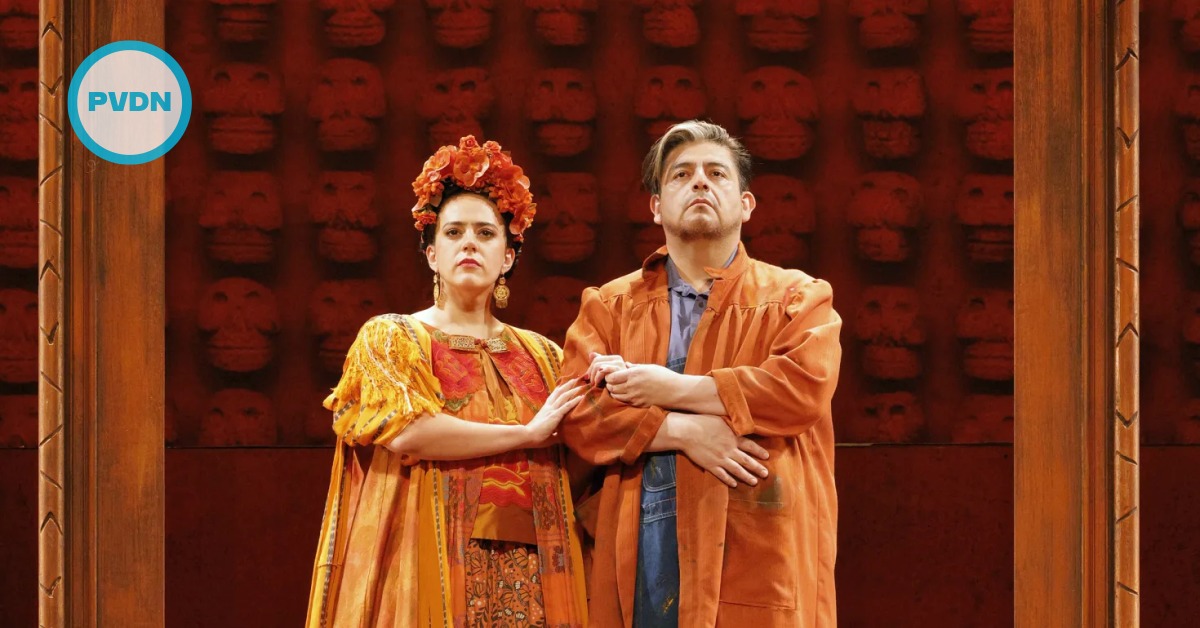
The most headline-friendly date is in New York. The Metropolitan Opera will premiere El Último Sueño de Frida y Diego with performances running from May 14 through June 5, 2026. It’s sung in Spanish, and it’s built around a fictional, magical-realist premise that leans into Mexican symbolism without treating it like decoration.
The story begins in 1957, three years after Kahlo’s death. On Día de Muertos, she returns for 24 hours, guided by Catrina, and reunites with Rivera. That setup gives the opera room to do what biography can’t. It can compress a relationship into images and emotional collisions. It can make the body central, not just the myth. And it can stage that familiar Kahlo-Rivera gravity as something intimate and haunted, not just famous.
The production is directed and choreographed by Deborah Colker, with designs tied closely to the painters’ own visual world. Isabel Leonard sings Frida, and Carlos Álvarez sings Diego. Yannick Nézet-Séguin conducts, signaling the Met is treating this as a real tentpole, not a niche experiment.
A MoMA exhibition that borrows the opera’s language
MoMA is turning that opera into a gallery experience. Frida and Diego The Last Dream runs from March 29 through September 12, 2026, and it’s presented as a direct collaboration with the Met’s new production. The hook is more than timing. The installation itself is designed by Jon Bausor, who also designed for the opera, so visitors aren’t just looking at paintings in neutral white rooms. They’re stepping into a space that intentionally feels theatrical.
The exhibition brings together five Kahlo paintings and a drawing, along with more than a dozen works by Rivera. For a lot of visitors, these won’t be obscure deep cuts. The point is context. The show aims to reset how people see works that have become over-familiar through endless reproduction. That “new context” idea is doing a lot of work here. When an image becomes iconic, it also becomes easy to flatten. Museums have been wrestling with that for years. MoMA’s approach in 2026 is to use stagecraft to pull the work back into a lived, human story.
There’s also a practical, almost strategic benefit. Visitors in New York who aren’t opera-goers may still end up thinking about the opera because they’ve walked through its visual logic in a museum first. And opera audiences may land in MoMA afterward, looking for the real Kahlo and Rivera behind the fictional night of ghosts and reunion.
Frida’s icon story moves from Houston to London
The other major 2026 marker is Frida The Making of an Icon, which opens in Houston at the Museum of Fine Arts, Houston from January 19 to May 17, 2026, and then travels to Tate Modern in London, opening June 25, 2026 and running into early January 2027.
The framing is blunt in a way museums don’t always dare. This isn’t pitched as another standard retrospective. The exhibition is structured around the question many people quietly carry: how did Kahlo go from being relatively unknown outside certain circles during her life to becoming one of the most recognizable artists on the planet? The show is built to separate “Frida the artist” from “Frida the phenomenon,” without pretending the phenomenon doesn’t matter.
In Houston, the exhibition description points to more than 30 works by Kahlo and 120 works by artists across five generations who were inspired by her, alongside memorabilia and documents from her archives. The aim isn’t to police how people love Kahlo. It’s to show how her image gets reused, reinterpreted, and sometimes consumed, and to track what that says about the times and movements that adopted her.
For expats in Mexico who already feel Kahlo’s omnipresence in everyday life, that international framing can be oddly clarifying. A show like this can make you notice what you’ve stopped seeing. It can also sharpen the line between admiration and commodification, without scolding the viewer.
What this means if you live in Mexico
You don’t have to fly to New York or London to feel this cultural moment. The Met’s Live in HD broadcast of El Último Sueño de Frida y Diego is scheduled for May 30, 2026, and it will be shown at Mexico City’s Auditorio Nacional at 11:00 a.m., with ticket tiers listed from 180 pesos up to 1,150 pesos. That’s a rare bridge between the big international calendar and an on-the-ground Mexico experience. It also lands at a time of year when Mexico City is already buzzing, but not yet in the heavy summer travel crush.
If you do travel, these dates offer a clean excuse to plan around something real instead of vague “museum time.” Houston gets the first run of the icon-making exhibition in the first months of the year. New York stacks the MoMA show in spring and the opera in late May into early June. London’s Tate opening is placed right in the summer travel window. In other words, these aren’t scattered events. They form a kind of cultural route map for 2026, anchored by Mexican figures whose work keeps forcing the world to look again.