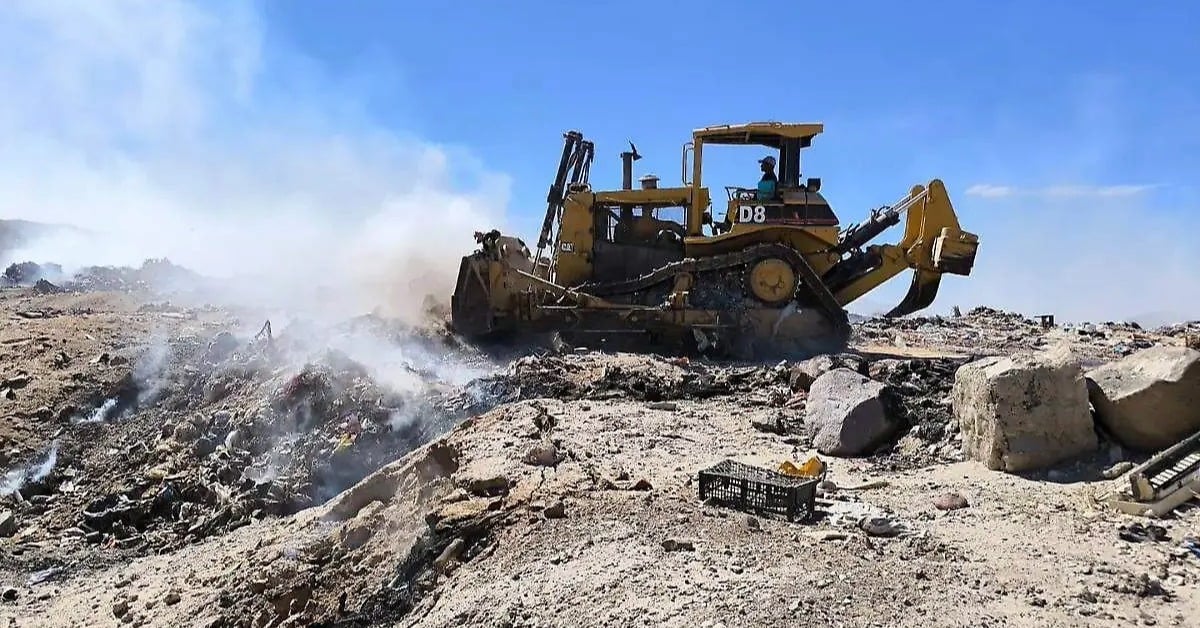
La Paz, Baja California Sur – La Paz sits on precious water. Most of it comes from underground, stored in aquifers that feed homes and businesses. A local specialist now warns that the city’s landfill is a weak point in that system. The waste pile generates leachate—a dark, contaminated liquid—that can migrate through soil and threaten supplies if it is not contained. The alert is simple: the dump is nearly full, and the physics of trash does not wait.
The report breaks the problem into parts. It describes what is in household garbage, how leachate forms, and how it moves. It then points to comparable local cases, flags that La Paz’s dump is close to capacity, and sketches measures that can cut the risk. None of this is theory. The city has seen foul odors and flooded streets after storms; people know that what sits on land can end up in water. The difference here is focus on the source—an aging landfill that leaks by design unless it is engineered to stop.
La Paz landfill leachate
Leachate starts as rain and moisture percolating through layers of waste. As it passes, it picks up dissolved organic matter, ammonia, heavy metals, and whatever else sits in the pile—solvents, batteries, microplastics. The result is a concentrated liquid that must be collected, treated, and kept out of the soil. Without liners, drains, and ponds that work, that liquid finds fractures and follows gravity. The article’s expert explains this chain in plain language and ties it to La Paz’s reality.
The movement matters as much as the chemistry. Once leachate escapes, it can ride through the unsaturated zone until it reaches groundwater. From there, it spreads along the aquifer’s flow paths. In coastal basins like La Paz, where fresh water already presses against seawater intrusion, added pollution shrinks safe yield. Pushing contamination into a stressed system is like throwing salt on a wound—the pain travels.
Why “almost full” is a public-health sentence
The article notes that the La Paz landfill is nearing the end of its useful life. A full dump is not just a logistics problem. As waste piles higher, internal pressure rises, liners age, and cracks appear. The collection pipes clog. Evaporation ponds overtop in heavy rain. The failure points multiply. The expert’s warning is not dramatic prose; it is a checklist of the ways old landfills begin to lose control of their liquids. If those liquids reach the aquifer, the city pays twice—once for cleanup, and again in trust.
Comparable situations in the state give the argument weight. The report cites other local episodes where poor waste control met seasonal rain and produced nasty runoff, odors, and suspected seepage. Each case is a reminder that prevention is cheaper than chasing a plume underground. Once contamination moves, you do not erase it with a press conference. You spend years tracking, pumping, and praying that the flow slows.
How leachate forms—and how to stop it
The recipe is simple: water plus waste plus time. You cannot change physics, but you can change the setup. Modern landfills use composite liners, a bed of sand and gravel, perforated pipes to collect liquid, and lined ponds for storage and treatment. They cap closed cells with impermeable covers to shed rain. They also build storm channels so tropical downpours run around the dump instead of through it. The specialist outlines this logic and links it to steps La Paz could take now.
Source control helps, too. If you keep batteries, oils, solvents, and electronics out of the trash, you strip some of the most toxic ingredients from the leachate. Cities do this with take-back programs and household hazardous waste days. The payoff is direct: fewer metals and solvents in the liquid that plants must treat or intercept.
The aquifer’s stake
La Paz lives by groundwater. That is why the article anchors the landfill story in hydrology. In arid zones, recharge comes in pulses. Long dry spells shrink the lens of fresh water; wet weeks send a surge through the subsurface. If the landfill sheds leachate during storms, that pulse becomes a delivery system. The plume follows the same path as clean recharge, only it carries a chemical fingerprint no one wants in a kitchen tap.
People feel these links even if they do not name them. After summer downpours, residents complain of smells, backed-up drains, and murky runoff. The landfill is not the only culprit, but it is a large, concentrated source. The specialist argues that dealing with it is a public-health investment, not a niche environmental hobby. Protect the aquifer today, and you avoid steeper water bills and bottled-water dependence tomorrow.
The politics of garbage
Closing a landfill cell and opening a new, engineered site takes money and political focus. The piece does not pretend otherwise. It does, however, set a floor under the debate: the current dump is almost full, and in that condition, it produces liquids that can reach what La Paz drinks. You can argue over who pays, where a new site goes, and which agency leads. You cannot argue with gravity. The longer you wait, the more you gamble with a resource the city cannot replace.
The article also points to communication. People accept hard projects when they see a map, a schedule, and a purpose. If City Hall explains what work crews will do—cap here, divert water there, add storage and treatment by this date—residents can measure progress and hold leaders to it. Vague promises about “modernization” will not cut it. A leachate pond either exists or it does not. A liner either passes a test or it fails. The aquifer will keep score.
What comes next
The path forward is practical. Confirm the landfill’s remaining capacity. Cap what is closed. Upgrade storm channels. Expand leachate handling. Launch a hazardous-waste collection push before the next big rain. In parallel, choose and design the next disposal site to modern standards. Each step buys time for the aquifer. Each month of delay hands time back to the physics inside the pile. The specialist’s message is not alarmist; it is urgent in the way a calendar is urgent.
La Paz has solved hard problems before. This one is visible, fixable, and tied to the most basic service a city can offer: clean water. The landfill will keep making leachate as long as it holds trash. The question is whether the city will hold the line that keeps that liquid out of the ground we all rely on.