A federal aquaculture experiment in Michoacán is betting on native species and family fish farms to bring Lake Pátzcuaro back to life.
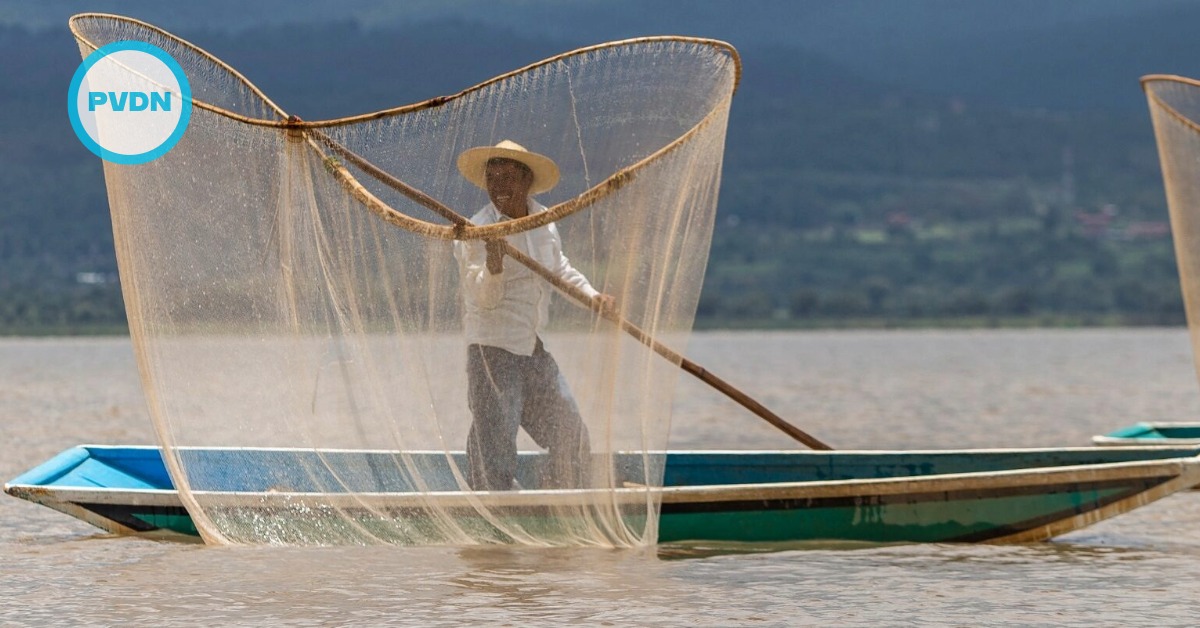
Pátzcuaro wakes slowly, the mist lifting off the brown water as wooden canoes nose away from shore. For veteran fisherman Florencio Cornelio, mornings used to mean coming home with boats so full of acúmura, pez blanco and achoque that the catch seemed endless. Today he measures every outing carefully. He mostly brings back tilapia and carp, and says he has gone more than a decade without landing a single native fish from the lake that fed his parents and grandparents.
Around 840 families in the communities scattered along the shoreline still depend on the lake, not just for income but for a way of life. Fishing is tied to language, festivals and recipes, from whitefish cooked over wood fires to broths made with achoque. This larval salamander has, for centuries, been both food and medicine in the region. As the native species disappeared, many families watched their earnings shrink and their children leave for bigger cities or the United States.
Scientists and local residents agree on the culprits. Decades of introducing exotic species such as tilapia and carp have upset the food web. Prolonged drought in 2023 and 2024 exposed cracked shorelines and stranded boats. State authorities also acknowledge that uncontrolled pumping for agriculture helped push the lake to some of its lowest recorded levels. That pressure is now being met with new conservation rules, patrols against water theft and a wider recovery plan that reaches into the forests and hills around the basin.
Lake Patzcuaro fish recovery
The most visible piece of that plan is happening at the Regional Center for Aquaculture and Fisheries Research on the eastern shore. Inside its tanks, technicians strip eggs from broodstock of pez blanco and acúmura, fertilize them and raise the larvae under controlled conditions until they are large enough to survive in the wild. Achoque, which is so threatened that wild captures are no longer sustainable, is kept in captivity while researchers refine rearing techniques and look for safe habitats.
When young fish are ready, they are loaded into plastic bags filled with lake water and oxygen, then ferried out to release sites. On a recent day, staff from the center floated four bulging bags near a reed bed, letting the water inside slowly match the temperature outside before loosening the ties. Within minutes, thousands of translucent juveniles darted into the murky shallows. It is a scene that repeats several times each year. Since the restocking strategy began in 2016 with just 3,000 juveniles, the program has grown to releases of about 40,000 whitefish and acúmara this year, with an official long-term goal of one million.
For state and federal officials, restocking the lake is only half the equation. The other half is changing how fishing families make a living. Researchers from the National Fisheries Institute are working with cooperatives to design small-scale farms where families can raise native fish in ponds or recirculating systems, either alone or alongside other species. Early trials led by a university aquaculture lab have shown that pez blanco and acúmura can adapt to these systems, opening the door to commercial production away from the shrinking wild populations.
The economic logic is hard to ignore. A kilogram of tilapia caught in the lake fetches around 100 pesos. The same amount of cultivated whitefish can sell for between 600 and 1,000 pesos, while acúmura reaches roughly 200 pesos per kilo. If families can reliably sell native fish raised in tanks or cages, they have less reason to chase the fragile wild stocks that are being released into the lake. It is conservation by way of better prices, and it hinges on careful training in husbandry, water quality and disease control so that new farms do not create fresh environmental problems.
Recent legal changes are nudging the same direction. In October, the pez blanco of Pátzcuaro received a protected geographical indication, recognizing its origin in the lake, its traditional harvest with artisanal gear and the distinctive texture and taste that made it famous in Michoacán’s cuisine. The designation applies both to fish caught in the lake and to those raised in certified aquaculture systems that meet strict quality standards. For local producers, that status could help justify the investment in hatcheries and small farms while protecting the name from imitators elsewhere.
Beyond science the future of Lake Patzcuaro fish
All of this is unfolding in a landscape where communities are also giving up land and short-term profits to keep water flowing. Purépecha villages around the northern shore have voluntarily placed more than 8,000 hectares into conservation status, trading the option of new fields or housing for support to reforest slopes, build small check dams and restore the springs and channels that feed the lake. Temporary employment programs pay residents to clear clogged waterways and plant native trees, turning restoration into a modest but steady income stream.
The stakes extend beyond biology. For many residents, the loss of native fish has also eroded cultural practices centered on shared meals and seasonal dishes. Elder cooks talk about teaching younger generations to clean and fry pez blanco or simmer achoque in broth, even if the ingredients now come from tanks instead of nets. The hope is that farmed fish raised from local broodstock will carry enough of the original flavor and symbolism to keep those traditions alive while wild populations slowly rebuild.
Recovery will not be quick. Scientists involved in the repopulation work say it could take ten to twenty years before pez blanco and acúmura reach stable, self-sustaining numbers in the lake again. That timeline depends on factors no hatchery can fully control: future droughts, enforcement against illegal pumping, the spread of invasive species and the willingness of fishers to respect no-take areas and size limits. Yet on the water, the mood is not entirely bleak. Many cooperatives see the promise of earning more from fewer fish, especially if the conservation aquaculture model proves reliable.
Back in his canoe, Florencio talks about his daughters, who help during harvests and know how to handle nets even as they study other careers. He wants them to have options that his parents never imagined, but he also wants them to know what it feels like to pull up a net shimmering with native fish. The federal experiment unfolding on his lake is really a bet that science, policy and community decisions can line up long enough for that to happen. If it works, Lake Patzcuaro fish might once again be known less as a cautionary tale and more as a shared meal that stayed on the table.