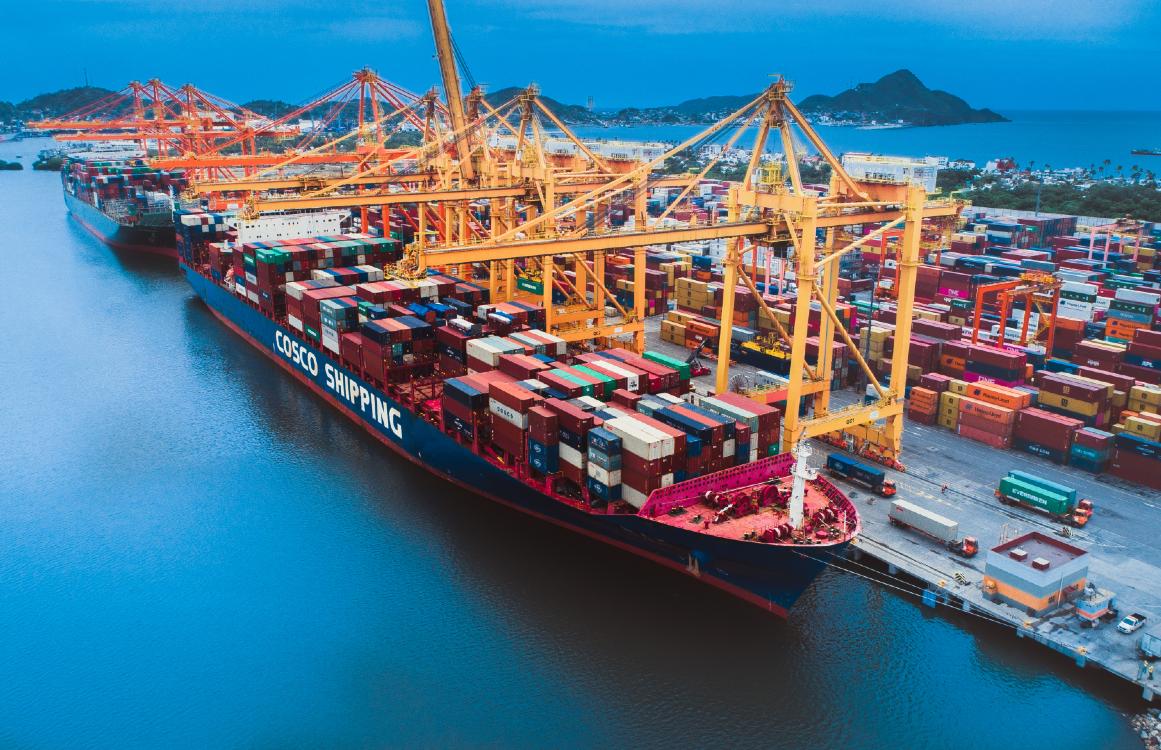
Manzanillo, Colima – On August 11, 2025, President Claudia Sheinbaum stood in Manzanillo and set a simple benchmark: first place in Latin America. The promise came with shovels in the ground and cameras rolling as she launched works that included the Tepalcates bridge. It was the kind of line that’s meant to travel—short, ambitious, and easy to measure—backed by the unmistakable signal of construction starting now, not later.
The message targeted two audiences at once. Nationally, it told shippers and investors that the country’s main Pacific gateway will not be allowed to stall. Locally, it acknowledged what residents and drivers live with daily near the port: access matters, and fixing choke points is not optional. Framing Manzanillo as the future number one was the headline; giving the Tepalcates bridge a green light was the proof-of-work.
Manzanillo top port in Latin America
The claim sets a high bar. “First in Latin America” can mean volume, reliability, speed, or some mix of the three. Sheinbaum’s statement didn’t parse the metrics; it staked out the direction. In politics and logistics alike, direction is the difference between drift and a plan. The plan here begins with concrete, steel, and a promise to clear the path to and from the docks.
Ambition aside, the start of work matters more than the slogan. The Tepalcates bridge may not, by itself, deliver top ranking. But it is the kind of access project that turns daily gridlock into predictable movement. If trucks and workers can move with fewer delays, the port’s performance improves in the one place where minutes add up: the city-port interface.
What started on the ground
Presidential promises often hinge on later budgets and approvals. This one came with a work start. The government says the Tepalcates bridge is among the projects launched during the visit. That detail matters because it shifts the conversation from future tense to present tense. People in Manzanillo won’t judge the day by a press release; they will judge it by whether a work zone appears where none existed yesterday.
If the bridge reduces a known bottleneck, the gains show up quickly: fewer backups on key approaches, more predictable turn times, and less friction between port traffic and daily city life. None of this is glamorous. It is, however, how ports climb rankings—by shaving off the small delays that quietly destroy schedules.
The stakes for Colima
Manzanillo is not an abstract project for Colima. A reliable port feeds local jobs, small businesses, and the services that grow around steady trade. When a president ties national competitiveness to a local worksite, it pulls the conversation down to street level, where residents feel first-order effects—noise, detours, new employment, and, ideally, smoother mobility when the works end. The administration framed the visit as both a push for investment and a show of movement on the ground.
Still, the community’s test will be practical: Are the works sequenced to limit disruption? Are detours well marked? Do access improvements appear as promised? These are the everyday questions that decide whether a flashy pledge ages well or falls flat. In ports, credibility rides on whether the next truck gets through a little faster than the last.
What to watch next
Two timelines will now run in parallel. One is political: repeating the “number one” line to keep pressure on agencies and contractors. The other is physical: pouring foundations, setting spans, and opening lanes. If the second timeline stays visible and steady, the first takes care of itself. People are patient when they can see progress.
For Manzanillo, the outcome will be measured in fewer stalled hours and better predictability for workers and carriers. If the bridges and access fixes do what they should, the port gets faster where it used to be fragile. And that is how an ambitious promise starts to look plausible: not all at once, but one reopened lane and one shorter queue at a time.