Federal environmental authorities say Los Cabos will remain a priority zone for inspections in 2026 as tourism and real-estate development continue to move along the coast. The immediate focus is whether projects near the sea are operating within the law before work advances too far. That means checking if developers hold the required environmental authorizations, whether land occupation is legal, and whether access to public beaches is being respected.
The renewed scrutiny matters because Los Cabos sits at the intersection of fast growth and fragile coastal land. New hotels, condominiums, villas, marinas, and related infrastructure can bring investment, jobs, and tourism revenue. They can also put pressure on dunes, wetlands, desert vegetation, runoff patterns, and shoreline access. For residents, the bigger concern is often practical. They want to know whether a project was cleared properly and whether long-used access routes to the coast will remain open.
What authorities are actually checking
At the center of the inspections is the question of environmental authorization. In Mexico, many coastal projects must first pass through a federal impact review. That process is tied to the Manifestación de Impacto Ambiental (MIA), the environmental impact filing used by authorities to evaluate whether a project can proceed and under what conditions. In plain terms, it is meant to force review before construction, not after damage has already been done.
That requirement is especially relevant in coastal areas. Mexican environmental rules cover real-estate developments that affect coastal ecosystems and also work in wetlands, estuaries, mangroves, and related federal zones. In places like Los Cabos, where tourism growth often pushes construction toward the shoreline, that review can become the dividing line between a project that moves forward legally and one that faces suspension, sanctions, or a closure order.
Why beach access is part of the story
For many international readers, the beach-access issue can be confusing because it is often discussed as if beachfront development automatically means private control. In Mexico, that is not how the legal framework is supposed to work. Beaches are public, and the federal maritime land zone next to them is also regulated under federal law. The state may grant concessions or permits for certain uses, but those rights do not erase the public character of beach access.
That is why officials keep linking permit checks with access checks. If a project expands toward the coast, authorities are not only asking whether the environmental file exists. They are also looking at whether people can still reach the shore. Mexican law prohibits blocking, restricting, or conditioning access to beaches and the adjacent federal zone. Where no public route exists, neighboring landowners can still be required to allow access through arrangements made by the federal government.
This is about more than paperwork
The Los Cabos case is not just a technical review of permits. It is also about the kind of coastal growth the region is allowing. Developers often arrive with plans tied to tourism demand, luxury housing, or mixed-use beachfront projects. Environmental oversight is supposed to test whether those projects can coexist with local ecosystems and public rights. That includes reviewing vegetation loss, grading, fill, drainage, impacts on coastal habitat, and the effect of roads, walls, or private layouts that can narrow or discourage public entry.
For residents and foreign homeowners alike, this can feel abstract until the effects become visible. A path disappears. A beach access point becomes harder to use. Fencing appears near the shoreline. Earthmoving starts before the public understands what was approved. By the time a dispute reaches authorities, trust is already low. That helps explain why officials are also pointing to citizen complaints as an important trigger for inspections.
A recent enforcement case shows the pressure is real
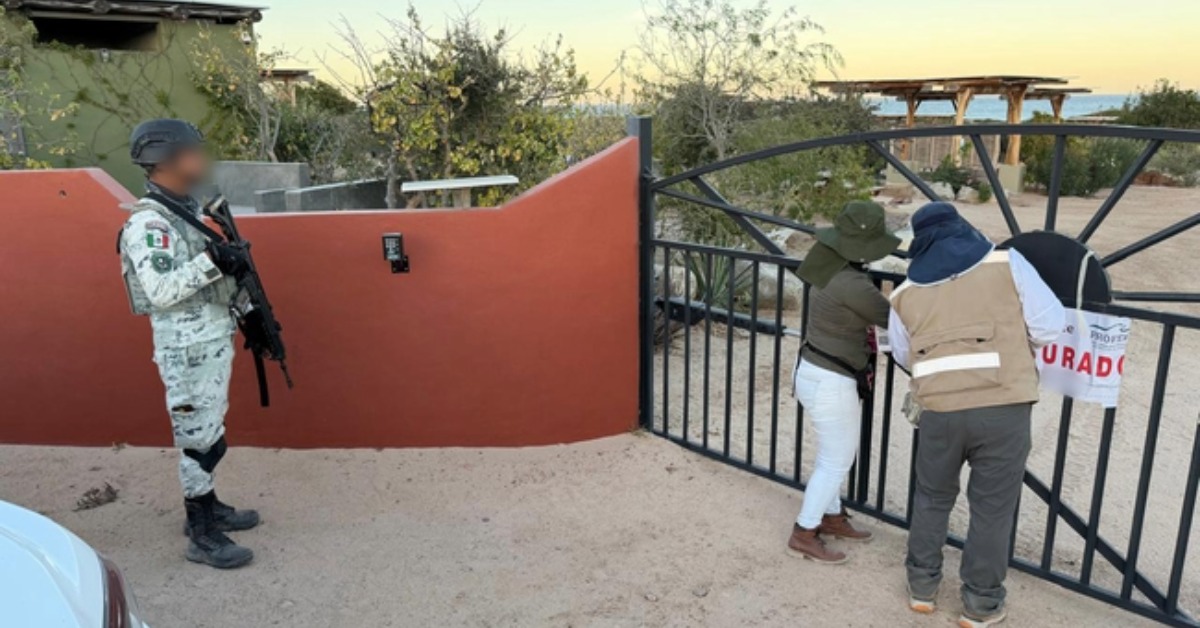
The new emphasis in Los Cabos comes with a recent example that gives the warning more weight. In March, Profepa reported the temporary closure of six developments in Cabo Pulmo after inspections found works and activities without the required federal environmental authorization. The agency said the sites involved construction, perimeter fencing, and land-use changes in coastal ecosystem areas.
That case matters because it shows enforcement is not limited to statements. It also shows the kind of pattern authorities say they are watching for across Baja California Sur. Once work begins, a project may create practical and legal pressure to let construction continue. Environmental enforcement is supposed to interrupt that logic by asking a basic question early: was the project reviewed first, and is it complying with the rules that apply to coastal land?
What this means for Los Cabos now
For Los Cabos, tighter oversight does not mean every coastal project is suspect. It means the region is being treated as a place where the stakes are high enough to justify closer federal attention. That matters for developers, buyers, residents, and visitors. Developers face more pressure to show permits and compliance from the start. Buyers may need to look more carefully at what was authorized before assuming a project is fully regular. Residents gain a clearer signal that beach access and environmental complaints remain part of the enforcement agenda.
For a destination built on its coastline, that balance is becoming harder to ignore. Los Cabos depends on tourism and real-estate investment, but it also depends on the environmental value of the coast itself. When federal authorities designate a municipality as a priority zone, the message is simple. Growth near the shoreline will be subject to closer review, and the rules on permits, ecosystem protection, and public access are not optional.