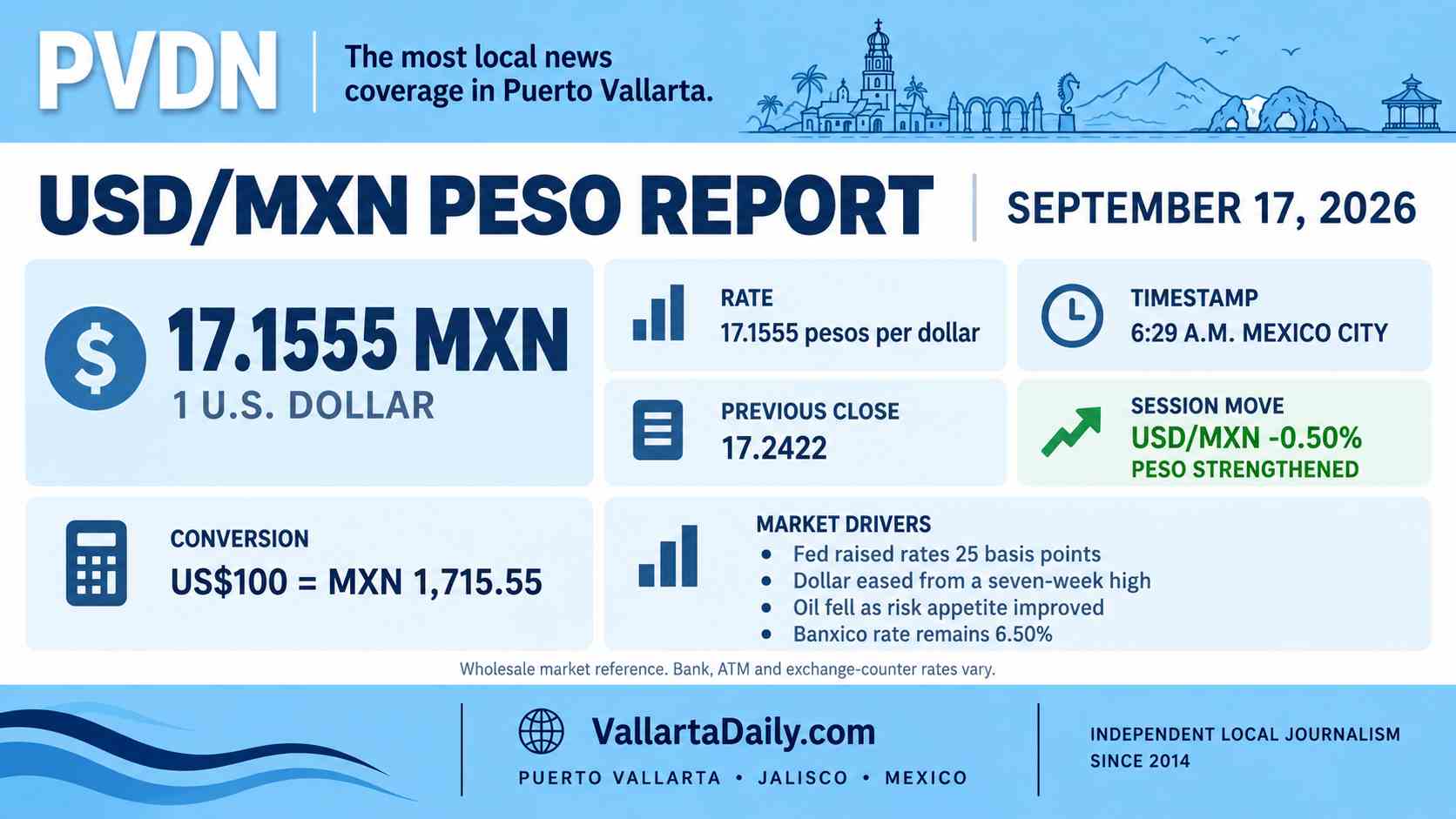
Puerto Vallarta, Jalisco, Sept. 17, 2026 – The Mexican peso strengthened Thursday morning, with USD/MXN trading at 17.1555 at 6:29 a.m. Mexico City time, meaning one dollar bought about 17.16 pesos in the wholesale market.
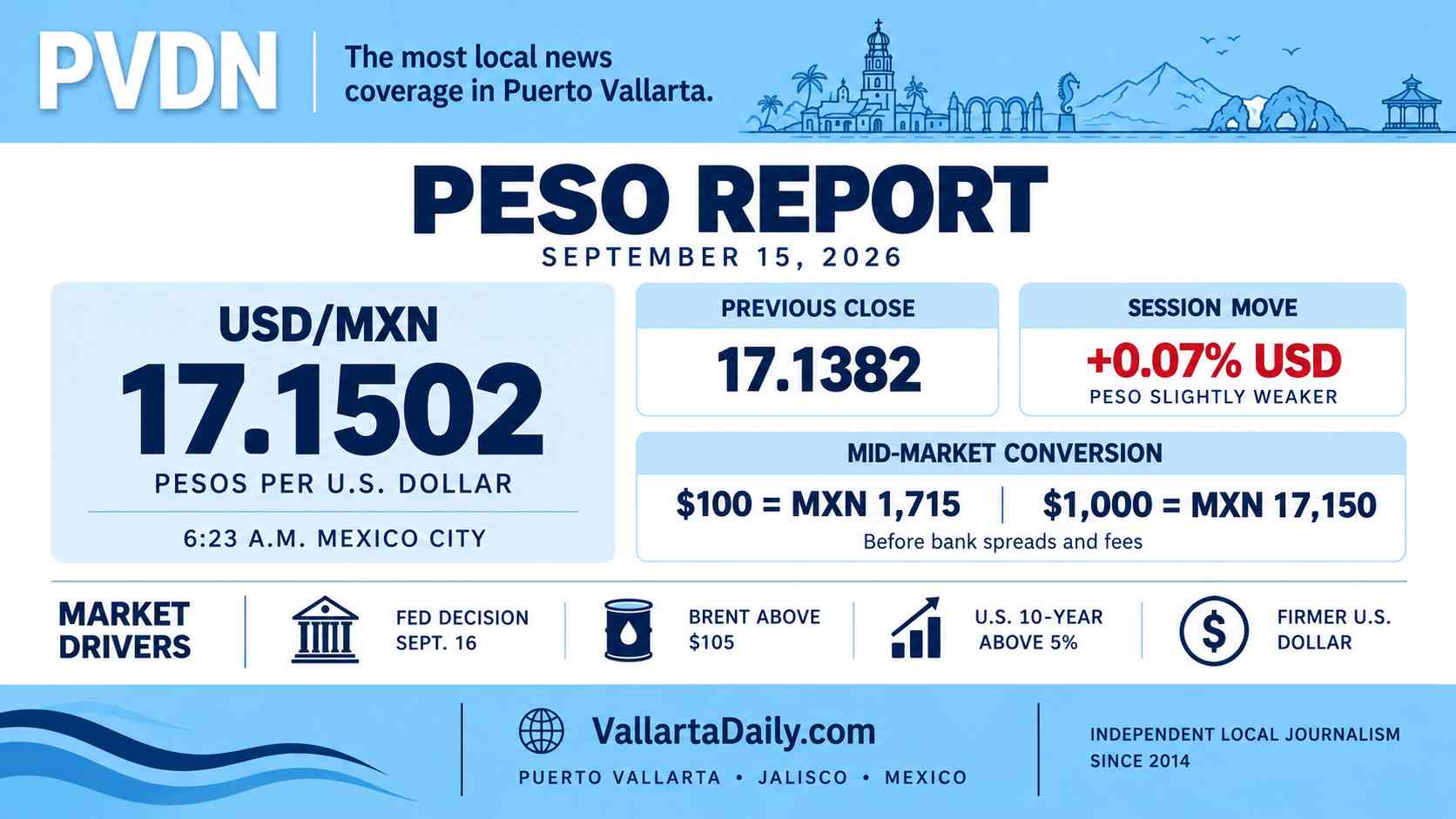
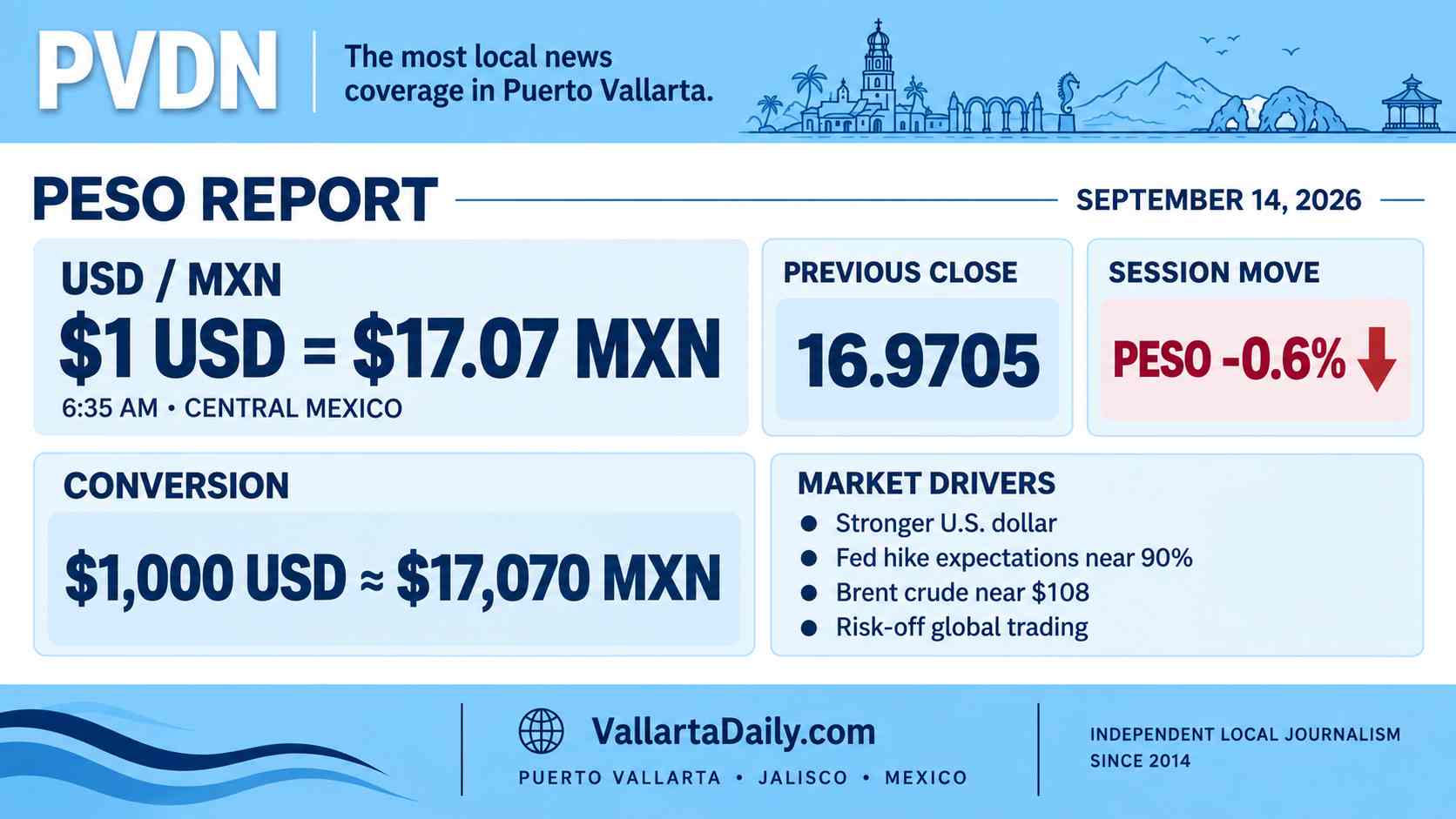
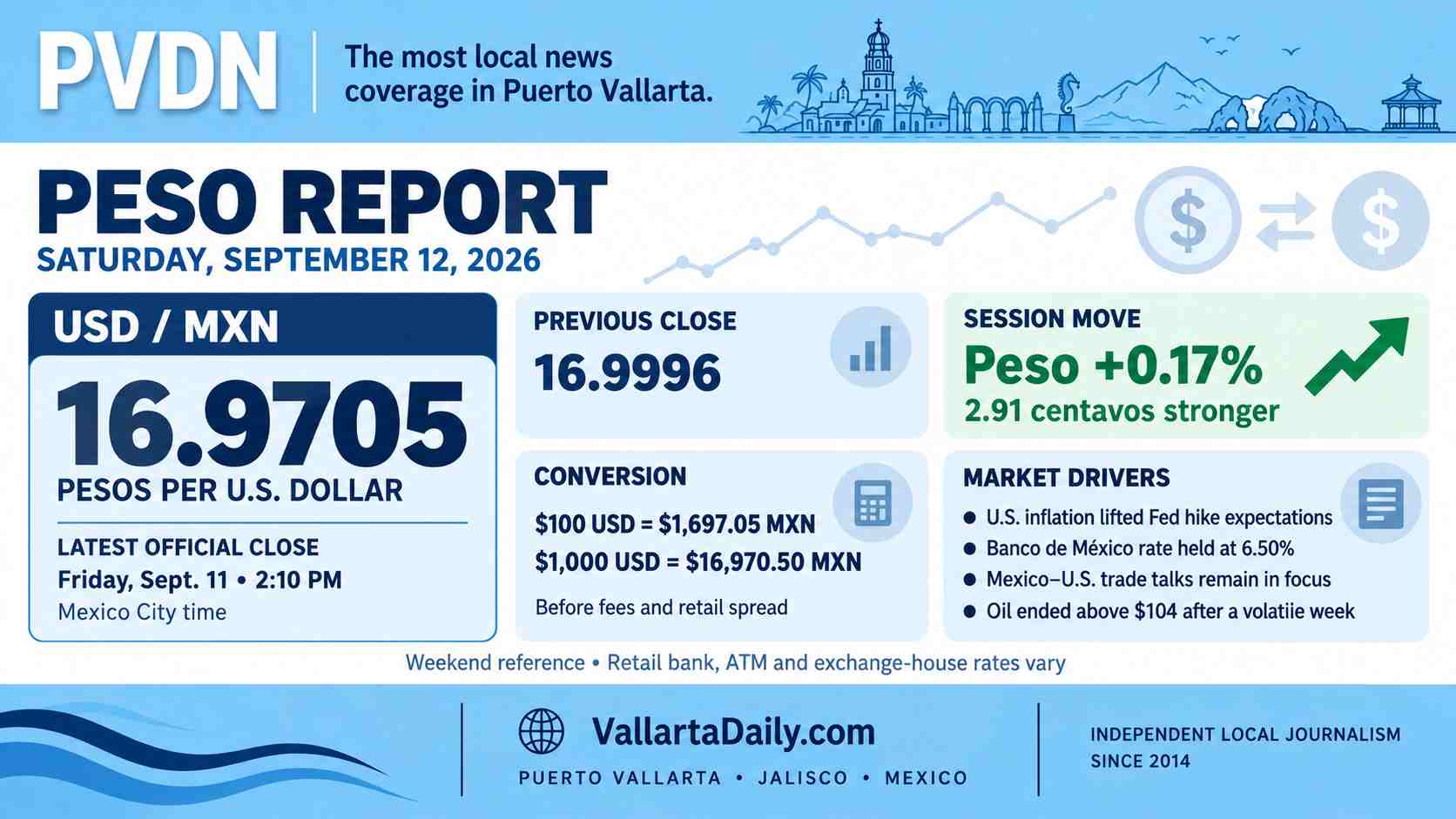
The real-time market quote was 0.50% below the previous close of 17.2422. USD/MXN had traded between 17.1555 and 17.2744 during the session.
A decline in USD/MXN represents a stronger peso because fewer pesos are required to buy one dollar. The morning move recovered much of the currency’s loss after Wednesday’s Federal Reserve decision.
Peso reverses part of its post-Fed decline
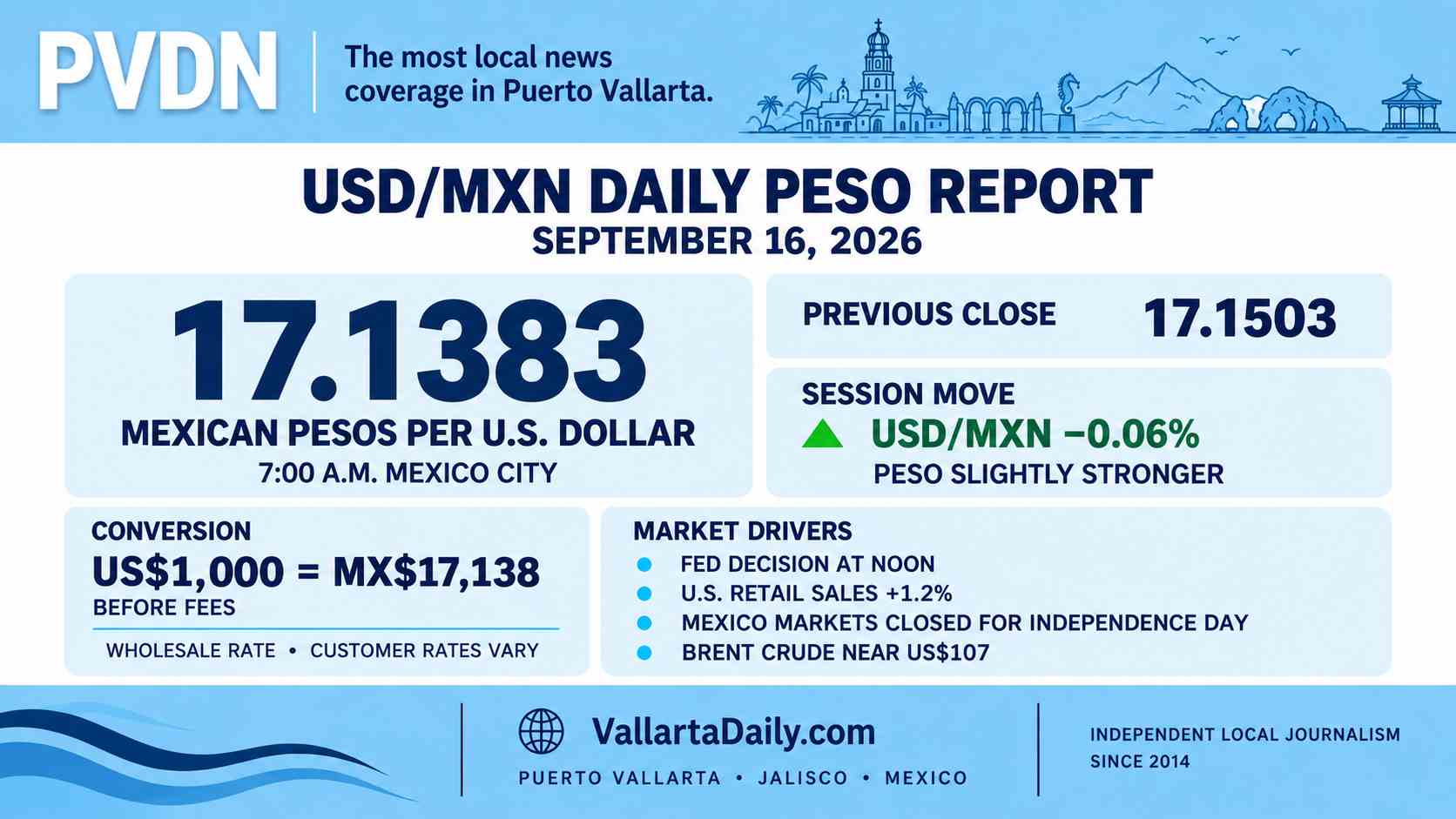
The peso weakened Wednesday after the Federal Reserve raised its benchmark rate by a quarter percentage point to a range of 3.75% to 4%. It was the Fed’s first increase since July 2023.
USD/MXN had been trading near 17.13 before the announcement and moved above 17.26 afterward. The Fed said inflation remained elevated and that the increase was intended to support a faster return to its 2% target.
New Fed projections showed that 16 of 18 policymakers expected at least one additional quarter-point increase before the end of 2026. The decision initially lifted the dollar against several currencies and pushed short-term U.S. yields higher.
Thursday’s recovery in the peso does not erase the policy shift. Higher U.S. rates reduce the yield advantage Mexico offers international investors, one factor that has supported demand for peso-denominated assets.
Oil retreat and a softer dollar shift the morning tone
The dollar eased from a seven-week high Thursday as oil prices fell and global equity futures improved. The dollar index slipped about 0.2% after briefly reaching 100.36.
Brent crude was trading near $101.66 a barrel, down almost 4%, while West Texas Intermediate fell below $100. The oil-price decline followed reports that Saudi Arabia was arranging additional shipments through Oman and making progress toward restoring damaged pipeline capacity.
Lower oil prices, falling Treasury yields and stronger U.S. stock futures coincided with the peso’s rebound. Those moves suggest improved risk appetite, although they do not establish a single cause for the currency’s gain.
Energy prices remain above levels seen before the latest Middle East escalation. Renewed supply concerns could still affect inflation expectations, interest rates and demand for the dollar.
Banxico faces a narrower interest-rate gap
Banco de México’s benchmark rate remains at 6.50%. After the Fed increase, the difference between Mexican and U.S. policy rates narrowed to between 2.50 and 2.75 percentage points.
Banxico’s next monetary-policy decision is scheduled for Sept. 24. Economists cited in a review of the changed rate gap said the Fed increase alone would not require Mexico’s central bank to raise rates by the same amount.
The board is also expected to consider the peso’s direction, capital flows, inflation expectations and Mexico’s slow economic growth. Persistent weakness in the currency would carry more weight if it were accompanied by capital leaving the country or signs that import costs were feeding into inflation.
Mexico’s proposed 2027 budget remains part of the broader market backdrop. Questions about the government’s deficit targets, economic-growth assumptions and continued support for Pemex have drawn scrutiny, but no new Mexican fiscal or trade announcement was identified as the direct trigger for Thursday morning’s currency move.
Converting dollars and pesos in Puerto Vallarta
At the reported rate of 17.1555:
- US$100 was equivalent to approximately 1,715.55 pesos.
- US$1,000 was equivalent to approximately 17,155.50 pesos.
- 10,000 pesos was equivalent to approximately US$582.90.
Compared with the previous close, someone converting US$100 at the wholesale reference rate would receive about nine fewer pesos. The difference is small for routine spending but becomes more noticeable across rent, property payments, payroll, or larger transfers.
Residents earning dollars and paying expenses in pesos receive slightly less purchasing power when the peso strengthens. People earning pesos and paying dollar-denominated bills benefit because fewer pesos are required to buy the same number of dollars.
The screen rate is not the counter rate
The 17.1555 quote is a wholesale market reference. Banks, ATMs, card issuers, transfer services and currency-exchange businesses set their own customer rates and may add fees or wider spreads.
Thursday is also the first full trading session after the Fed announcement. U.S. labor, housing and manufacturing reports on the day’s calendar could move Treasury yields and the dollar, while oil markets remain sensitive to developments in the Middle East.
The quoted rate should therefore be treated as a timestamped snapshot rather than a rate available throughout the day.