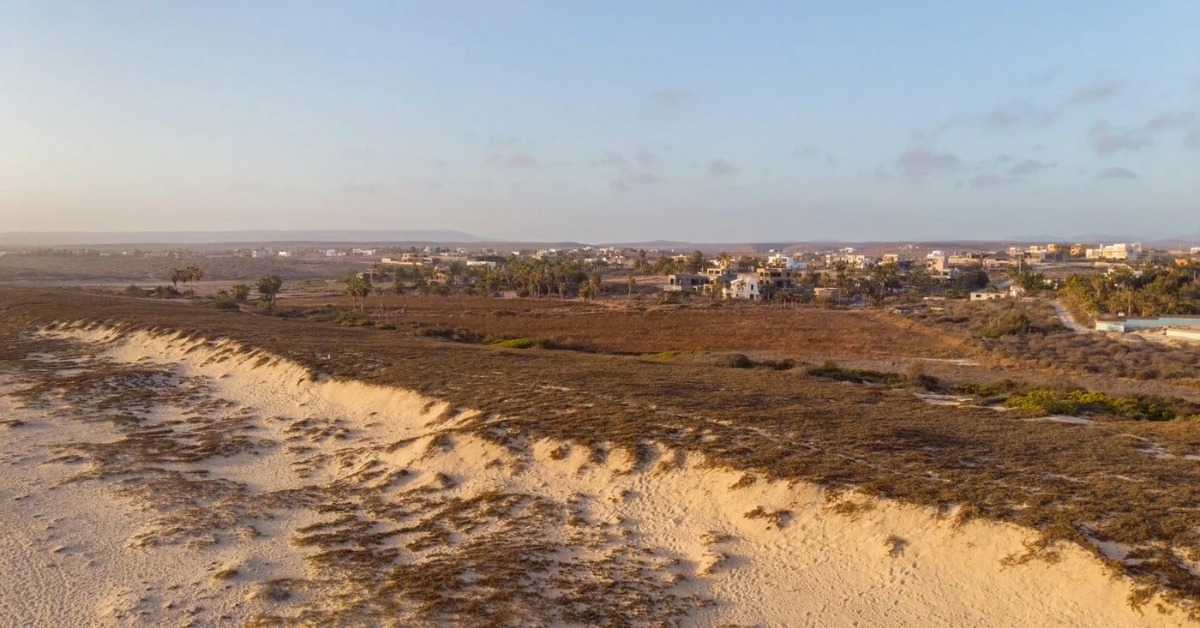
On August 21, 2025, the Baja California Sur Congress issued an exhortation urging federal environmental authorities to address more than seven citizen complaints alleging damage to the San Sebastián dune field in Todos Santos. The motion’s sponsor, Deputy Karina Olivas Parra, warned that developers are fragmenting projects and presenting them as “single-family homes” to avoid a federal environmental impact review.
Olivas framed the dunes as the first line of defense for La Paz municipality against Pacific storms, arguing they store sand and help beaches recover after heavy surf—functions activists say are being compromised by grading, pours, and access cuts.
Community groups have been pressing for action since early summer, confronting trucks and filing complaints while asking Profepa—the federal environmental prosecutor—to step in with inspections and, if warranted, safety measures and sanctions. Their demands include a formal working table with federal and local agencies to keep construction off active dunes from Todos Santos to Las Playitas.
The campaign is not occurring in a vacuum. Just weeks earlier, Profepa shut down an unpermitted construction site in the Todos Santos coastal ecosystem, citing the absence of a federal environmental impact authorization (MIA). Authorities described a multi-level build underway without the proper federal paperwork. That closure followed a preliminary inspection in late May.
Mexico’s General Law of Ecological Equilibrium and Environmental Protection (LGEEPA) defines coastal ecosystems to include beaches and coastal dunes. Works that may affect these ecosystems typically require a federal impact authorization from SEMARNAT. Courts and regulators have repeatedly affirmed that standard.
Separately, the Zofemat—the federal strip of land contiguous to the beach—is legally 20 meters wide, measured from the highest tide. Activities there are federally regulated, and illegal occupation or modification is a common violation in tourist corridors.
Why the dunes matter, beyond scenery
Scientists describe coastal dunes as living infrastructure: they absorb storm energy, store sand that nourishes beaches, filter rainwater, and host specialized plants and wildlife. When leveled or cut by access routes, those services degrade, lowering a coastline’s ability to rebound after extreme surf and storms.
In Baja California Sur, researchers and advocates say the stakes are high. Local reporting cites a recent diagnosis estimating the state holds 27.4% of Mexico’s coastal dunes, with heavy impacts already recorded in nearby Cerritos and Pescadero, and measurable losses around Todos Santos. Those figures have been used to argue for integrating dunes into urban-planning instruments, not just environmental law.
The friction point, according to residents and lawmakers, is project fragmentation: presenting multiple commercial units as separate “single homes” to dodge cumulative impact analysis under federal review. That allegation has surfaced repeatedly in Todos Santos over the past decade and is once again at the center of the current complaints. The June shutdown in the coastal ecosystem adds weight to calls for stricter scrutiny now.
Profepa’s own materials flag dune alteration and illegal Zofemat occupation as recurrent risks in tourist development, underscoring why early inspections—and swift closures where needed—matter.
The public exhortation gives Profepa and Semarnat a clear political signal: the Todos Santos dunes are under scrutiny, and inaction will be visible. Recent closures show the agencies can move when inspections find violations; the question now is consistency—and whether deterrence arrives before more sand is scraped away.