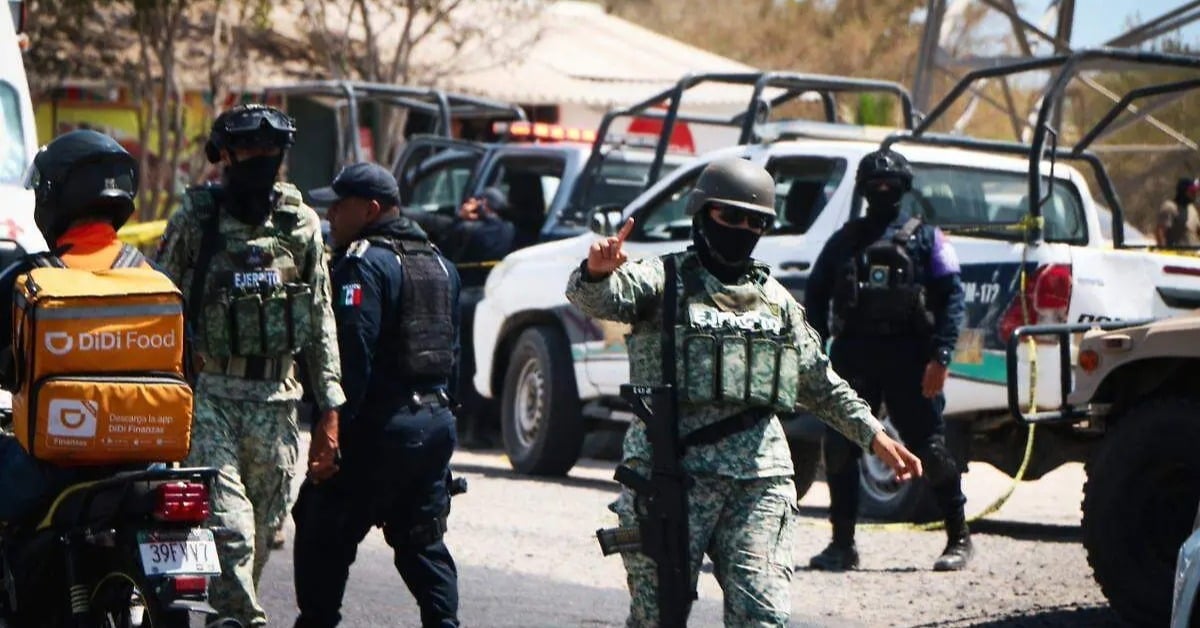
Los Cabos still looks safer than many Mexican cities in national perception data, but one number should concern local officials. Residents gave the municipal government one of the country’s lowest marks for solving major city problems. At the same time, fear of insecurity has risen sharply compared with last year. For a destination built on confidence, tourism, and daily quality of life, the gap between a relatively low insecurity rate and weak trust in government response is becoming harder to ignore.
Los Cabos gets low marks on local public safety confidence
Los Cabos has been placed among Mexico’s lowest-rated urban areas for government effectiveness, according to the latest national public-safety perception survey.
The concern is not only whether residents feel unsafe. It is also whether they believe local government can solve the problems affecting daily life. On that measure, Los Cabos scored near the bottom of the national table.
Only 16.3% of adults surveyed said the government in their city was very or somewhat effective at solving the most important local problems. That placed Los Cabos behind almost every other city measured in the survey.
The two lower-rated cities were Cuautitlán Izcalli, at 14.8%, and Ciudad Obregón, at 15.4%.
The data come from the National Urban Public Security Survey, known as ENSU. The survey is conducted quarterly by Mexico’s national statistics agency and measures adults’ perceptions of public safety in their city.
What the numbers show for Los Cabos
The latest survey found that 34.7% of adults in Los Cabos considered it unsafe to live in the city in March 2026.
That number is well below the national urban average of 61.5%, meaning Los Cabos still ranks lower in perceived insecurity than many Mexican cities.
But the longer-term trend is more concerning. In March 2025, only 24.7% of adults in Los Cabos said they felt unsafe. By March 2026, that had climbed to 34.7%.
That year-over-year increase was marked as statistically significant in the survey.
There is one important distinction in the data. The official table does not show a rise from December 2025 to March 2026. It shows Los Cabos moving from 39.0% in December 2025 to 34.7% in March 2026.
That means the local story is not a simple quarter-to-quarter spike. It is a broader deterioration compared with the same period last year.
Why perception matters in a destination city
Public-safety perception is not the same as crime statistics. It does not prove that crime rose or fell during the same period.
Instead, it measures how people feel about their surroundings, their routines, and the authorities’ responses.
That matters in Los Cabos because the municipality depends heavily on confidence. Residents need to feel safe in neighborhoods, public spaces, roads, and commercial areas. Visitors also make decisions based on reputation, even when they never read a full crime report.
Los Cabos is also not one single urban experience. The ENSU measurement for Los Cabos includes the urban area of San José del Cabo and Cabo San Lucas. Those communities have different daily rhythms, different tourism pressures, and different local concerns.
For many residents, security is tied to ordinary routines. It affects whether people walk at night, carry valuables, allow children to move around freely, or trust police when they need help.
A low score for solving city problems
The government-effectiveness score is broader than policing alone. It asks residents whether their city government is effective at solving the community’s main problems.
Those problems can include crime, public lighting, streets, water service, transport, drainage, and neighborhood conditions.
Still, the score is relevant to public safety because insecurity rarely exists in isolation. Poor lighting, damaged streets, neglected public spaces, and weak municipal services can all shape how safe people feel.
Nationally, 32.3% of adults said their city government was very or somewhat effective at solving major problems. Los Cabos came in at about half that level.
That is the clearest warning sign in the survey. The municipality does not only face concerns about safety. It also faces a public-confidence problem in how local issues are handled.
Los Cabos compared with La Paz and the national picture
Baja California Sur showed mixed signals in the survey.
In La Paz, perceived insecurity reached 46.6% in March 2026. That was higher than Los Cabos and also marked a significant rise compared with March 2025.
Los Cabos remained below La Paz and well below the national average. Even so, both of the state’s measured urban areas showed higher levels of perceived insecurity than a year earlier.
Across Mexico, 61.5% of adults in the 91 measured urban areas said they considered their city unsafe. Women reported higher insecurity than men, with 67.2% of women and 54.6% of men saying they felt unsafe in their city.
The survey also found that public spaces remain central to how people judge safety. Nationally, residents felt most unsafe at public ATMs, in the street, on public transportation, and on highways.
For Los Cabos, those findings point to a familiar challenge. Public safety is not only about violent crime. It is also about whether people feel comfortable moving through the city.
The gap between residents and tourists
Los Cabos often receives strong marks from visitors. Tourism surveys have shown high satisfaction with the destination and generally positive visitor perceptions of safety.
That does not cancel out the resident experience.
Tourists often stay in controlled areas, move along known corridors, and interact with the destination for a short period. Residents deal with road conditions, neighborhood services, police response, lighting, traffic, water issues, and daily public spaces.
This gap matters because both realities can be true. A visitor may feel safe during a beach vacation, while a local resident may feel that the city government is not responding well to everyday problems.
For a destination with heavy international attention, local confidence is part of the tourism product. It is also part of the basic quality of life.
What officials will need to address
The survey does not prescribe policy. It does, however, identify a trust problem that local officials cannot solve with tourism promotion alone.
For Los Cabos, the challenge is to show visible results in areas residents can measure in daily life. That includes police presence, response times, street lighting, safer public spaces, and basic urban maintenance.
The low government-effectiveness score suggests residents are not yet seeing enough improvement, or they do not believe actions are reaching the problems they face.
That perception can harden over time. Once residents lose confidence in local response, it becomes harder for officials to regain trust, even when individual indicators improve.
The next ENSU release will show whether March was part of a longer pattern or a temporary warning sign.
For now, Los Cabos remains below Mexico’s national average for perceived insecurity. But its weak score on government effectiveness shows that public confidence is a separate problem, and one that may shape how residents judge security in the months ahead.