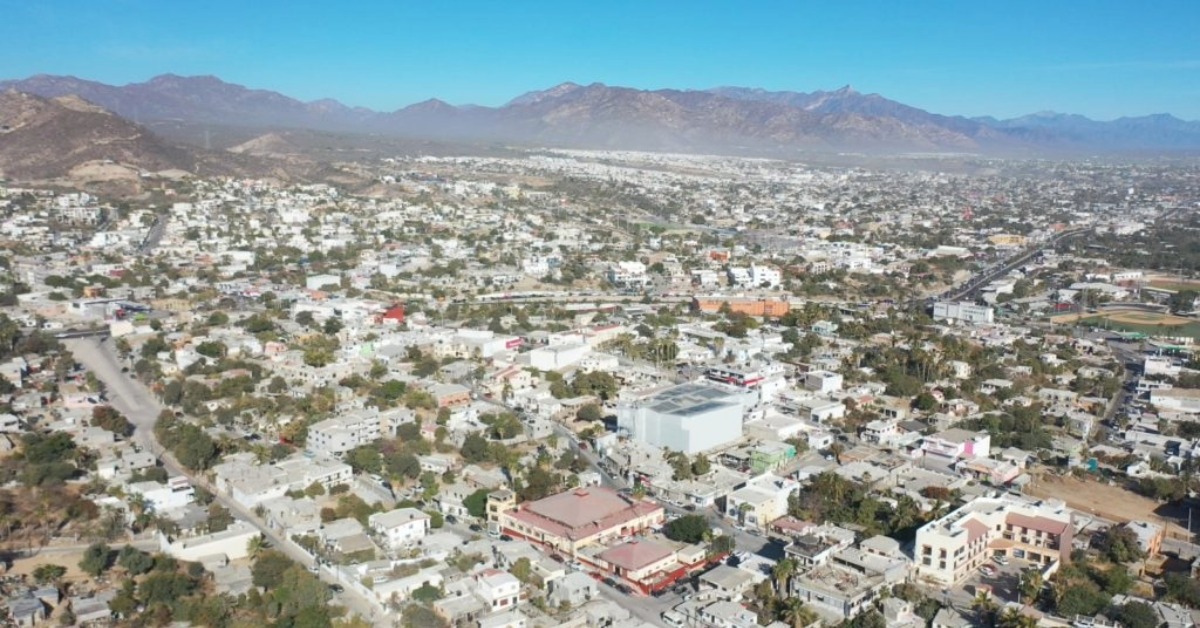
More than 50 investment projects in Baja California Sur are reportedly stalled because of limits in the state’s electrical supply, with Los Cabos among the main pressure points.
The projects are concentrated mainly in Los Cabos and La Paz, where business growth has outpaced the power infrastructure needed to support it. The affected projects include restaurant-sector investment, but the concern reaches across several business lines tied to tourism, services, housing, and local employment.
Business representatives are expected to present proposals to federal economic officials on April 29. The proposals include input from specialists at the Autonomous University of Baja California Sur and the Northwest Biological Research Center. The goal is to identify technical options that could help the state expand or stabilize its electricity supply.
The warning comes at a sensitive time for Los Cabos. The destination continues to attract tourism, real estate projects, restaurants, and service businesses. But growth needs power before it can become jobs, permits, leases, or openings.
Why Baja California Sur has a power problem
Baja California Sur faces a structural challenge that many readers outside Mexico may not be aware of. Much of the state’s electricity system operates as an isolated grid, rather than being fully tied into Mexico’s larger national power network.
That matters because an isolated grid has fewer backup options when demand rises or generation falls short. In a fast-growing area like Los Cabos, that can turn summer demand into a business risk.
Federal reliability data has already identified summer capacity challenges in the Baja California Sur system. In 2024, emergency mobile generation was used under a corrective protocol to reduce the risk of outages and reserve shortages. That does not mean the system is failing every day. It does show that the margin for growth is tight.
For residents, the issue can show up as anxiety about blackouts, service reliability, or the pace of new development. For investors, it can mean delays before a project receives the electricity capacity it needs.
What is being proposed
The April 29 meeting is expected to focus on strengthening the state’s power infrastructure and keeping investment from leaving Baja California Sur.
The private sector’s immediate concern is practical. Projects cannot move forward without power. That affects restaurants, commercial spaces, hotels, housing-related services, and other businesses that depend on stable electricity.
Academic participation could help shape proposals beyond short-term fixes. Baja California Sur has strong potential for sun and wind, and research capacity. But adding a new generation is only part of the challenge. The state also needs enough transmission and distribution capacity to move electricity where it is needed.
That is why the issue cannot be solved only by announcing a new investment. The question is whether the grid can connect, deliver, and sustain the added load.
The Los Cabos power plant plan
One federal project already on the table is a 240-megawatt internal combustion power plant planned for Los Cabos. The project has been described as part of a broader effort to strengthen the region’s electricity supply.
Local government information has described the plant as having 13 dual-system generating units, with an estimated investment of 272 million dollars and 800 direct jobs. The project is intended to help meet electricity demand linked to population growth in Los Cabos.
The plant has also entered the environmental review process. The project site has been described as nearly 20 hectares, with a large portion requiring land-use change in desert scrub habitat. Environmental documentation has identified flora and fauna that would need management or relocation if the project advances.
That makes the plant part of a larger debate. Los Cabos needs power to support its economy. But new infrastructure must also move through environmental review and public scrutiny.
Why this matters to foreign residents
For foreign residents in Los Cabos, the issue is not only about large investors. Power constraints can affect daily life in quieter ways.
When infrastructure falls behind growth, the cost usually spreads. Business openings are delayed. Commercial rents can remain high. Housing and service projects may take longer. Restaurants and small businesses may face higher operating risks. Residents may also see more pressure on water, roads, and public services tied to the same growth pattern.
Los Cabos has already faced concerns over water supply, housing pressure, and land availability. Electricity now sits in the same category of basic infrastructure that determines how much growth the region can realistically absorb.
The central question is not whether Los Cabos will continue growing. It almost certainly will. The question is whether public infrastructure can keep pace with private investment.
What happens next
The next step is the federal economic meeting scheduled for April 29. Business leaders are seeking a route that allows stalled investments to move forward without losing projects to other states.
The larger test will be whether the proposals lead to funded projects, permits, grid upgrades, or faster coordination between agencies. For now, more than 50 projects remain on hold, and Los Cabos is facing a familiar problem for fast-growing destinations.
Demand is not the obstacle. Infrastructure is.