Luchatrans Project
Trans wrestlers have long been sidelined in a sport steeped in machismo. In Mexico City, Luchatrans Project set out to change that by uniting the spectacle of lucha libre with the energy of ballroom culture. The project’s founder, the trans wrestler Estrella Divina, frames it as both sport and safe space. It is a card, a community, and a statement.
Divina says the idea grew from necessity. She describes wrestling as a world where trans identities were ignored or mocked, and where even speaking about being a trans woman could cost you bookings or safety. Her goal: make a ring where trans athletes and allies can compete, perform, and be seen without apology.
The cancellation and the comeback
This summer, the project ran into a wall. The “LuchaTrans 3” show was canceled at Coliseo Morelos after organizers said a local figure—identified by them as “Príncipe de Seda”—made transphobic remarks. ANADE LGBTQ+, a national LGBT sports association, publicly denounced the cancellation as discrimination.
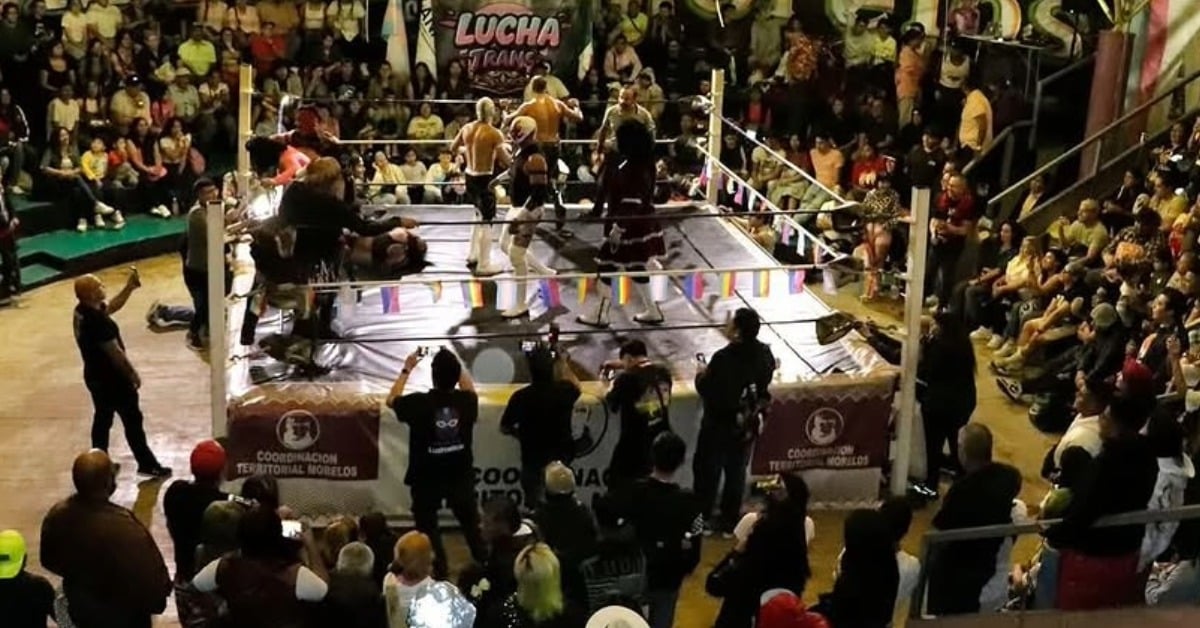
What happened next mattered. With ANADE’s support and help from the Venustiano Carranza mayor’s office, the event went ahead on August 9 at the same venue. A free program, it paired afternoon ballroom activities with an evening wrestling card, drawing fans from the neighborhood and beyond. The night was more than a show. It was proof of concept.
Ballroom meets lucha libre
LuchaTrans isn’t just entrances and finishes. It leans into ballroom’s language of pose, precision, and chosen-family courage. Voguing shares the stage with armdrags and tope suicidas. That blend turns the ring into a runway for stories often kept out of sports. It’s a celebration, but it’s also strategy—meeting audiences where delight can soften resistance.
For Divina, the “exótico” tradition—camp performance that has long existed in lucha—opens a door, but it isn’t the destination. Exóticos entertained, sometimes by playing stereotypes. LuchaTrans asks for something different: complexity, respect, and athletic room to breathe.
Why visibility in the ring matters
Visibility changes who shows up and who stays. By staging a full trans-led card, LuchaTrans shows fans—and younger athletes—that there is space in Mexican wrestling to compete as yourself. Coverage by national outlets and public-interest media has amplified that message well beyond the neighborhood where the show ran. The symbolism is clear: if a trans-led event can reclaim a ring after a cancellation, others can claim space in gyms, leagues, and federations, too.
What comes next
A single night won’t fix a sport’s culture. But it builds muscle memory. ANADE says it exists to carve out safe arenas for LGBT athletes. LuchaTrans has now shown it can survive pushback, organize allies, and fill seats. That is a platform to grow from—whether through more cards, training pipelines, or partnerships that keep the turnstiles clicking and the doors open.