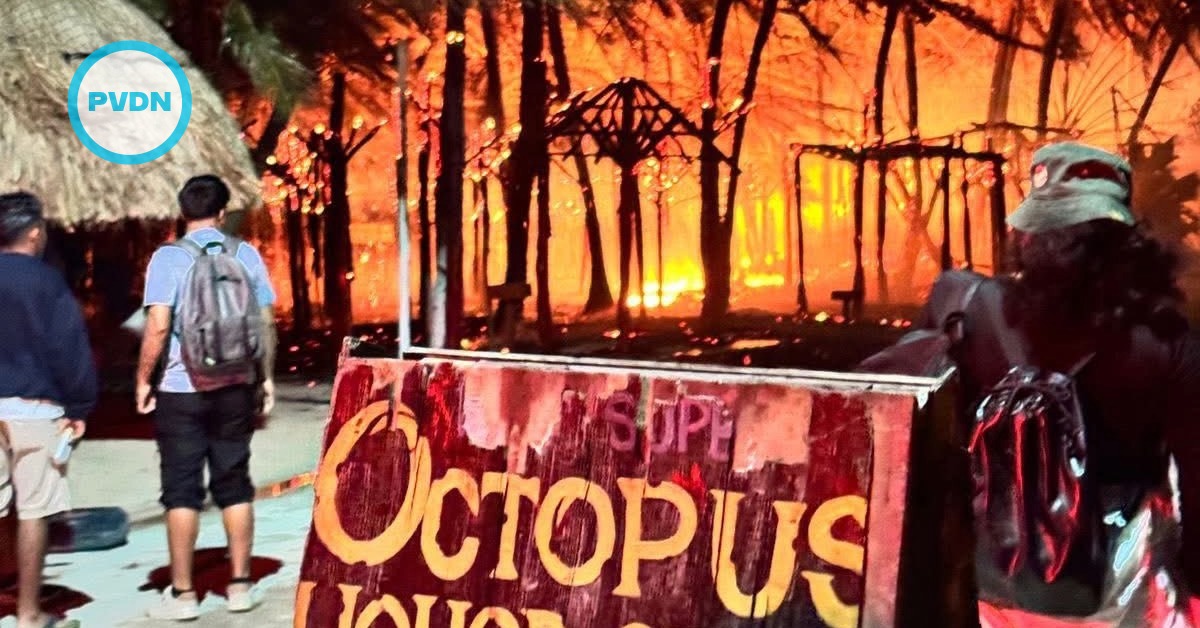
Suspected arson in Mahahual destroyed about 250 beach palapas before dawn. A man was arrested as merchants press for a full probe.
Christmas morning came with smoke instead of shade on Mahahual’s shoreline. Before dawn, a fast-moving blaze tore through the palm-thatched palapas that define the town’s beachfront businesses. Authorities say they arrested a man within hours, yet residents and merchants are still demanding answers about motive and whether anyone else played a role. For visitors and expats who know Mahahual as an easy, laid-back escape, the real question now is what reopens first—and what changes after.
A pre-dawn fire tears through Mahahual’s beachfront
The Mahahual palapa fire broke out before sunrise on December 25, turning a stretch of beachfront commerce into a moving line of flames. Authorities said the fire started at a restaurant and beach club area and then spread rapidly along the shore where many palapas sit close together.
Palapas are more than decoration in Mahahual. They are the palm-thatch roofs and shade structures that anchor beach restaurants, massage spots, and artisan stands. When they burn, it is not just a rebuild of wood and palm. It is lost inventory, damaged equipment, and days or weeks without income during one of the busiest travel periods of the year.
Witness accounts described a chaotic, improvised response in the first moments. Neighbors and workers tried to slow the fire with buckets and whatever containers they could find while firefighters worked to contain the blaze. Authorities said there were no reported injuries, but the damage on the ground was extensive.
Early estimates of the number of destroyed palapas varied as the fire scene came into focus. Municipal-level reports initially pointed to dozens burned in a concentrated area. Later statements from state investigators put the total damage at roughly 250 palapas, with harm extending beyond a single business.
Why authorities suspect arson
State investigators said the fire was intentionally set, and they announced the arrest of a man identified as Miguel Ángel “N.” In Mexico, authorities often use a first name and initial to avoid fully identifying suspects during legal proceedings.
Investigators said the suspect approached one palapa and set it on fire, and that the flames spread quickly because of the materials and conditions along the beach. They said he was taken into custody and placed at the disposal of the public prosecutor as the case file is built and his legal situation is determined.
For locals, the arrest is not the end of the story. Merchants and residents have demanded a deeper investigation that goes beyond the first spark. They want clarity on motive, possible accomplices, and whether the area’s security and emergency response were adequate for a town packed with flammable beachfront structures.
That demand matters because Mahahual is not a large city with layers of redundancy. It is a place where a single disaster can hit dozens of families at once, especially those whose work depends on daily foot traffic from tourists and cruise passengers.
What the town is left to rebuild
In the days after, the visible losses are easy to name: collapsed thatch, warped beams, scorched furniture, and blackened sand near the businesses that line the shore. The harder rebuild is economic. Many beachfront workers earn by the day, and small operators often rely on peak-season cash flow to carry them through slower months.
For expats living in Quintana Roo, or those who make Mahahual part of their regular loop, this is also a reminder of how quickly “normal” can flip in coastal towns built for outdoor living. Palapas feel timeless, but they are vulnerable by design. They are meant to breathe in heat and shade people from sun, not resist a deliberate ignition at three in the morning.
Authorities have not laid out a public timeline for the investigation beyond the detention and ongoing casework. Residents are watching for that next step, not just to assign blame, but to understand what protections might follow. The immediate goal is reopening. The longer one is confidence—among business owners, workers, and visitors—that what happened on Christmas morning will not repeat itself.