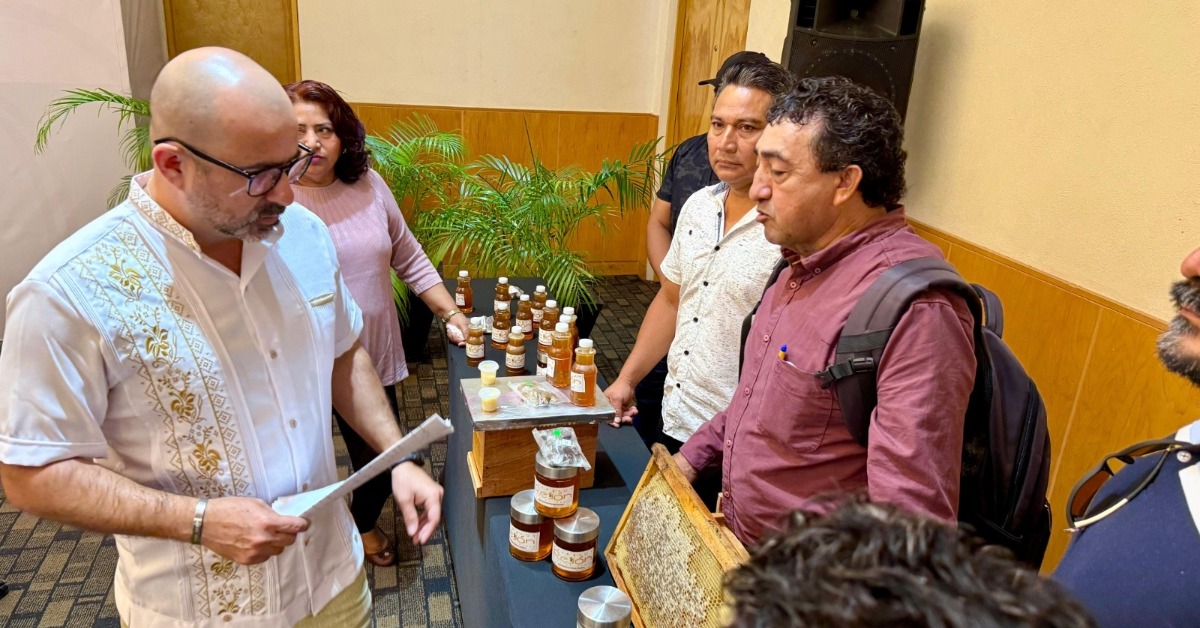
Quintana Roo’s honey sector is getting attention beyond Mexico, with officials pointing to European demand for organic honey from the Yucatán Peninsula. Behind the export story is a smaller, older tradition: melipona honey, produced by stingless bees long associated with Maya communities. New figures show thousands of hives, hundreds of registered producers, and a recent official recognition meant to protect one of the region’s most specific honey traditions.
Quintana Roo honey draws attention in Europe
Quintana Roo is using World Bee Day to point to the state’s honey production and its link to Maya communities in the south and center of the state.
State figures list 2,727.80 tons of honey produced in 2023 from 54,613 hives. The state also reports 846 registered beekeepers with official hive marks.
Much of the activity is tied to rural areas, including Felipe Carrillo Puerto, José María Morelos, and Bacalar. Those municipalities are among the places most associated with the state’s apiculture work.
Officials say organic honey from the Yucatán Peninsula continues to see demand in Europe. That gives Quintana Roo’s producers a place in a wider regional market already known for honey exports.
Melipona honey gets protected status
The smaller part of the story is meliponiculture, the keeping of stingless melipona bees.
Quintana Roo reports 175 melipona producers and 3,264 melipona hives. Annual melipona honey production is listed at 2,772.10 liters.
The honey is produced by stingless bees, mainly Melipona beecheii, known locally as xunán kab. The practice is connected to Maya communities and traditional methods of production.
In 2026, the Mexican Institute of Industrial Property granted protection to the Miel de Abeja Melipona del Corredor de la Zona Maya de Quintana Roo as a geographic indication. The protected area covers Felipe Carrillo Puerto, José María Morelos, and Tulum.
The recognition is meant to protect the product’s name, origin, and production rules. It also sets conditions for who may use the protected indication.
State law also covers bee protection
Quintana Roo’s apiculture law includes measures to protect bees, train producers, promote pollination, and support organic honey production.
A 2023 reform also declared May 20 the state day for the melipona bee, also known as the sacred Maya bee. That date matches World Bee Day, observed internationally each May 20.
For producers, the legal and commercial pieces are now moving together. Traditional honey production, organic markets, and official protection are becoming part of the same conversation.
The next test is whether those recognitions translate into better market access for small producers, especially in Maya communities where melipona honey remains a low-volume product.