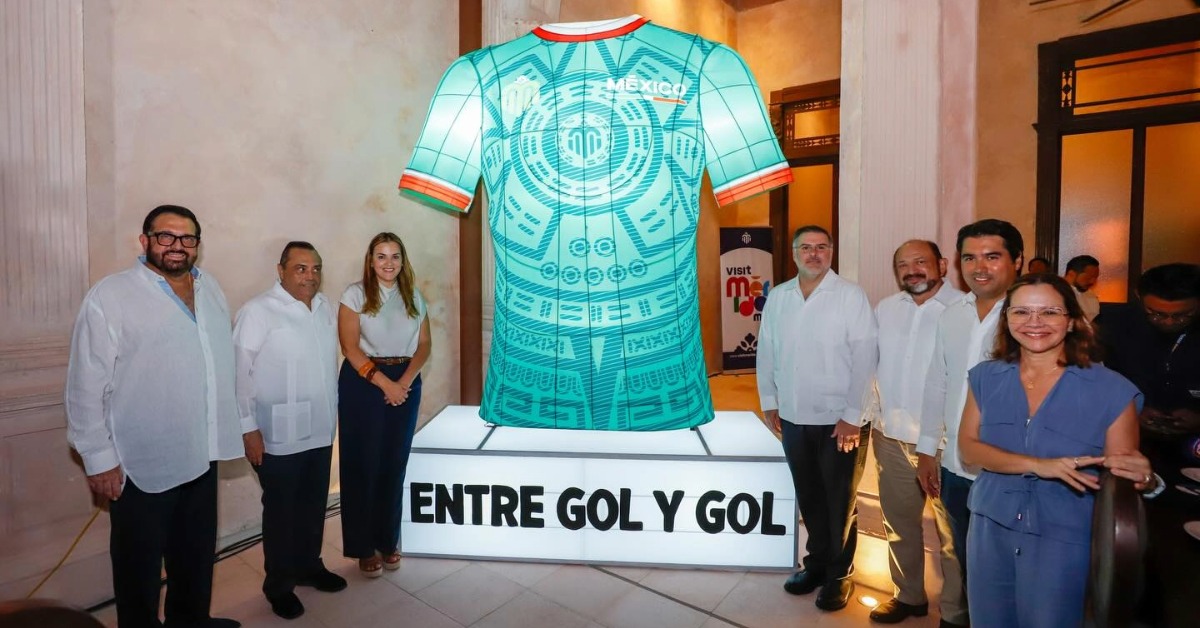
Mérida has launched “Mérida entre gol y gol”, a campaign built around a simple idea. If millions of people travel through North America for the 2026 FIFA World Cup, some of them may be persuaded to spend extra days in Yucatán.
City officials presented the plan this week as part of a broader effort to market Mérida as more than a quick side trip. The target is ambitious. The city says it wants to attract up to 200,000 visitors during the tournament by offering public screenings, cultural programming, food experiences, and tourism partnerships designed to turn match gaps into vacation days.
That matters because Mérida is not one of Mexico’s host cities. The World Cup itself will be staged across Canada, Mexico, and the United States, with Mexican matches spread across Mexico City, Guadalajara, and Monterrey. For Mérida, the opportunity is not inside a stadium. It is in the movement of fans before games, after games, and between host cities.
Why a non-host city thinks this can work
The phrase “entre gol y gol” translates loosely to “between one goal and the next,” but the real pitch is broader. Officials are trying to sell Mérida as a comfortable stop between match days, not just a place to watch football on a screen.
That approach reflects how major sporting events often work outside the main venues. Host cities capture the direct spending tied to tickets, stadium transport, and matchday crowds. Nearby or well-connected destinations chase the spillover. They try to attract visitors seeking beaches, heritage, food, nightlife, or a quieter base away from the largest crowds.
Mérida’s argument is that it can offer those things without asking travelers to give up access to the tournament. Local officials have tied the campaign to the city’s air connectivity, its tourism infrastructure, and its reputation for safety and cultural appeal. In practical terms, the city is betting that some travelers will want a different pace between games and that Yucatán can fill that gap.
What the campaign includes
The campaign is not limited to advertising. Officials say the plan includes public screenings in central gathering points such as Plaza Grande, along with broadcasts in neighborhoods and outlying communities. The aim is to create a citywide World Cup atmosphere instead of concentrating activity in a single tourist zone.
The strategy also folds in cultural activations, gastronomic routes, and sports programming that extend beyond the matches themselves. That is an important detail. Mérida is not trying to compete with a stadium city on football alone. It is trying to package football with everything else people already travel to Yucatán to experience.
The municipal push also fits into a broader city agenda for 2026 and 2027 that links the World Cup moment to year-round events. That gives the plan a longer runway. If it works, the city can use the tournament as a marketing platform for future travel, not only for a few weeks of visitor spending in June and July.
The business case behind the message
For local businesses, the appeal is obvious. More visitors during the World Cup could mean fuller hotels, busier restaurants, more airport traffic, and stronger demand for tours, transfers, and short-stay experiences.
Hotel leaders in Yucatán say they are preparing promotional packages aimed at travelers who may want to stay several days in Mérida before or after attending matches elsewhere in Mexico. According to local hotel industry figures cited during the rollout, the state has more than 17,000 hotel rooms, and the sector is expected to see occupancy near 70 percent during the tournament period.
Those numbers should be read as goals and planning assumptions, not guarantees. The city’s target of up to 200,000 visitors is also an aspiration, not a booked count. Even so, the campaign shows how seriously local officials and business groups are treating the World Cup as an economic opportunity.
What international readers should understand
For readers outside Mexico, the key point is that this is not a host-city construction story. It is a tourism strategy story. Mérida is trying to turn a global sports event into a regional travel opportunity.
That distinction matters because the 2026 tournament will be unusually large. It will run from June 11 to July 19, 2026, include 104 matches, and span 16 cities across three countries. That scale creates room for secondary destinations to compete for attention. Some will market beaches. Some will market events. Mérida is marketing a broader cultural experience centered on its historic center, food scene, and established visitor economy.
For foreigners who live in Mexico or travel here often, the campaign is also a reminder of how the World Cup may reshape travel patterns well beyond the official venues. Even cities without matches are already positioning themselves for added demand, heavier domestic travel, and new promotional alliances.
The real test comes next
The rollout gives Mérida a clear narrative, but the harder part starts now. A campaign only works if it converts attention into nights booked, meals sold, and visitors who decide the detour is worth it.
That will depend on pricing, air access, package design, marketing reach, and timing. It will also depend on whether travelers see Mérida as easy to combine with World Cup plans rather than as an extra leg that complicates them.
Still, the city’s move is easy to understand. When a mega-event lands in your country, waiting for benefits to arrive on their own is risky. Mérida has decided to chase them directly. The next year will show whether “Mérida entre gol y gol” becomes a smart tourism play or simply an ambitious slogan attached to the biggest football tournament on the calendar.