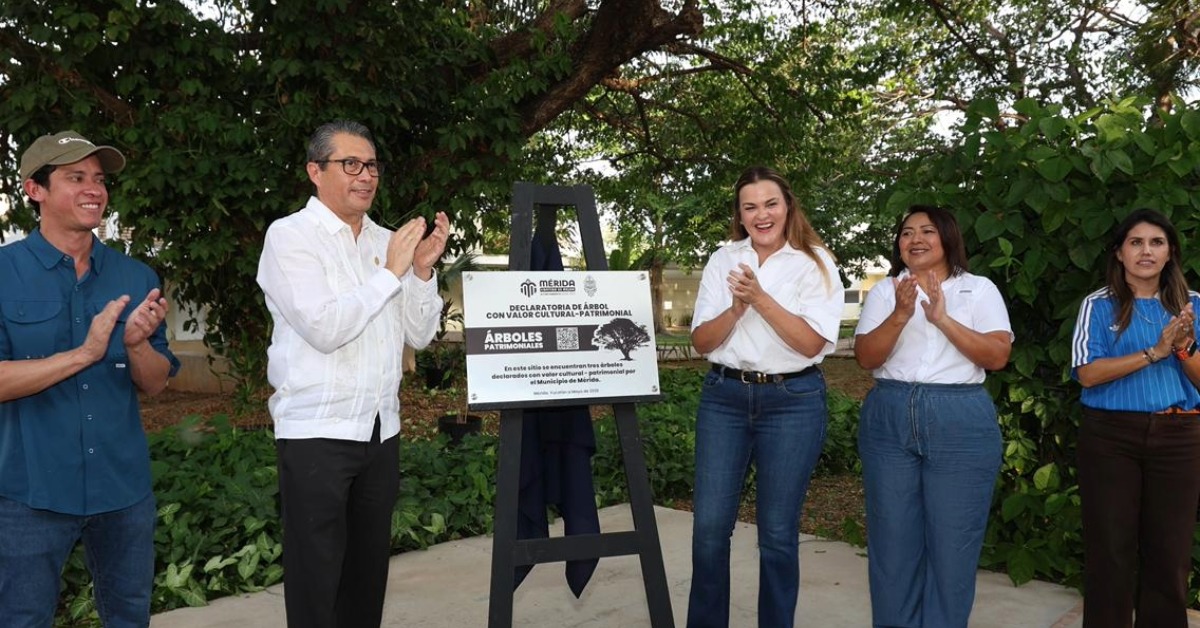
Mérida has added more trees to its Green Heritage Trees program, bringing the citywide total to 174 protected specimens. The latest additions are on the UADY campus and include a ceiba and two black algarrobos. City officials are also tying the program to broader efforts around reforestation, green corridors, and public participation. For residents, the move is part of a wider conversation about shade, heat, and how Mérida grows without losing the natural features that help define daily life.
Mérida adds more protected heritage trees under city program
Mérida’s Green Heritage Trees program has reached 174 protected specimens after three more trees were added at the Universidad Autónoma de Yucatán campus.
The new declarations include one ceiba and two black algarrobos on the university’s Central Administration Campus, located in eastern Mérida. The ceiba, listed as Ceiba pentandra, stands about 23 meters tall. The two black algarrobos, listed as Samanea saman, provide shade and habitat for birds and climbing plants.
One of the algarrobos is about 35 years old, according to information released with the declaration. The trees are now part of a municipal program that identifies specimens with cultural, environmental, or landscape value.
A tree program tied to Mérida’s identity
The heritage-tree program does more than mark individual trees. It gives selected specimens public recognition as part of the city’s natural and cultural landscape.
In Mérida, that distinction carries added meaning because many long-standing trees are part of neighborhood memory. They shade sidewalks, campuses, parks, and public spaces. They also help residents recognize places that have changed around them.
The inclusion of a ceiba is especially notable. The tree has long cultural importance in the Maya world and remains one of the most recognized native species in the region. Its protection on a university campus connects environmental planning with education and public awareness.
The latest declarations also show how the program is expanding beyond parks and historic streets. Campuses, public institutions, and other shared spaces can become part of the same protection effort.
Green corridors and reforestation remain part of the plan
City officials have linked the heritage-tree program with other environmental projects across Mérida. Those include the Ciudad Caucel Green Corridor, the planned Brisas Green Corridor, and citizen tree-adoption efforts.
The municipality reported that the “Una familia, un árbol” program has reached 47,474 adopted trees. More than 5,000 people have also made donations connected to the Cuxtal Ecological Reserve.
Mérida is also preparing for its 2026 Forest Crusade, aiming to plant 8,500 trees over 18 days. The effort is expected to include more than 3,500 volunteers.
For residents, these programs are not only about appearance. Shade, walkability, and green space affect daily routines in a city where heat is part of life for much of the year.
Tree protection meets a growing-city challenge
Mérida has expanded quickly in recent years, and that growth has increased attention on trees, land use, and heat. Studies on the metropolitan area have pointed to rising land-surface temperatures as the urban footprint has grown.
That makes tree protection both a practical and a cultural issue. Mature trees cannot be replaced quickly once they are removed. Even new planting programs take years for young trees to provide the same shade and habitat.
The heritage-tree program helps identify trees that deserve special attention before they are damaged or lost. It also gives residents a clearer way to see which trees have been formally recognized.
For Mérida, the challenge is keeping tree protection connected to everyday planning. That includes streets, schools, housing areas, public parks, and commercial zones.
The latest UADY declarations add three trees to the protected list. More broadly, they point to a city treating its urban forest as part of public infrastructure, not just decoration.