A new documentary about Yucatán’s flamingos is getting free public screenings in three places tied to the birds and the film itself. “Flamingos, la vida después del meteorito” follows the Caribbean flamingo through the wetlands of northern Yucatán, using more than 700 days of filming to connect wildlife, local ecosystems, and the region’s deep geological history. The screenings bring the film back to Mérida, Celestún, and Sisal, where the story is more than something on a screen.
Free screenings bring the flamingo story back to Yucatán
Yucatán cultural officials announced three free screenings of “Flamingos, la vida después del meteorito,” a documentary centered on the Caribbean flamingo and the coastal ecosystems that support it.
The screenings will take place from May 7 to 9 in Celestún, Mérida, and Sisal, three locations closely connected to the film’s subject and production. The documentary was directed by Mexican filmmaker Lorenzo Hagerman and narrated by Julieta Venegas.
The first screening is scheduled for May 7 at 7 p.m. at the municipal dome in Celestún. The Mérida screening will follow on May 8 at 7 p.m. in the Sala Mayamax at the Gran Museo del Mundo Maya. Hagerman is expected to attend that presentation.
The final screening will be held on May 9 at 7 p.m. at the basketball court in Sisal.
A film made in the places flamingos call home
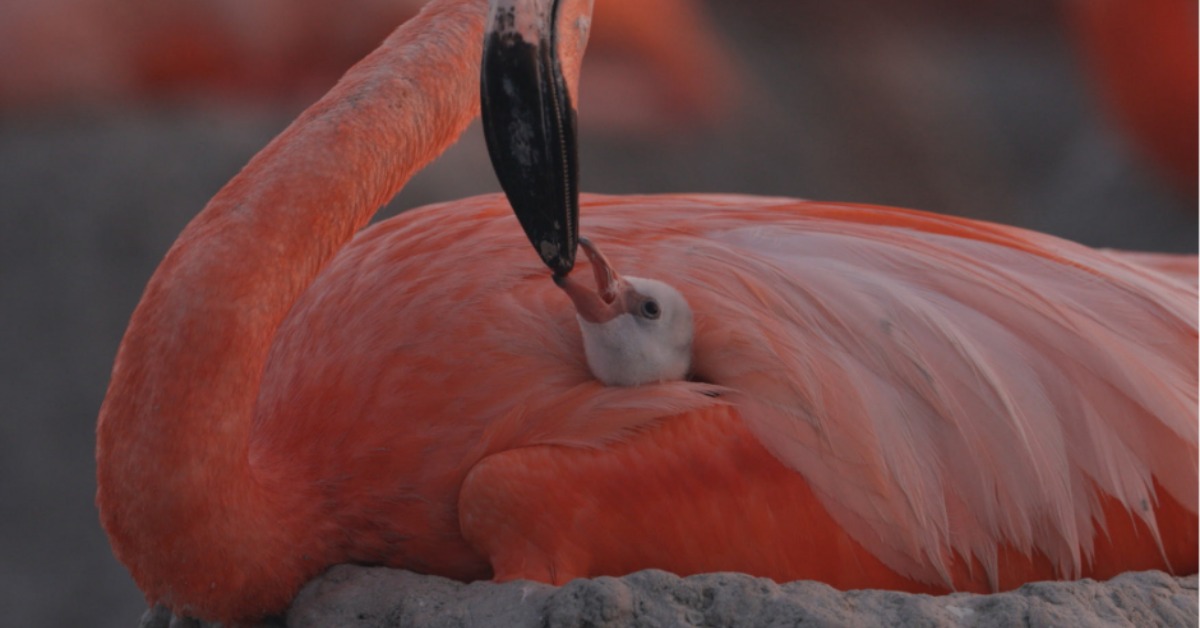
The documentary follows the life cycle of Yucatán’s flamingos, from mating and nesting to feeding, movement, and survival. Its title refers to the Chicxulub impact, the asteroid event tied to the extinction of non-bird dinosaurs about 66 million years ago.
That connection gives the film a local frame. The Chicxulub crater is centered on the Yucatán Peninsula, and modern birds are part of the surviving evolutionary line after that mass extinction.
The documentary uses that idea to tell a more grounded story about survival. Flamingos are not presented only as a tourist image or postcard symbol. The film looks at them as wildlife shaped by habitat, climate, food sources, and collective behavior.
According to information released about the project, crews spent more than 700 days observing and filming flamingos in Sisal and Celestún. That long production period is part of what gives the documentary its close look at the birds’ daily lives.
The film also includes a script by Spanish poet Ajo Martín and original music by Bryce Dessner, known for his work with The National and in film composition.
The ecosystems behind the pink birds
For many international residents and visitors, flamingos are one of Yucatán’s most recognizable natural sights. But their presence depends on a narrow set of conditions found in the state’s wetlands, mangroves, estuaries, and shallow coastal waters.
The Ría Celestún Biosphere Reserve is one of the best-known areas for flamingo viewing in Yucatán. It forms part of a wider wetland corridor on the western side of the peninsula, where freshwater from underground aquifers meets coastal systems.
These conditions support mangroves, dunes, lagoons, marshes, and bird habitat. The reserve is especially known for flamingos, but it also supports many resident and migratory bird species.
Sisal is tied to another important coastal area, the El Palmar State Reserve. The reserve includes mangroves and wetland habitats used by aquatic birds, including flamingos and other migratory species.
Those ecosystems are also part of local economies. Fishing, small-scale tourism, guided boat trips, restaurants, and nature-based visits all depend on healthy wetlands and clean coastal waters.
Conservation is part of the story
The flamingo is often treated as an attraction, but it is also a protected species whose habitat can be disrupted by human pressure. Nesting and feeding areas are sensitive, especially when boats, foot traffic, drones, noise, or development push too close.
That is one reason the documentary’s return to Celestún and Sisal carries local significance. These are not only filming locations. They are communities where conservation, tourism, fishing, and daily life often overlap.
For residents and visitors, the film offers a chance to understand the birds beyond the usual tour experience. It also adds context to the rules often found in protected areas, such as keeping a distance from wildlife and using authorized guides.
The film’s approach fits into a larger conversation in Yucatán. Coastal towns are seeing more visitors, more interest in real estate, and more pressure on natural areas. That growth can bring income, but it can also place stress on mangroves, wetlands, and wildlife corridors.
Film as public environmental education
The screenings are being organized by Yucatán’s cultural authorities as free public events. That matters because environmental education often reaches more people when it is tied to culture rather than just regulation.
A documentary can make a protected species easier to understand. It can show behavior that most people never see during a short boat tour. It can also connect the birds’ beauty to the practical needs of habitat protection.
For Mérida residents, the screening at the Gran Museo del Mundo Maya offers access to the film in the state capital. For Celestún and Sisal, the screenings bring the documentary back to communities where the birds are part of local identity and tourism.
The timing also places the film in front of audiences as Yucatán’s coast continues to draw attention from travelers, retirees, and new residents. Many come to the beaches and small coastal towns, but those places depend on ecosystems that are easy to damage and difficult to restore.
A local story with a wider message
“Flamingos, la vida después del meteorito” uses one species to tell a broader story about adaptation, fragility, and place. It connects Yucatán’s wetlands with the region’s geological past and with the choices being made today along the coast.
For viewers, the film is also a reminder that Yucatán’s natural attractions are not separate from local communities. Celestún and Sisal are living towns, not just viewing points. Their future depends in part on whether tourism and conservation can work together.
The free screenings give residents and visitors a chance to see that connection through film. They also place the flamingo back where it belongs in the public conversation: not only as a symbol of Yucatán, but as a species tied to the health of the coast.