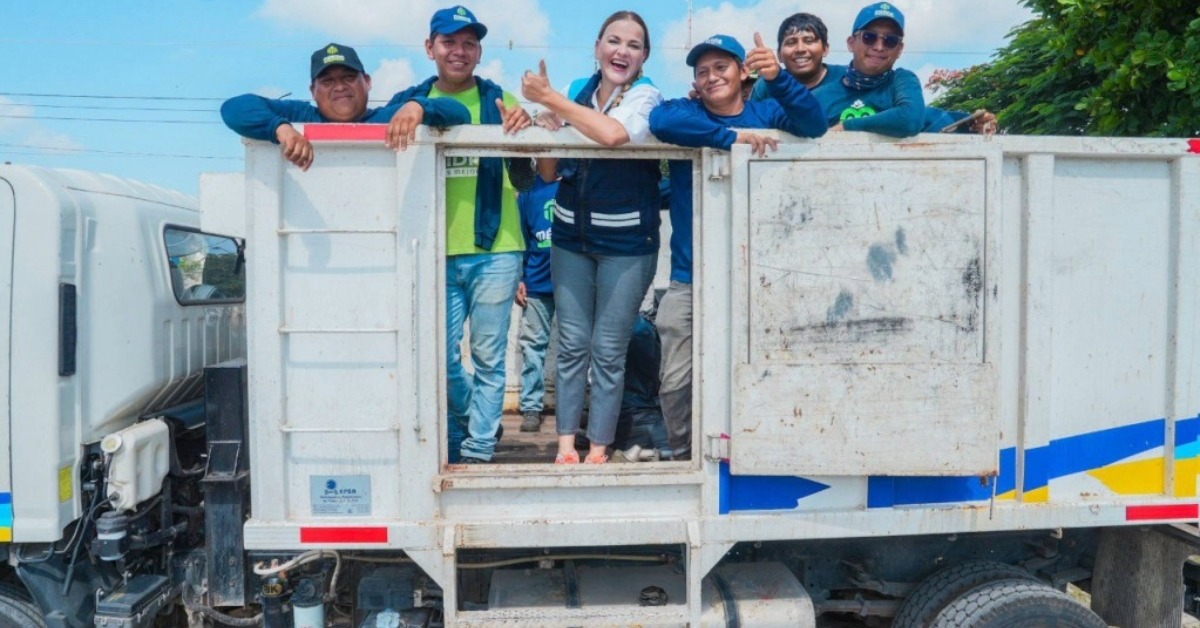
Mérida’s city government says its Mérida Limpia campaign has received an international distinction for work tied to waste management, urban cleanliness, and environmental care. The recognition was granted through Ategrus, a technical association focused on waste and urban cleaning, and city officials presented it as validation of a campaign built around field operations and citizen participation.
The announcement is straightforward. The city says the award recognizes practical results, not just messaging. That matters because cleanup campaigns are often easy to brand and harder to measure. In this case, officials tied the distinction to visible actions across neighborhoods, the historic center, and outlying communities, rather than to a single one-day event or symbolic launch.
For international readers, the story is also a useful reminder of how much daily city life depends on basic municipal services. Clean streets, regular collection, bulky-waste disposal, and functioning drainage support more than appearance. They affect mobility, health conditions, neighborhood order, and how residents experience a city day to day.
What Mérida Limpia actually includes
According to the figures released with the announcement, Mérida Limpia has carried out 16 major cleanup operations in neighborhoods across the city. Officials say the campaign also maintains a permanent operation in the Centro Histórico, one of the city’s busiest and most visible areas.
The city says more than 1,000 municipal brigadistas have worked across more than 827 blocks, collecting 878 tons of waste. That gives the campaign scale beyond a simple awareness drive. It also suggests the city wants the public to see the program as a broad service model rather than a short-term publicity push.
Another part of the strategy is the use of Puntos Mérida Limpia, which are itinerant containers placed in neighborhoods and comisarías to collect special solid waste. These collection points are intended for items that do not fit into routine household pickup, including mattresses, tires, glass, and wood. Officials say 23 containers have been deployed across 307 locations and have helped channel more than 2,300 tons of waste to final disposal.
The city also linked the recognition to its Limpieza Integral Mecanizada program. Under that part of the effort, Mérida says it has added 67 units and machines, including drain-cleaning equipment, transport units, and street sweepers, as well as 27 new public-services workers. That matters because many municipal cleanup drives depend on labor-heavy responses. Mérida is trying to show it is pairing manpower with equipment.
Why the distinction matters
The immediate political value is obvious. Any outside recognition gives local officials a stronger way to defend a public-services agenda. But the award matters more if it helps residents understand what the city is prioritizing and whether the model is producing durable results.
Waste policy often becomes visible only when it fails. Residents notice trash piles, clogged corners, illegal dumping, and missed pickups long before they notice the machinery and routing behind them. That is why city governments often treat sanitation as one of the clearest measures of administrative performance. It is routine work, but it is public, constant and difficult to hide.
That also helps explain why the city emphasized citizen participation in the announcement. A campaign like this depends partly on public behavior. Special-waste disposal, neighborhood cooperation, and proper use of collection points can determine whether cleanup stays manageable or becomes a repeated emergency response. In that sense, the distinction is not just about sweepers and brigades. It is also about whether residents buy into the system enough for it to function.
What the award does and does not show
The recognition gives Mérida a useful credential, but it does not settle every question about local sanitation. Awards can confirm that a project is well designed, technically strong or well executed in the areas reviewed. They do not automatically mean every neighborhood experiences the same level of service or that long-term waste challenges have been solved.
That distinction matters for readers trying to interpret the headline. A city can receive praise for a program and still face uneven service, infrastructure strain, or public complaints in parts of its territory. The more useful reading is narrower. The award signals that Mérida has built a cleanup strategy strong enough to attract outside notice and that officials have numbers and operations they are willing to put forward in support of it.
For now, the city is using the moment to frame Mérida Limpia as part of a broader municipal identity built around order, sustainability and visible management of public space. Whether that framing holds will depend less on the award itself and more on whether residents continue seeing results in streets, neighborhoods, and collection points over time.
The broader takeaway for Mérida
For foreign residents and other international readers, the story’s deeper significance is practical. When a city highlights garbage collection, bulky-waste handling, and street cleaning, it is talking about the infrastructure of everyday life. These are the systems that shape how livable a place feels, even when they rarely draw attention to themselves.
That is why this announcement is more than a ceremonial city-hall item. It is a snapshot of how Mérida wants to be seen and how it wants to govern. The city is presenting cleanliness as public policy, not just presentation. The international distinction gives that message a boost. The harder test will be whether the program continues to deliver the kind of everyday results residents can see without needing an award to point them out.