Mérida is offering a science activity with an unusual draw: a chance to look at the Sun without risking your eyesight. The free public event will use a filtered telescope and include explanations about sunspots, solar eruptions, and how activity on the Sun can affect technology on Earth. For many readers, that makes this more than a family outing. It is also a practical lesson in how astronomy connects to daily life.
A Sunday science event with a practical lesson
Mérida’s Museum of Natural History is inviting the public to a free Sunday activity, Una mirada al Sol, a guided solar observation session that lets visitors view the Sun through a telescope fitted with a specialized filter. The event is scheduled for Sunday, April 12, from 9 to 10 a.m., on the museum’s esplanade, and organizers say it is open to the general public. The activity has also appeared in official city event listings, which frame it as a public science program for residents and families.
The session is designed to be accessible rather than technical. Organizers describe it less as a formal workshop and more as a space where people of all ages can get a close, safe look at the Sun and hear simple explanations about what they are seeing. That matters because direct solar observation is not intuitive. Many people still assume sunglasses or improvised filters are enough. They are not. The point of an event like this is that the equipment is prepared for the task, and the viewing is supervised.
Why safe solar viewing matters
The safety message is central to the event. NASA and the American Astronomical Society both warn that the Sun should only be viewed directly with special-purpose solar filters. Regular sunglasses are not safe, and neither are cameras, binoculars, or telescopes unless they have the correct filter mounted on the front of the device. That is why public observation events can be useful. They give people a controlled way to see the Sun while also learning what safe viewing actually requires.
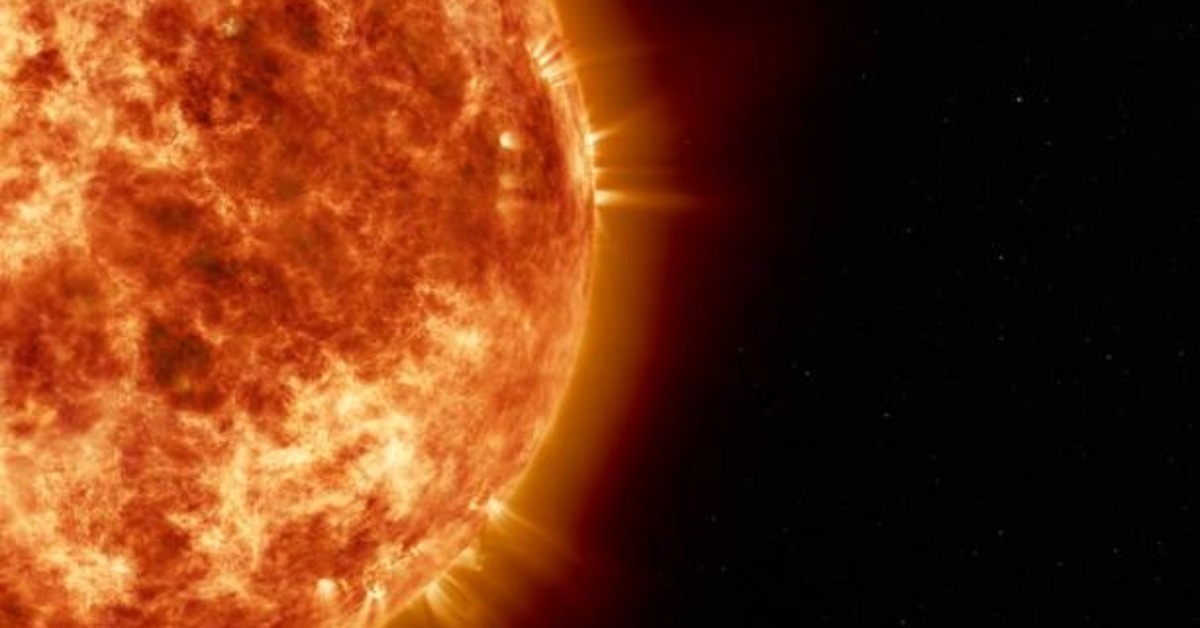
What visitors may see depends on conditions and the equipment in use, but the event description highlights sunspots and other visible solar phenomena. NASA describes sunspots as darker regions on the Sun that are slightly cooler than the surrounding surface and linked to magnetic activity. Those details make a quick look through a telescope more meaningful. Instead of seeing a bright disk, visitors can begin to understand that the Sun is active, changing, and closely studied because its behavior affects Earth.
Why this matters beyond astronomy fans
That broader connection makes the event more useful to an international audience. Organizers say they plan to explain how strong solar activity can affect Earth. That is consistent with guidance from NASA and NOAA, which note that space weather can interfere with satellites, radio communications, GPS signals, and, in extreme cases, electric infrastructure. The same solar activity can also contribute to auroras, which are among the most visible signs that conditions on the Sun can have real effects here on Earth.
For Mérida, the event also reflects a wider effort to keep science programming public and approachable. A free one-hour session on a Sunday morning lowers the barrier to entry for people who may never visit an observatory or follow astronomy news. It also gives parents, longtime residents, and newcomers a simple way to engage with a city institution that many may know only in passing. The museum is listed at Calle 59 No. 648 between 84 and 84-A in Centro, which makes the event relatively easy to reach for people living in or visiting the city center. As with any skywatching activity, organizers note that the experience depends on weather conditions.
For readers deciding whether this is worth attending, the answer is straightforward. It is free, brief, and grounded in a subject that often feels distant until it affects everyday systems people rely on. In that sense, Una mirada al Sol is not just about watching the sky. It is about understanding why the nearest star still matters on the ground.
Deep Dive:
Optimal Viewing Conditions for Solar Eclipse in Puerto Vallarta
Using certified goggles to observe eclipse, UNAM scientists suggest
Puerto Vallarta Science Students Ready for Solar Eclipse