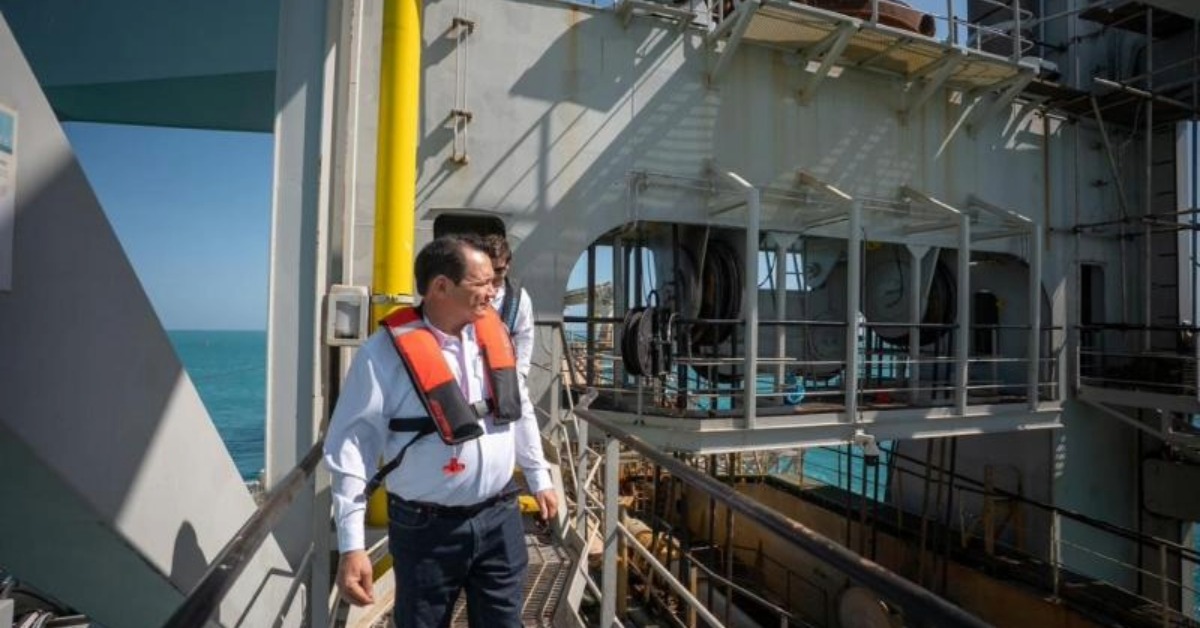
The second stage of the Progreso high-port expansion has entered federal environmental review, opening a new chapter in one of Yucatán’s most closely watched infrastructure projects.
The review now before Semarnat covers the next major build-out after the first stage, which state officials have said is nearing completion. According to the project filing, this second phase would take five years to build. When added to the earlier works already underway, the full expansion would span seven years.
That timeline matters because the project has become a central part of how state and federal officials describe Yucatán’s logistics future. Progreso is already the state’s main maritime gateway. Any increase in its capacity could affect cargo movement, industrial development, tourism flows, and the wider effort to better connect the peninsula with domestic and international markets.
For many foreign residents in Yucatán, the story may sound technical at first. But the questions behind it are familiar and practical. Will the port handle more trade? Will it draw more private investment? Will nearby development accelerate? And what environmental tradeoffs come with a larger industrial footprint on the coast?
What the second stage would add
The new filing provides a clearer picture of what this stage would include. The plan centers on constructing a second platform, designated the South Platform, along with additional drag works to support the expanded port layout.
In the current filing, the second phase covers a total area of 97.91 hectares, including the new platform and the associated dredging zone. The project seeks a five-year construction permit and a 50-year operating permit, which the filing describes as the useful life of the work.
That long operating horizon is standard for large port infrastructure, but it also shows that officials are not framing this as a short-term expansion. The intent is to create capacity that can shape shipping and coastal development for decades.
The filing also gives a more precise investment figure for this stage. It places the cost of phase two at about 3.55 billion pesos, including both construction and environmental mitigation measures. That number is notable because it is lower than some earlier public estimates tied to the broader port expansion. At the same time, it does not necessarily mean the overall project is becoming cheaper. It may instead reflect the difference between a phase-specific budget and earlier figures used for the larger multi-stage modernization plan.
Why the numbers seem to change
One reason this project has drawn attention is that its costs and timelines have shifted as the plan evolved.
Earlier public information tied to the broader Ampliación del Puerto de Progreso placed an estimated investment for the larger macroproject at 7.225 billion pesos. In January 2025, another public report described the expansion as costing about 7 billion pesos, while the governor at the time of the launch event referred to an investment of 7.9 billion pesos. The current environmental filing for phase two is much narrower, putting that stage alone at roughly 3.55 billion pesos.
The differences do not necessarily contradict one another. They point instead to a project that has been revised, broken into stages, and presented in different ways depending on whether officials were describing the first drag works, the broader master plan, or a single platform now under environmental review.
The latest reporting also notes that the current set of environmental studies reflects a project that has already gone through several changes. That is not unusual for large coastal infrastructure. Port expansions often move through redesigns as engineers, regulators, and investors refine the layout, update costs, and respond to environmental requirements.
Still, the changing figures are important for public understanding. When readers hear one number in a public announcement and another in an environmental filing, it can sound like a contradiction. In reality, it often means officials are describing different slices of the same project.
What phase one tells us about the timeline
The government of Yucatán said in early March that the first phase, focused on dredging, had reached 95 percent completion. In February, state officials had placed that same stage at 90 percent and said it involved 1.63 billion pesos in state investment.
That first stage is focused on widening and deepening the navigation channel. Officials have said the works would increase the channel’s depth and width, allowing the port to receive larger vessels. In simple terms, phase one is about making the port physically more accessible to bigger ships. Phase two is about expanding the usable port platform itself.
Seen together, the two stages show how the project is being built in layers. First comes the marine access and dredging. Then comes the larger platform and related infrastructure. That sequencing helps explain why the full project spans several years rather than being delivered as a single construction package.
Why this matters beyond Progreso
For international readers living in Mexico, port projects can feel distant until they begin to shape the places around them. Progreso is not just a local port town. It is a strategic point for Yucatán’s economy, a cruise arrival point, and part of broader discussions about freight, industrial growth, and regional connectivity.
A larger, more modern port could support greater cargo traffic and potentially attract investment in logistics, warehousing, manufacturing, and related sectors. That can create jobs and expand economic activity. It can also put new pressure on land use, transport corridors, and environmental oversight.
That is one reason the Semarnat review matters. This step is not just procedural. It is where the federal government weighs the project’s environmental impacts and the mitigation measures proposed by the developer. In this case, the filing includes a specific budget for prevention, mitigation, monitoring, and follow-up tied to environmental effects.
For residents and observers, the bigger issue is balance. Yucatán wants stronger infrastructure and greater competitiveness. But large coastal works also raise questions about dredging, marine ecosystems, shoreline change, and long-term development patterns. Those questions tend to grow as projects move from concept to construction.
What to watch next
The immediate next step is the outcome of the federal environmental review. If the project clears that stage, attention will turn to the construction timetable, permitting conditions, and whether the stated five-year schedule holds.
Readers should also watch how officials describe the project going forward. The most useful public updates will be the ones that clearly separate phase-one spending, phase-two costs, and the overall long-term investment. Without that distinction, the public conversation can quickly become confusing.
For now, the clearest takeaway is this: the second phase of the Progreso port expansion is moving forward in regulatory review, the current filing places that stage at about 3.55 billion pesos over five years, and the broader modernization effort is now framed as a seven-year project when both main phases are counted together.