A short rainfall should not leave city streets smelling like sewage. Yet complaints from Puerto Vallarta point to wastewater spilling into public areas as the rainy season begins, with Zona Romántica and Versalles named among the problem spots. The failure comes as officials prepare for heavier storms, and as SEAPAL records show a system already dealing with older pipes, recurring repairs, and pressure from rapid growth in neighborhoods now carrying heavier daily use.
Vallarta Got One Light Rain Then Sewage Hit the Streets
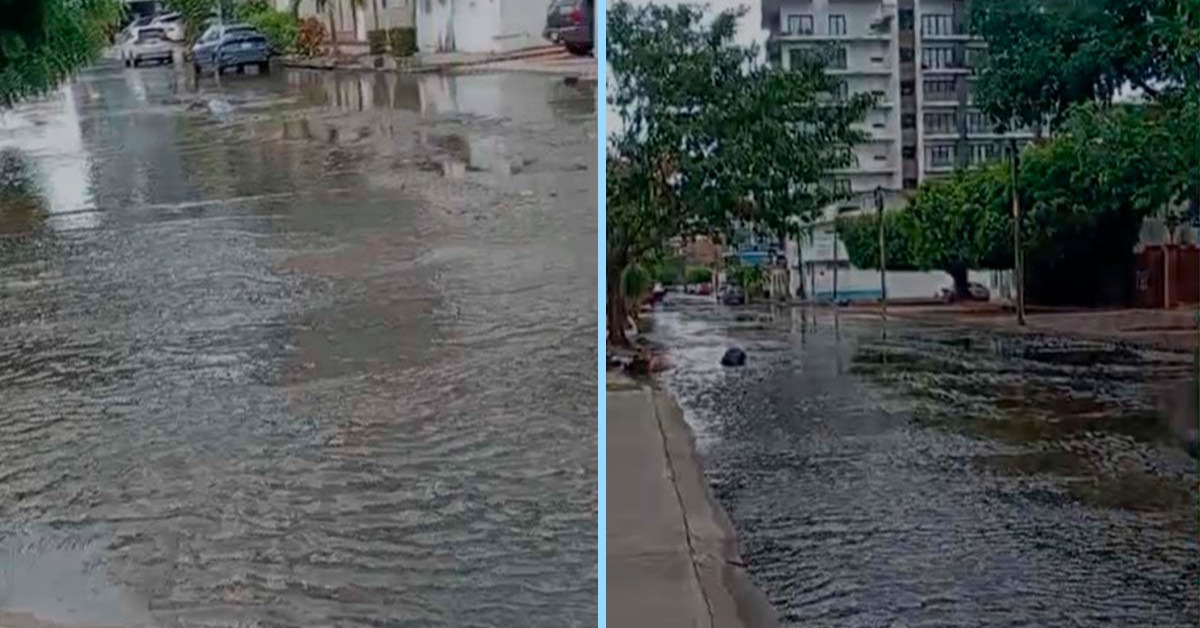
A short Thursday rain pushed Puerto Vallarta’s drainage problems into the street.
The brief rainfall sent wastewater and storm runoff through public areas. Local complaints named Zona Romántica and Versalles among the affected spots. Residents described foul-smelling flows in the street, and nearby businesses raised concerns about sanitation and the destination’s image.
If a short shower can cause wastewater to run onto the pavement, the city is entering the wetter months with a drainage system already showing signs of stress.
Drainage failed before the season got serious
Puerto Vallarta has seen flooded streets before. Heavy rain has overwhelmed low points, storm drains, and roadways in past seasons. This complaint is different because it was tied to a short rainfall, not a major storm.
The failure points toward familiar weak spots in the system. Blocked lines. Older pipe. Maintenance gaps. More pressure from construction, restaurants, rentals, traffic, and daily use in neighborhoods that have changed quickly.
The spill also fits the wider infrastructure strain now visible across Puerto Vallarta. Sewers, storm drains, trash collection, roads, and oversight are being tested simultaneously.
Versalles was already on the warning list
SEAPAL warned earlier this year that grease and oil from food businesses can harden inside sanitary lines and block normal flow. The utility identified Emiliano Zapata, Centro, and Versalles as areas where parts of the sanitary infrastructure are close to 40 years old.
SEAPAL made the law clear: “discharging grease into the drain is prohibited.” The agency said restaurants and food businesses must use and maintain grease traps. Without them, waste can obstruct the sewer system and trigger public impacts.
The streets named in the latest complaint sit inside one of the city’s busiest urban corridors. Old systems are carrying a heavier load.
A separate complaint from Versalles this week described a continuing sewage spill on Calle Viena, with neighbors saying it had not been resolved. The city now has more than one public account pointing to the same neighborhood and the same type of failure.
Rain preparation is colliding with pipe reality
City officials installed the Municipal Civil Protection Technical Council in May to prepare for the 2026 rainy and cyclone season. During that meeting, meteorologist Víctor Manuel Cornejo warned, “This year it will be hotter, and there will be excessive rainfall.”
The same session included plans for shelters, emergency coordination, and desalination work in channels, basins, and streams. Public Works listed cleaning and maintenance points including Mojoneras, Las Palmas, Sendero de Luna, La Floresta, El Contentillo, the Pitillal River channel, and Luis Donaldo Colosio.
Those steps address flood risk. They do not answer the question about the sewer. Stormwater and sanitary sewer failures can overlap on the street when drainage points are blocked, overwhelmed, or already leaking. Once wastewater reaches public pavement, the issue becomes a public health risk.
This is also why the first storms expose so much in Puerto Vallarta. Early rains pull dust, trash, leaves, grease, and loose debris toward grates and low points. If the system has weak links before the first real downpour, those weak links tend to show up fast.
SEAPAL’s own records show the workload
SEAPAL reported that crews handled 305 leaks and broken pipes in water and drainage networks during the first half of May. The agency also said it carried out 632 operational actions during that period.
The utility is also carrying out sewer rehabilitation work in Marina Vallarta. It said a drainage project there had reached 90 percent completion. That job includes replacing 163 linear meters of sanitary sewer pipe on Calle Albatros. SEAPAL said the work uses mostly 20-inch pipe in an area where the infrastructure had already reached the end of its useful life.
The repair list is not limited to one neighborhood. A sinkhole on Prisciliano Sánchez recently prompted another SEAPAL response, with the utility setting a 72-hour repair target. That case involved a different point in the system.
The latest complaints from Zona Romántica and Versalles show how quickly a basic service failure can spill, literally, into public view, even before the heavy rains arrive.