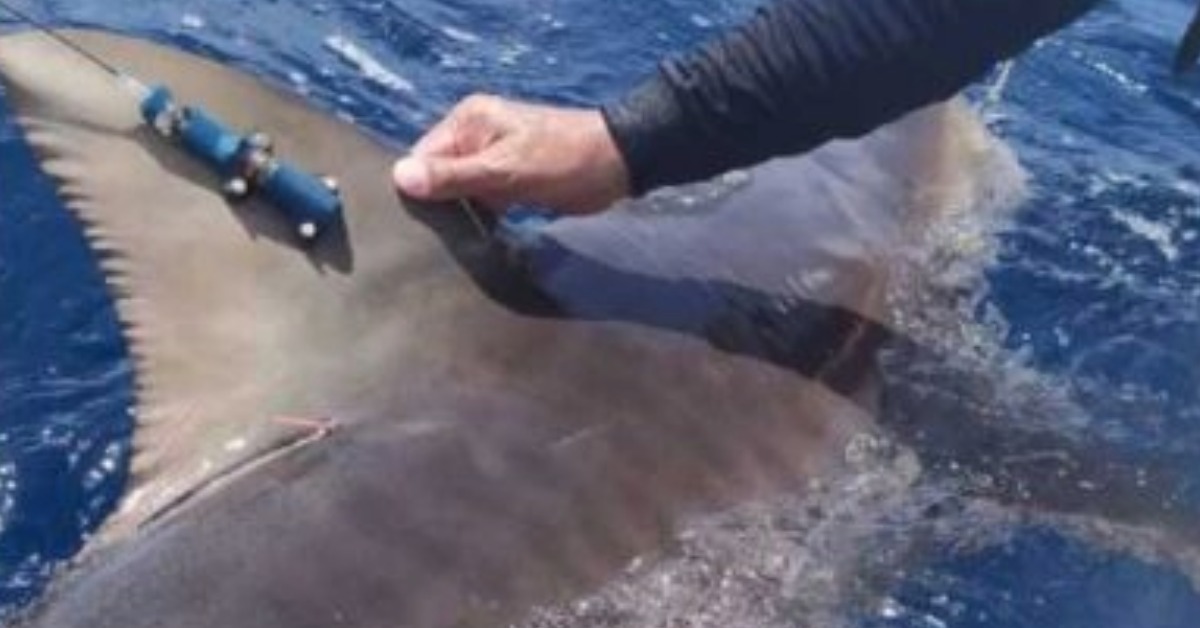
Researchers in the Mexican Caribbean are expanding shark monitoring with a newer generation of satellite tags that stay attached far longer than older devices. The work is being led by marine biologist Rafael de la Parra Venegas with the Kab Xok ecotourism cooperative in Isla Mujeres. According to the latest report, the new tags can remain in place for up to three years. They are fixed to the dorsal fin, which gives scientists longer records of movement, habitat use, and time spent in the region.
Longer tracking matters because these animals do not stay in one place. Earlier research on whale sharks in the northeastern Yucatán area showed movements through the Gulf of Mexico, the northwestern Caribbean, and the Straits of Florida. Some sharks later returned to Quintana Roo. That helps explain why multi-year data is valuable. It can link local behavior to much larger migration routes.
Why the new tags matter
The current monitoring push is not limited to one species. Researchers say 56 tags have already been placed on hammerhead, bull, tiger, mako, and reef sharks. That turns the project into more than a basic tracking exercise. It can help identify routes that need protection and reveal how long sharks have been using specific coastal areas.
For many readers, the whale shark angle is the clearest point of connection. The Mexican Caribbean hosts one of the region’s major seasonal whale shark gatherings. Activity centers offshore between Isla Mujeres, Isla Contoy, and Holbox. The whale shark is the world’s largest fish. It often feeds near the surface, making it easy to watch and disturb. Those summer aggregations support a large tourism economy while also putting the species in direct contact with boats and swimmers.
Tourism pressure is becoming part of the story
Researchers involved in the current work say whale shark behavior appears to be shifting as tourism pressure rises. The concern is not that the species has disappeared from the area. The warning is that the large groupings seen about a decade ago are no longer as common. Sharks are now often found farther apart. That can change tour patterns, weaken enforcement, and make scientific monitoring harder.
Recent research helps explain that concern. A drone-based study at El Azul, a major whale shark site in the northern Mexican Caribbean, found repeated rule violations by boats and swimmers. That happened even when vessel numbers stayed below the legal cap. Researchers warned that frequent disturbance can interrupt feeding and raise energy costs for the sharks. In practical terms, scientists are now studying two problems at once. They need to know where sharks go and how human activity may be changing what they do when they get there.
What this means for Quintana Roo
This makes the new monitoring effort more than a technology story. It is also a test of how marine conservation will work in one of Mexico’s busiest coastal tourism regions. Better tracking can give authorities and researchers clearer evidence when they review protected areas, operating rules, and enforcement needs.
For Quintana Roo, that matters economically as well as ecologically. Whale sharks help support tours, seasonal jobs, and the broader identity of the northern Caribbean coast. If the animals spread out more, feed less efficiently, or avoid certain areas, the tourism model around them becomes harder to sustain. The new tags will not solve that problem on their own. But they may give the region better data before the next decisions are made.