Grupo México ties an award to Mexican gray wolf breeding in Sonora and community work, as officials press on with recovery.
Grupo México is leaning into a rare kind of corporate headline: wolves.
In messaging tied to an “Empresas Excepcionales 2025” recognition, the company is highlighting the Mexican gray wolf in Sonora. It points to captive breeding and reintroduction work tied to Buenavista del Cobre in Cananea. It also points to community programs it frames as social-impact work in nearby towns.
The wolf story lands in a moment when “nature-positive” claims are everywhere, and trust is thin. This one is easier to measure than most. Wolves are either born, monitored, and released under permit or not. The more complex question is what the project means outside a press release. Does it help a species recover in the long run? Does it build real support in the communities that share the landscape with a top predator?
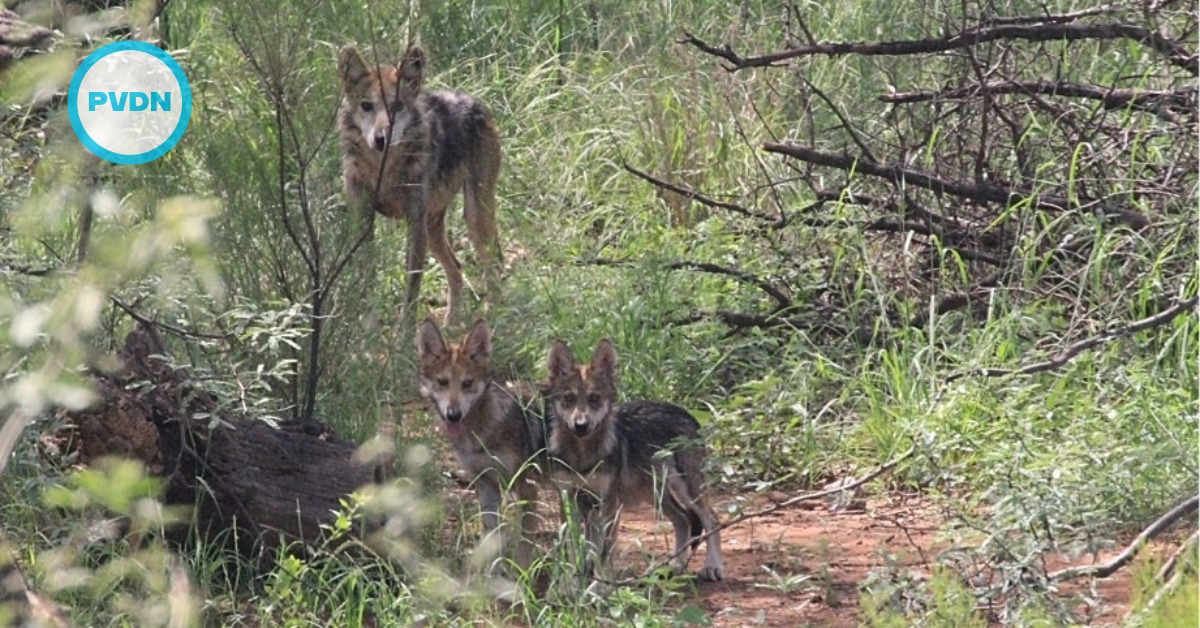
The Mexican gray wolf is the smallest North American gray wolf subspecies. It was pushed close to extinction in the 20th century due to eradication campaigns and conflicts with ranching. Recovery now depends on a careful chain of custody. It starts in captivity. It runs through behavioral conditioning and genetic management. It ends with long-term monitoring in the wild.
That chain involves public agencies on both sides of the border, universities, and conservation groups. It also involves private facilities. Readers in Sonora face a fair question. What role should an industrial site play in conservation? What does accountability look like when it does?
Mexican gray wolf recovery in Sonora
Buenavista del Cobre sits in a rugged corner of northern Sonora, best known for copper. It is also home to a Wildlife Conservation, Management and Sustainable Use center, known in Mexico as a UMA. Grupo México says the center has housed 67 Mexican gray wolves over the years. It says the facility has produced more than 20 pups and supported reintroductions through the binational recovery program.
A 2018 release in Mexico, described at the time as a family group of seven wolves, included five pups born at the Buenavista del Cobre UMA. The release was coordinated with conservation authorities. It included behavioral checks and satellite collars on the adult wolves for tracking. That monitoring matters. Releases without follow-up become a feel-good moment with no way to learn what worked.
Mexico’s official list of at-risk species was updated through a Diario Oficial publication in November 2019. In that update, the Mexican gray wolf appears under the “in danger of extinction” category. That legal label does not mean the wolf is safe. It signals the country still treats the animal as a priority. It also shapes how permits, releases, and management plans are handled.
On the U.S. side of the border, the latest annual count put the minimum at 286 wolves at the end of 2024. Managers also documented 26 breeding pairs. They have leaned on cross-fostering, which places captive-born pups into wild dens. The goal is better genetic diversity. The population keeps growing, but genetics remains the long-term headache. If the gene pool stays narrow, growth can mask fragility.
That context helps explain why captive facilities matter. A recovery program needs the right genetic lines and the correct behavior. It also requires the right timing for releases. Private sites can add capacity. They can also add risk if transparency slips. The proof is in permits, monitoring data, and whether released wolves breed years later.
The company’s new spotlight is not just about biology. It is also about legitimacy.
Empresas Excepcionales is nationally recognized, backed by major business groups and a communications council. It aims to highlight practices with social impact. Grupo México has pointed to its “Due Diligence Model.” The company says it draws on the UN Guiding Principles on Business and Human Rights. In plain terms, it describes a process to identify risks to communities, address grievances early, and reduce harm associated with large projects.
In the same messaging, the company also highlighted a social-impact model linked to its shopping-center operations. It framed activities with tenants, suppliers, and neighbors as part of a broader community strategy. The packaging is familiar. Tie wildlife and community programs to an external badge, and tie the badge to corporate leadership.
For communities in mining regions, the test is whether those models change daily life. That includes how the company handles water use, dust, traffic, and jobs. It also includes whether conservation work reaches local schools, ranchers, and residents as more than a photo moment. Wolf recovery needs acceptance on the ground. If people see only risk, conflict follows, and wolves lose.
What the award does not answer
Awards can open a door, but they do not settle the hardest questions.
If a company wants the public to trust wildlife work, it should treat data like part of the project, not a nice extra. How many wolves were born, how many were released, and how many survived long enough to breed in the wild? What genetic lines did they add? What monitoring continued after release, and for how long? Those answers are contained in agency files and field reports. They should also exist in plain language for the public.
There is also a boundary issue. A predator recovery effort needs continuity across political cycles and corporate leadership changes. It requires funding when the cameras are gone. It needs trained staff, strict animal welfare, and clear coordination with authorities. If any of that weakens, the project can slide from conservation into display.
None of this cancels the value of adding capacity to a recovery program. A well-run captive facility can help prevent a species from blinking out, and it can support releases timed to real conditions on the ground. It can also help normalize the idea that conservation is not only a government job.
For Sonora, the Mexican gray wolf story is worth watching because it sits at the intersection of ecology and power. If wolves released from captivity continue to survive and breed, that is a measurable win. If the project stays locked inside branding language, trust will remain just as scarce as the wolf once was.