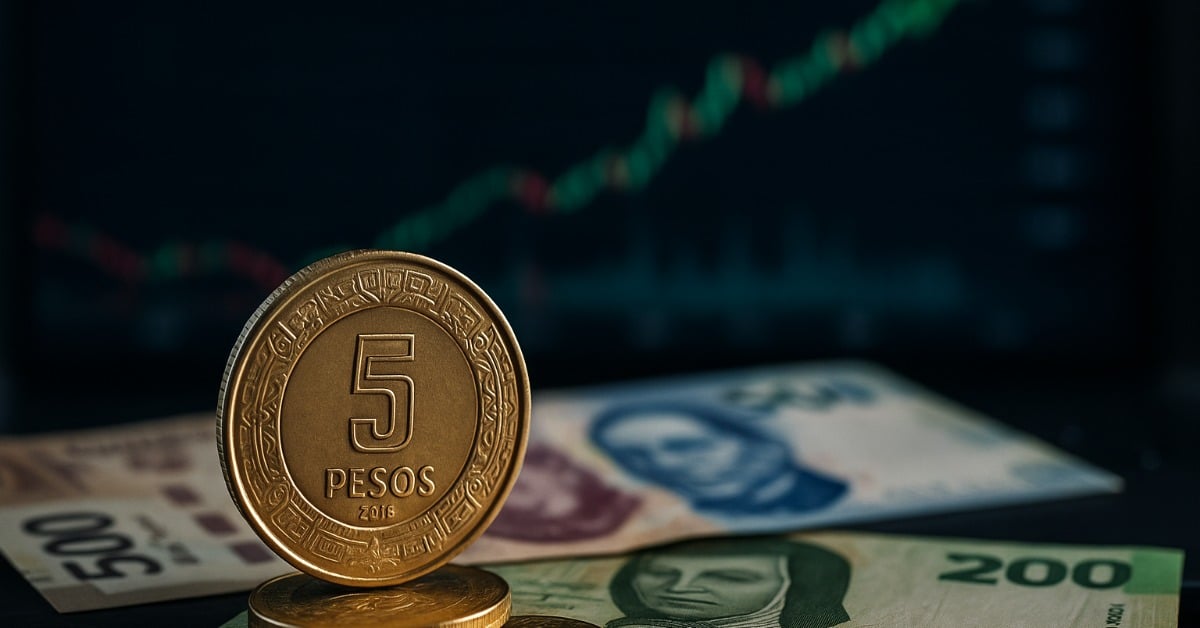
Mexico’s currency advanced on Tuesday as the dollar weakened after fresh U.S. inflation data. The peso settled at 18.5803 per dollar, a 0.53% gain from Monday’s 18.6800 close, according to Bank of Mexico records. Intraday pricing briefly dipped near 18.53.
The dollar’s pullback did some of the lifting. The U.S. Dollar Index hovered around 98.06 in late trade, down roughly 0.46% on the day, reflecting softer greenback demand across majors. That broader move amplified the peso’s advance without a domestic catalyst.
What the U.S. numbers say
July consumer prices in the United States rose 0.2% from June and 2.7% year over year. Core inflation increased 0.3% on the month and 3.1% on the year. The headline print undershot the 2.8% annual pace many expected, permitting markets to lean back into a September rate-cut narrative.
That expectation matters for Mexico. A cheaper dollar reduces immediate pressure on emerging-market currencies and often encourages carry-trade flows into higher-yielding markets like Mexico. On Tuesday, that dynamic was visible in the peso’s steady climb through the session.
Odds shift toward a September cut
After the CPI release, futures tied to the Fed funds rate implied a roughly 94% chance of a quarter-point cut in September, according to live market trackers. Markets are now watching whether officials validate that path at Jackson Hole next week.
The Kansas City Fed’s schedule puts the Jackson Hole Economic Policy Symposium on August 21–23, giving Chair Jerome Powell a high-profile stage to guide expectations before the September meeting. What he signals there could firm up—or puncture—the market’s conviction.
Why it matters for Mexico
For households and businesses, a stronger peso softens imported price pressures and can shave costs on dollar-priced inputs, from fuel to machinery. For exporters and tourism operators, the picture is mixed: a firm currency trims peso revenues when dollar prices are fixed, but also reflects calmer global risk sentiment that supports travel and trade. The balance will depend on how far and how fast the Fed eases—and whether Mexico’s inflation path gives Banxico room to follow at its own pace.
The next checkpoints
Thursday’s U.S. producer-price reading will test the inflation-is-cooling story. Then comes Jackson Hole, where any hint of urgency—or caution—from Powell could sway the dollar and, by extension, USD/MXN. For now, the peso’s move is grounded in data and broad dollar tone rather than a one-off headline.