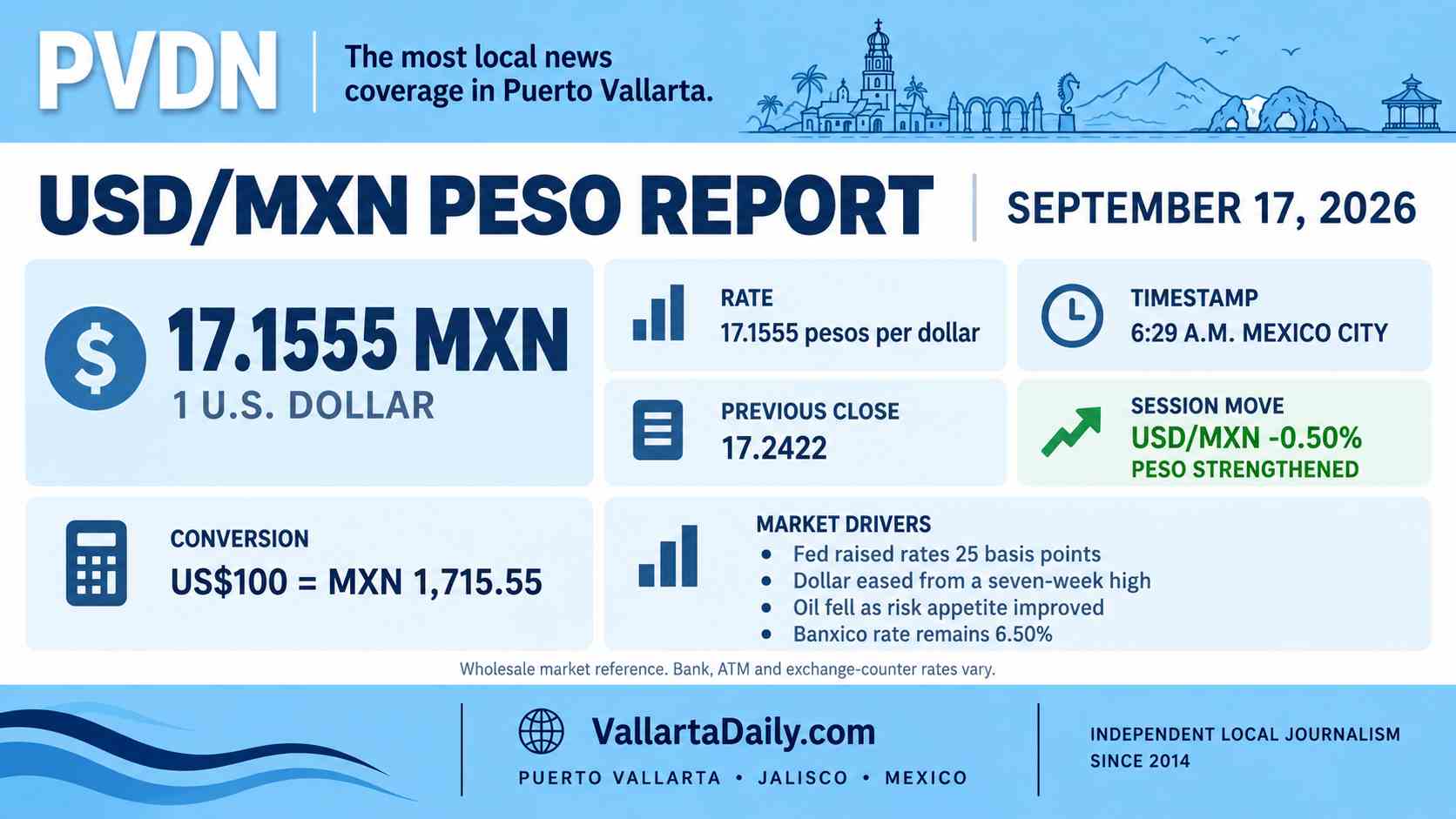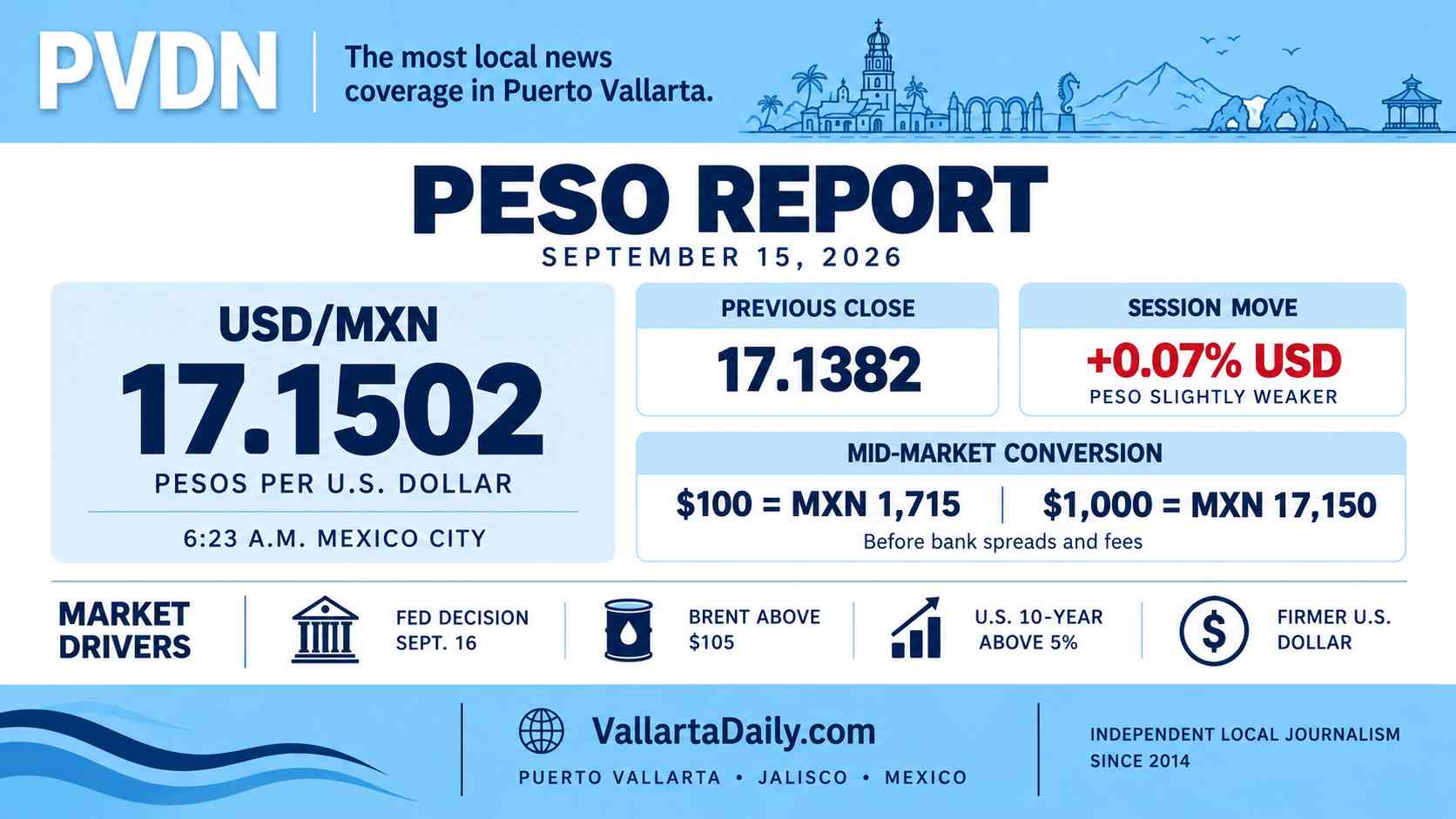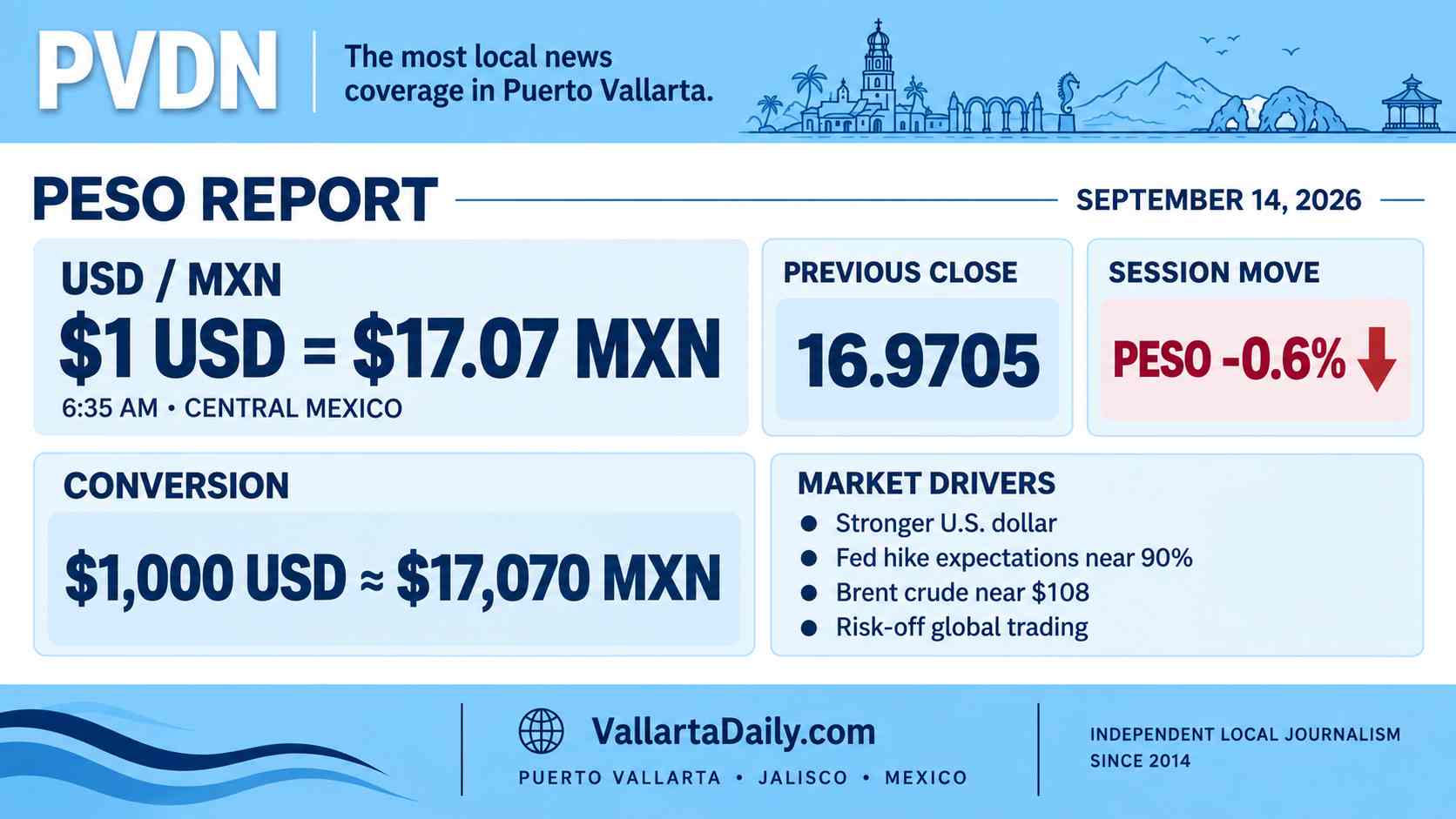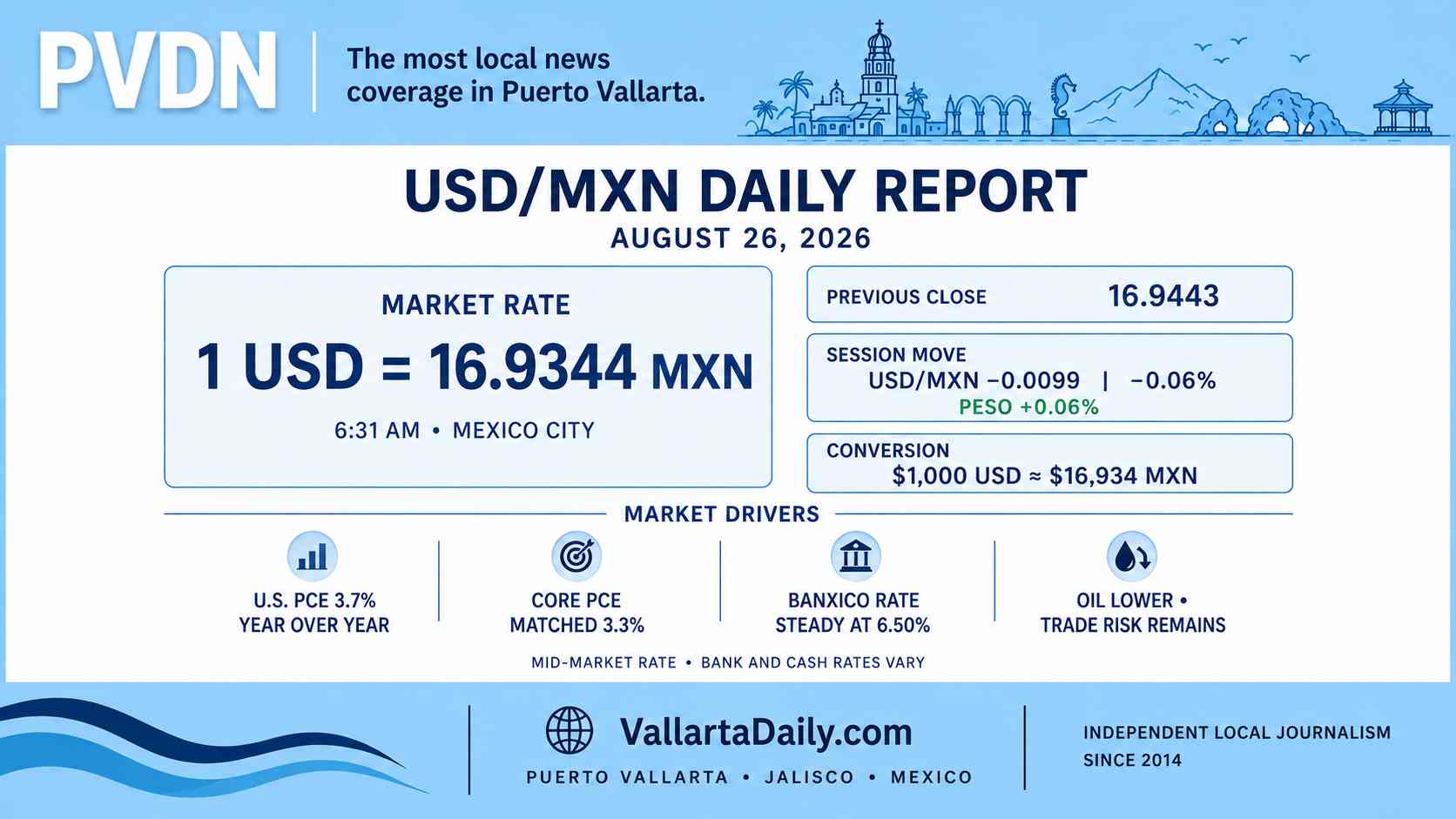
Puerto Vallarta, Jalisco, August 26, 2026 – The Mexican peso was trading at 16.9344 per U.S. dollar at 6:31 a.m. Mexico City time Wednesday, according to live USD/MXN market data. The figure is an interbank market rate, not the cash price available at a bank, ATM or exchange house.
USD/MXN was down 0.0099 peso, or 0.06%, from the previous market close of 16.9443. Because the pair measures how many pesos are needed to buy one dollar, the lower quote represents a modest gain for the peso. The early session had ranged from 16.9227 to 16.9536.
The official Banco de México FIX rate for Tuesday was 16.9460 pesos per dollar. Wednesday’s live market price remained near 16.93 immediately after the release of new U.S. inflation and growth data, without a sharp initial break in either direction.
U.S. Inflation Report Leaves the Peso Near 16.93
The U.S. personal consumption expenditures price index rose 0.2% in July and 3.7% from a year earlier, according to Wednesday’s economic data release. Both figures were slightly above forecasts.
Core PCE inflation, which excludes food and energy and receives close attention from the Federal Reserve, increased 0.2% for the month and held at 3.3% annually. Those readings matched market expectations.
A second estimate showed the U.S. economy growing at a 1.5% annual rate during the second quarter, unchanged from the initial estimate and slower than the first quarter’s 2.1% pace.
The figures offered mixed signals. Headline inflation was somewhat warmer than forecast, while core inflation and economic growth produced no major surprise. The dollar index was near 98.97 and up about 0.05% shortly after the release, while USD/MXN continued to trade slightly below Tuesday’s market close.
Federal Reserve Expectations Remain in Play
The Federal Reserve kept its target rate at 3.50% to 3.75% in July, although three voting members preferred a quarter-point increase.
Before Wednesday’s inflation report, futures markets placed the probability of a September rate increase at roughly one-third. The slightly firm headline PCE reading could keep that possibility open, but the core figure did not exceed expectations.
Attention now shifts to Federal Reserve Chair Kevin Warsh’s scheduled speech at the Jackson Hole symposium on Friday. Markets will listen for his assessment of inflation and whether rates may need to remain higher or rise again later this year.
Banxico Policy Continues to Support the Peso
Banco de México held its benchmark rate at 6.50% on August 6 and said keeping it at that level would be appropriate under the current outlook.
The gap between Mexican and U.S. interest rates continues to make peso-denominated assets attractive to some international investors. Those flows have supported the currency, although they can reverse quickly when risk appetite weakens or trade tensions increase.
Mexico’s recent economic figures have also provided some support. Gross domestic product grew 1.4% during the second quarter compared with the first three months of the year. The economy expanded 1.9% annually on a seasonally adjusted basis.
Annual inflation reached 3.26% during the first half of August, while core inflation stood at 3.93%. Those figures remain consistent with Banxico’s cautious pause, although the central bank has not announced a new policy decision this week.
Oil and Trade Headlines Pull in Different Directions
Oil prices fell by roughly 2.5% Wednesday morning as Iran and Oman discussed steps that could restore navigation through the Strait of Hormuz. Brent crude traded near $86 per barrel, easing some concern about energy-driven inflation.
Lower oil can improve global risk sentiment and reduce inflation pressure. Mexico is also an oil exporter, however, making the effect on the peso less direct. Wednesday’s limited currency move cannot be attributed to oil alone.
Canada’s announcement of retaliatory tariffs on about $20 billion in U.S. goods added another point of tension to North American trade. The action was not directed at Mexico, but it reinforces the uncertain regional trade environment.
For the peso, the more direct political risk remains the future of the USMCA. Annual reviews of the trade agreement have prolonged uncertainty for companies and investors even as Mexican exports continue to grow.
The Rate Puerto Vallarta Readers Will Actually Receive
At the 16.9344 market rate, $1,000 was equivalent to about 16,934 pesos before fees or exchange-rate spreads. A 20,000-peso expense required approximately $1,181.
For someone earning dollars and spending in pesos, Wednesday’s move reduced a $1,000 conversion by only about 10 pesos compared with the previous market close. The longer trend is more significant: the peso has strengthened about 9.2% against the dollar over the past 12 months, meaning dollar income now buys fewer pesos than it did a year ago.
People earning pesos and paying dollar-denominated expenses receive the opposite effect because each dollar costs fewer pesos.
Banks, card networks, money-transfer services, ATMs and Puerto Vallarta exchange houses set their own rates and fees. Their customer quotes can differ noticeably from the interbank rate, and Wednesday’s market price may change as North American trading continues.