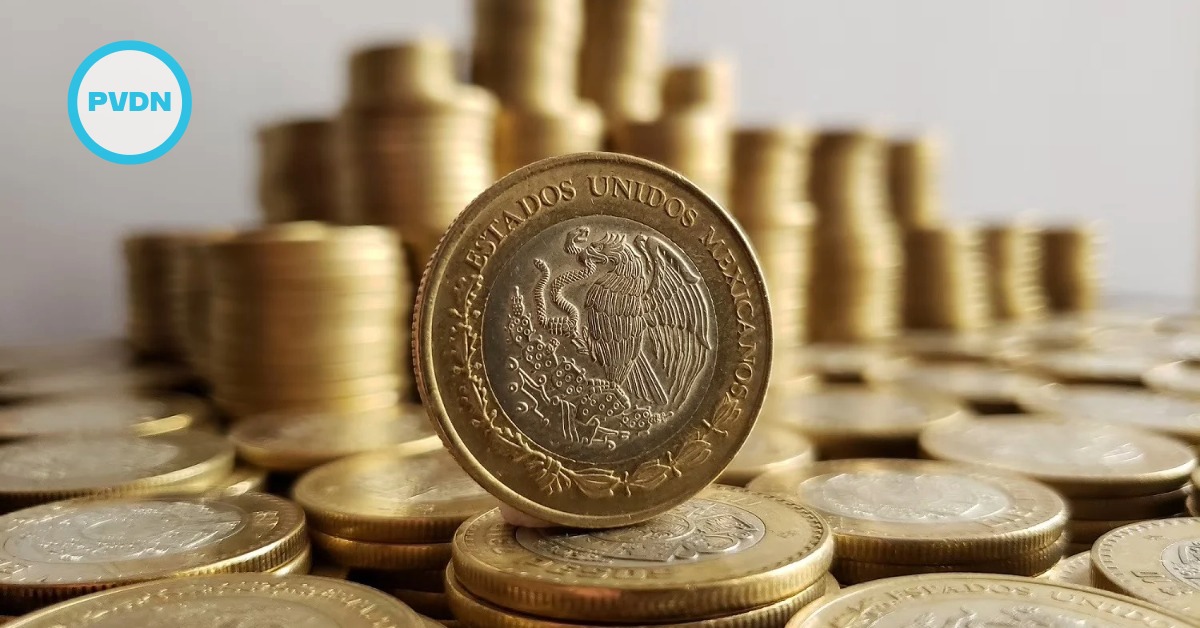
After flirting with its strongest levels in more than a year, the peso finished Thursday almost exactly where it started. But the calm close masks two storylines expats should watch: a surprise nudge higher in Mexico’s inflation and a fresh twist in Washington’s Greenland chatter, which has been tugging at the dollar. With Banxico’s next decision approaching, traders are treating 17.50 as a psychological ceiling. The question now is whether the peso is pausing—or loading up for another leg.
A calm close below 17.50
The Mexican peso ended Thursday virtually unchanged against the U.S. dollar, continuing to hover just under the 17.50 level as the market digested a fresh inflation reading. The exchange rate settled at 17.4802 pesos per dollar, a hair stronger than the previous close of 17.4843, amounting to a marginal 0.02% gain—less than a cent in practical terms.
Even on a “flat” day, the trading range told its own story. The dollar reached a session high of 17.5136 and a low of 17.4378, underscoring how tightly the pair is consolidating after the peso’s recent push to its strongest territory since June 2024. For expats budgeting life in Mexico—rent, school fees, contractors, or everyday spending—this kind of session feels almost boring, the sort of stability you only notice when it disappears.
Greenland headlines cool and the dollar softens
A key support for the peso came from the dollar’s broader retreat. The Dollar Index, which tracks the greenback against a basket of six major currencies, slid 0.45% to 98.35, easing pressure across currency markets and helping the peso hold firm without needing a major local catalyst.
Politics also remained in the mix, particularly around Greenland. President Donald Trump said details of a Greenland deal are being finalized, a day after he backed away from tariff threats aimed at European nations opposing his plans and said he would not take the territory by force. That shift in tone helped cool a pocket of uncertainty that had been feeding into dollar demand.
The peso’s resilience also reflects a longer-running narrative: it has carried over momentum from last year and tends to benefit when the dollar weakens amid worries over Washington’s trade strategy. Andrés Espinosa, business development manager at Excent Capital, framed it as a policy logic that may keep the dollar from regaining easy strength, arguing that a softer-dollar posture still aligns with the administration’s economic aims.
Inflation returns to center stage
Mexico’s inflation data provided the day’s main domestic datapoint, and it was firm enough to draw attention without triggering panic. Headline consumer inflation accelerated to 3.77% year over year in the first half of January after two straight fortnights of easing. Core inflation also ticked up to 4.47% after moderating in the prior period.
Taken together, those numbers reinforce expectations that Banxico will keep its benchmark interest rate unchanged at its next meeting. For currency markets, that matters because Mexico’s rate advantage has been one of the peso’s anchors; the question is how long that support lasts if inflation proves sticky and the path to future cuts gets more complicated.
U.S. data added another layer to the day’s backdrop. The United States posted 4.4% growth in the third quarter of last year, slightly above forecasts and stronger than the prior quarter. At the same time, the personal consumption expenditures price index—closely watched by the Federal Reserve—rose 2.8% year over year in November. The combination leaves traders balancing two forces at once: a still-growing U.S. economy and price pressures that can keep rates higher for longer, even as the dollar softens on shifting trade and geopolitical signals.
For now, the peso remains in consolidation mode under 17.50. Whether that calm turns into another leg of appreciation or a snapback higher in the dollar will likely hinge on the next inflation prints, the tone out of Banxico, and whether the Greenland storyline stays quiet—or flares again.