Mexico’s new circular economy law creates a national system to cut waste, extend product life and push governments and industry to reuse materials.
Mexico’s Senate has unanimously approved a new General Law on Circular Economy. The vote backs a shift away from the country’s long-standing “use and throw away” model of production and consumption. With 111 votes in favor and none against, senators endorsed a framework that keeps materials in use for longer and cuts waste. It also gives environmental policy more teeth at every level of government.
The decree, passed on December 10, 2025, creates the General Law on Circular Economy and amends two cornerstone environmental laws. It rewrites how the state understands waste. It extends responsibility along supply chains. It orders authorities to treat discarded materials as potential inputs instead of pollution. The reform now heads to the federal executive for publication.
Behind the legal language is a crisis that has been building for years. Mexico generates more than 120,000 tonnes of municipal solid waste every day, and only a fraction is recycled or recovered. Official data compiled by environmental analysts estimate about 53 million tonnes of waste a year nationwide, with around 1.2 kilograms per person, per day. Much of that ends up in more than two thousand disposal sites. Most of them are open dumps that leak into soil, rivers and air.
For lawmakers, the circular economy is meant to answer that problem and align Mexico with global climate and trade commitments. Until now, federal rules on waste and recycling were spread across several statutes. Only some states had passed their own circular economy laws. The new statute is designed to pull those efforts into one national system. It sets common standards for companies and local governments.
What the Mexico circular economy law actually does
The reform’s centerpiece is the creation of a National Circular Economy System. Under the new rules, the federal government, the 32 states and municipal authorities must coordinate policies. The goal is that products, materials and residues move through the economy with less loss and fewer emissions. The environment ministry will lead the policy. It will draft a National Circular Economy Program, issue a technical standard and create indicators to track progress.
The law updates the General Law on Ecological Balance and Environmental Protection. It also updates the General Law for the Prevention and Integral Management of Waste. It defines how powers are shared between the federation, the states, municipalities and Mexico City’s boroughs. Responsibilities for collection, sorting, treatment and final disposal should now be clearer. The law also opens the door to economic instruments, including tax incentives and other tools that reward companies that design durable, repairable, and recyclable products.
One of the most sensitive shifts is the move toward mandatory extended producer responsibility. Producers and importers will be required to design circular products. They must set up recovery and take-back schemes when it is environmentally, technically and economically viable. Sector-specific agreements will set targets for reuse, recycling and recovery. A Circular Management Registry will track the schemes companies put in place.
The legislation also foresees a National Circular Economy Seal. The label would identify products and services that meet circularity criteria and could receive preference in public procurement. In parallel, a digital public information platform is planned to gather data on material flows, traceability and compliance. That should give regulators and citizens a clearer picture of what actually happens to products at the end of their life.
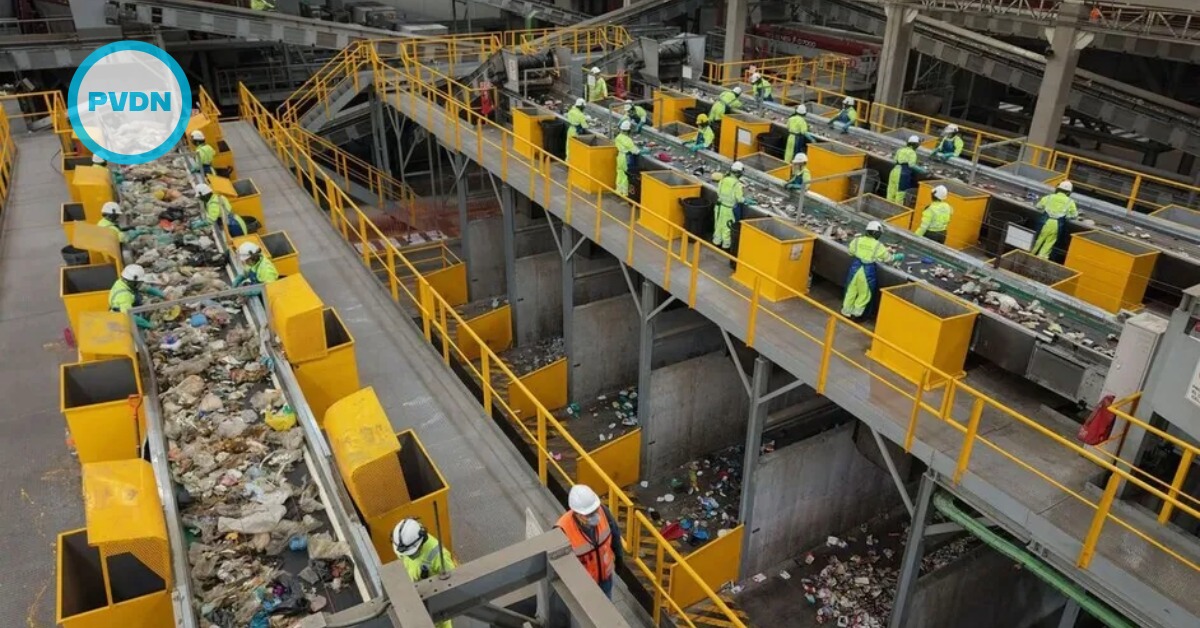
Waste infrastructure is expected to change as well. The law gives existing sanitary landfills a five-year window, with possible extensions, to begin a progressive reconversion. The aim is that less material ends up in final disposal. More material should be diverted to recycling or other forms of recovery. The goal is to make landfills the last resort, not the default destination for most of the country’s trash.
Another key element is inclusive recycling. The statute explicitly recognises the social, economic and environmental contribution of informal waste pickers and recyclers. It orders authorities to design models that include them in formal circular economy schemes. The idea is to avoid pushing them out as new technologies and large private operators move into the sector. For advocates, this recognition is one test of whether circularity can also be a tool for social justice.
From law on paper to change on the ground
Supporters describe the new framework as a long-overdue response to an environmental and productive crisis. Legislators backing the project framed it as a way to generate less trash, more economic value and more green jobs. They also see it as a way to give Mexico a clearer path to sustainable growth without breaking its trade competitiveness. The law also responds to the federal development plan. That plan calls for a gradual move away from single-use goods and for greater recycling of materials across key industries.
Yet even its strongest backers acknowledge that the hard work begins now. Local congresses will have to harmonise their own laws. Municipalities will need resources and technical support to upgrade waste collection, sorting and treatment systems. Companies in sectors such as packaging, consumer goods, automotive and electronics face new compliance expectations. These range from product design to traceability and reporting. For small and medium-sized enterprises, timelines and obligations may be adjusted, but the direction of travel is clear.
International experience suggests that circular economy laws only work when data, enforcement and public awareness move in step with formal rules. Mexico’s own environmental agencies have struggled for years with limited budgets and uneven enforcement. Over the same period, waste volumes and plastic use increased. Analysts warn that without stable funding, reliable data and coordinated inspections, the most ambitious targets could remain on paper.
At the same time, the new law gives authorities new tools. It allows the federal government to use fiscal incentives to reward circular practices. It can channel investment into recycling infrastructure, especially in coastal areas and public spaces where plastic and other waste often accumulate. The law also anchors circularity in a legal framework that is harder to roll back. That signals to investors and trading partners that Mexico is aligning with global standards for resource efficiency.
For households, the change will not be immediate, but it will be visible if the law is implemented as written. Better separation at source is one likely outcome. New collection schemes for specific products are another. People should also see clearer information on what can be repaired, reused or recycled. Over time, success will be measured in fewer open dumps, cleaner rivers and beaches and more formal green jobs. A smaller share of the country’s waste should end up as pollution rather than as raw material.
Mexico has pushed the circular economy from policy proposal to binding law. Whether the Mexico circular economy law becomes a turning point will depend on how quickly governments, companies and consumers turn its principles into everyday practice.