Mexico City issued a new guide with police, journalists and rights groups, seeking to rebuild trust on the streets after the Generación Z clash.
Mexico City’s government has made a rare move amid a long and bruising conflict between security forces and the press. This week, officials published a new manual that spells out how capital police should treat journalists, especially during protests and high-tension operations. The guide is the product of two years of work between the city’s Secretaría de Seguridad Ciudadana, reporters and press-freedom groups, with support from an international security governance center and funding from Germany’s embassy.
According to the organizations involved, the project grew out of a series of closed-door dialogues in 2024 that brought officers and reporters into the same room. Women from both sides held dedicated sessions to talk about harassment, threats and the extra risks they carry in the field. Those conversations, participants say, shaped a document that tries to put everyone’s duties and rights in plain language.
At its core, the guide lists the basic obligations the city already has on paper: to protect freedom of expression, to avoid obstructing coverage and to act when reporters are attacked. It goes further by urging commanders to factor in a gender perspective, to recognize the specific risk faced by women and LGBT+ journalists, and to build inclusive policies that also consider Indigenous people and people with disabilities.
Police violence against journalists
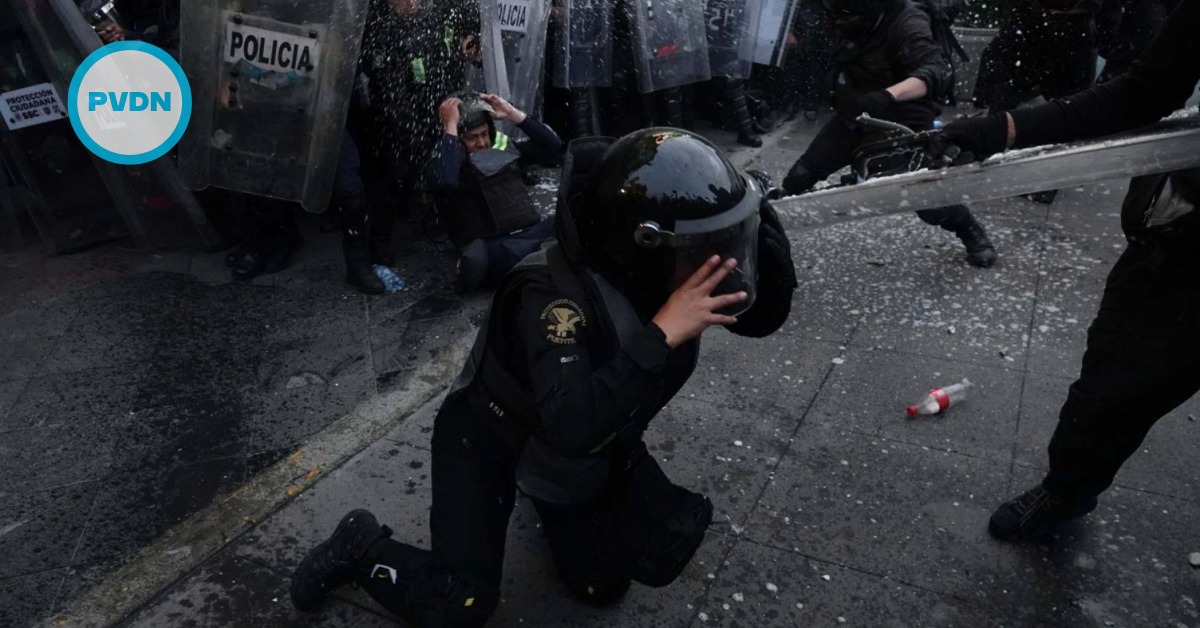
The move comes after yet another public clash laid bare how fragile those commitments are on the street. On November 15, the so-called Generación Z march drew roughly 17,000 people to downtown Mexico City. What began as a youth-driven protest over insecurity, corruption and the cost of living ended in tear gas, smashed fences and running battles in the Zócalo.
Officials reported 40 people detained that day. Half were turned over to prosecutors for alleged robbery and assaults; the others faced administrative charges. The city’s security chief later said 100 officers were injured, with 40 taken to the hospital, and that 20 civilians also received medical attention. Those numbers describe only part of the damage. Rights groups and media organizations documented multiple attacks on reporters, including photographers kicked while on the ground and camera crews hit with gas and projectiles while filming.
The march was not an isolated incident. Mexico has spent years near the top of global rankings for attacks on the press. Press-freedom groups say at least five journalists were killed in the country in 2024 alone, and hundreds more suffered threats, physical assaults or online harassment. One major monitoring group counted 639 attacks on journalists in 2024, a jump of almost 14 percent from the previous year, and found that a large share of those incidents involved public officials or other state actors.
Mexico City itself stands out in that national picture. Previous research by advocacy organizations has placed the capital among the states with the highest number of aggressions against the press, many of them linked to local authorities. For reporters who cover protests, the threat often comes not only from masked demonstrators but from the lines of riot shields in front of them.
It is in that context that the city now presents its new guide as a response to police violence against journalists and as an attempt to keep future protests from spiraling into beatings, equipment theft and panic.
The document does not pretend that only one side is at risk. It lists shared problems raised in the 2024 meetings: emotional burnout for officers and reporters, lack of safety gear, poor understanding of the legal framework on both sides and persistent stigma that paints all police as abusers and all media as enemies. It also notes that violence can come both from organized crime and from inside institutions, and that complaints about corruption or abuse often go nowhere.
From paper commitments to street reality
Beyond diagnosis, the guide lays out a catalogue of actions. It urges police commanders to refresh their training in human rights, protest management, and intercultural communication, and to do so with journalists in the room. It calls for joint workshops that walk through real cases, rather than abstract lectures, and for permanent channels where reporters can raise concerns without fear of retaliation or exposure of their personal data.
One key section restates that officers must not obstruct coverage, destroy equipment or confiscate cameras and phones, except under the narrow conditions the law already allows. When journalists are attacked, onlookers or bystanders, officers are reminded that their duty is to shield them and get them medical help, even if the aggressor is another officer. The guide also stresses that presenting detained people to the press must not violate the presumption of innocence or reveal sensitive personal information.
The project’s backers frame it as part of a broader regional effort. Similar police-press manuals have already been developed with local forces in states such as Sinaloa and Nuevo León, also with Article 19’s support. Together, they form a kind of toolkit that could, in theory, be adapted in other cities that face the same mix of protest, crime and mistrust.
Still, the hardest work lies ahead. A guide, no matter how detailed, cannot by itself undo years of fear, impunity and routine aggression. For reporters who were beaten or robbed during the Generación Z march, trust will not return because a PDF appears on a government website. For officers who have also been injured on the line, any change will depend on whether they feel their own rights and risks are taken seriously.
Mexico City’s new manual is, at minimum, an acknowledgment that the status quo is unsustainable. In one of the world’s most dangerous countries for the press, any concrete step that limits confrontation between police and journalists can mean fewer cameras smashed, fewer ribs broken and fewer families waiting all night for news outside a hospital. Whether this guide becomes a living tool or just another document filed away will be decided in the next protest, not in the next press conference.