Street vendors say parachutes keep dropping near a downtown Hilton after a viral U.S. jumper incident, raising safety and airspace questions.
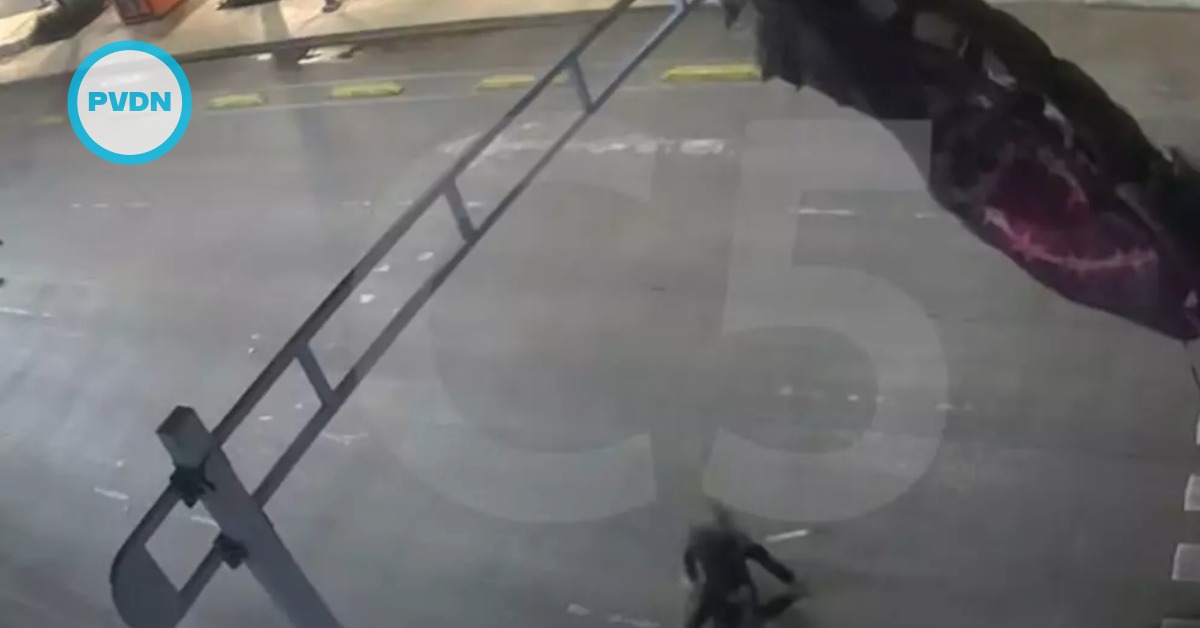
On a cool Tuesday morning in downtown Mexico City, traffic on Avenida Balderas screeched to a halt for a scene straight out of an action movie. A man in black, harnessed to a parachute, dropped over the intersection with Avenida Juárez and ended up tangled in a traffic light, just steps from the Alameda Central. Cameras at the city’s C5 monitoring center recorded the entire descent, while drivers and pedestrians rushed in to pull him down from the pole.
Police later identified the parachutist as a 36-year-old U.S. citizen named Miles. According to the initial report shared with officers on the scene, he said he had jumped from an ultralight aircraft flying over the city and misjudged his landing. Despite the dramatic images, paramedics found no serious injuries. The man was taken to a Civic Judge, where authorities decided to release him after confirming there were no damages or injured third parties.
The viral clip of the foreigner dangling over one of the capital’s busiest crossroads spread quickly across social networks. For people who work around the Alameda, though, the surprise was more limited. Several informal vendors stationed on Avenida Juárez say parachutes have appeared in that same stretch of sky more than once, and not always by accident.
Some of them point their fingers at the tall tower across from the park: the Hilton Mexico City Reforma, a 24-story hotel on Avenida Juárez with a helipad on its roof.
One vendor says he has twice watched a canopy open high above the hotel and drift toward the roof before disappearing from view. Others say they have seen parachutists over the zone but cannot confirm whether they actually touched down on the building. What they agree on is that the airborne stunts do not feel like a one-off prank.
Mexico City parachute jumps
The talk on the street is blunt. In the days after the traffic-light incident, vendors around the Alameda repeated the same story: these are not the Mexico City parachute jumps they see for the first time. Some say they have also heard the buzzing sound of small aircraft, quieter than helicopters, passing over the area before a parachute appears in the sky.
Their stalls sit in one of the most crowded corners of the capital. Alameda Central, the Museo Mural Diego Rivera, Bellas Artes and the busy office blocks on Juárez and Balderas funnel commuters, tourists and families through the intersection from early morning to late at night. Dropping a parachute into that space, even as a controlled jump, leaves very little room for error. A gust of wind or a miscalculated glide path could push a jumper into traffic, building glass or overhead cables.
For now, the witnesses’ accounts remain just that: testimonies from people who spend long hours looking up and down that corridor. There is no public video showing parachutists landing on the Hilton’s rooftop, and no authority has confirmed that any organized skydiving activity is taking place from the building.
The hotel, approached for comment after the latest incident, first said it had no information about parachute activity over its facilities. Staff later explained that an external tourism company with a presence inside the hotel sells flights, but in the Teotihuacán area outside the capital, not over downtown Mexico City. When contacted, personnel from that company said they were not aware of any parachute jumps being carried out in the city itself.
City authorities have also kept their distance from the rumors. The local Government Ministry, the Secretariat of Citizen Security and the Secretariat of Comprehensive Risk Management and Civil Protection were all asked whether they had knowledge of repeated jumps in the area or any investigation related to the hotel. As of the publication of the original report on Thursday, 11 December, none had issued a formal position.
Who is watching the sky above Juárez
The official response has, instead, focused on the viral jump itself. Salvador Guerrero Chiprés, head of the C5, shared a brief message after the incident, explaining that video monitoring enabled operators to track the parachutist from the moment he became stuck on the light. From the C2 Centro Histórico, staff coordinated with on-the-ground police officers to ensure there were no damages or risks in the area before traffic returned to normal.
Behind that quick intervention sits a broader framework that now governs what happens in Mexico’s airspace. Since 2023, the Ley de Protección del Espacio Aéreo Mexicano has been in force. The law assigns the Secretariat of National Defense (Sedena) the task of coordinating the national system that monitors the country’s skies and leading actions to protect the space above Mexican territory. Civil agencies, including the Federal Civil Aviation Agency (AFAC) and air navigation services, are part of that system.
While the law does not mention parachuting by name, ultralight aircraft are regulated through aviation rules and circulars that set operational requirements and safety conditions for flying in Mexican airspace. Those rules are stricter in congested urban zones and around airports. Mexico City’s historic center lies within controlled airspace that also serves the capital’s main airports, so any small aircraft operating there requires clear authorization and must respect protected zones and heights.
Pilots and air-traffic specialists consulted for coverage of the case have pointed out that ultralight flights over dense areas of the city, especially near major airports or large gatherings of people, could violate regulations if they do not follow AFAC procedures or stray into restricted corridors. They also note that these aircraft tend to fly lower than commercial jets, which can make them harder to spot on radar and more reliant on visual tracking, such as the C5 cameras that recorded Tuesday’s jump.
In the Alameda corridor, the people most exposed to any mistake are those on the ground. Vendors who have watched parachutes float past their stalls describe a mix of fascination and unease. The sight of a canopy blossoming against the skyline might be spectacular, but it also raises an obvious question: if something goes wrong, who carries the responsibility for injuries or damage?
For now, the U.S. jumper has walked away with only a scare and a civic file. The hotel at the center of the rooftop rumors insists it hosts no parachute activity in the city. Regulators have not said publicly whether they are tracing the ultralight flights that brought Miles over downtown, or whether they will look into the alleged rooftop landings that local workers say they have seen.
What is clear is that the viral video has done more than entertain social media. It has drawn attention to how little most residents know about what is allowed in the sky above them, and how narrow the margin is between a daring stunt and a serious accident in the heart of Mexico City. Until authorities explain who is jumping, from where, and under which permits, people working under that flight path will keep scanning both the crowd and the clouds.