Mexico City has paid nearly 33.9 million pesos to more than 3,700 drivers for pothole damage, exposing deep flaws in road maintenance.
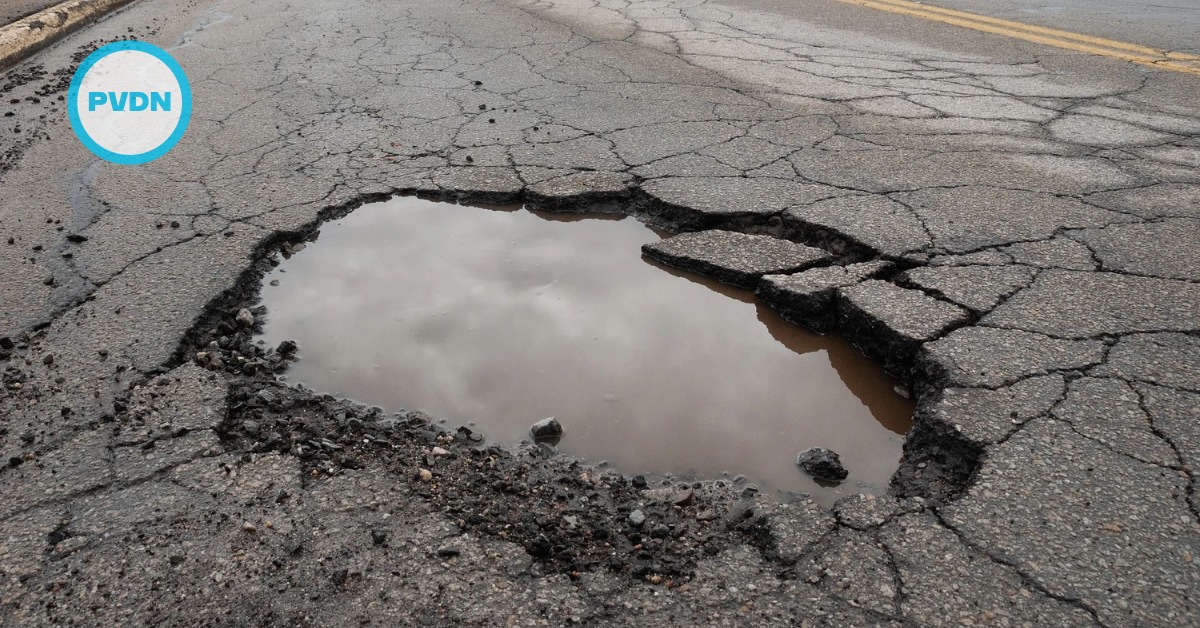
In less than six years, Mexico City pothole payouts have crossed 33.8 million pesos. That money went to 3,723 drivers whose cars were damaged after dropping into unmarked holes in the asphalt on primary and secondary roads. The figures come from data released by the city’s Finance Secretariat through transparency requests, covering 2020, 2022, 2023, 2024 and January to October 2025. Behind each peso is a flat tire, a bent rim or a broken suspension that the city has accepted as its responsibility.
The payouts are not small. Together they add up to 33,866,054 pesos, an average of about 9,000 pesos per driver. The most expensive year so far was 2023, when the city paid 8,361,667 pesos to 688 motorists whose vehicles were damaged by potholes. In 2022, 695 drivers received just under 8 million pesos. Another 793 cars were compensated in 2024 for more than 7.3 million pesos, and from January to October 2025 the city paid 1,851,013 pesos to 250 drivers. The pattern matches what anyone in traffic already feels: each rainy season brings more holes, more repairs and more bills.
At street level, compensation reaches drivers through two main routes. One is the long-standing mechanism in which a driver files a complaint with a civic judge, who orders a technical inspection and establishes the damage. This channel is used often by motorists with plates from other states. The other route is administrative. Through the Bache10 program, drivers call the city’s complaint lines and begin a claim that can end in a check for repairs, as long as the pothole was not properly marked and the damage is clearly linked.
Mexico City pothole payouts and who actually gets paid
The transparency data show that 1,318 vehicles were compensated after drivers took their case to a civic court and a court-appointed expert confirmed the damage. Another 2,354 vehicles were covered through Bache10 after motorists reported the incident via telephone lines such as 072 or Locatel. In both cases, officials required proof that the vehicle fell into an unmarked pothole on a city road and that the driver was following basic traffic rules at the time.
The distribution of claims also reveals where the problem is most visible. Among the boroughs with more complaints handled through the civic-court route are Gustavo A. Madero, Álvaro Obregón and Cuauhtémoc. In Gustavo A. Madero alone, 11 potholes triggered compensation of 351,300 pesos. Seven potholes in Álvaro Obregón led to 214,800 pesos in payments, while five in Cuauhtémoc generated 151,350 pesos in aid. Each figure reflects a specific site where the city accepts that it failed to warn drivers about damaged pavement.
For 2025, the city added another layer: an insurance policy. Current payouts are being covered by a contract with Seguros Azteca that cost the local government more than 380 million pesos. The coverage is meant to absorb risks linked to damaged streets and other hazards. It comes on top of earlier spending for incidents such as falling trees and flooding, which together have generated close to 60 million pesos in compensation in recent years. The picture is clear. Road and infrastructure failures now carry a steady price tag for public finances.
A slow road from damage to compensation
On paper, residents have had the right to seek payment since a responsibility law and related programs were introduced in 2008. Guidance published by civic and data-journalism groups explains that any driver can request compensation if a car is damaged by an unmarked pothole, uncovered drain, grate or sinkhole on city streets. The conditions are strict. The driver must not leave the scene without documenting the damage, must be sober, and must have valid plates, registration and licence. Collisions with other vehicles, and damage to bicycles, are excluded.
In practice, the process can feel like a second punishment after the first hit to the car. The recommended steps are detailed and time-sensitive. Drivers are advised to stop as safely as possible near the pothole, take photographs of the hole, the car and the surroundings, and call Locatel to open a report. If the car cannot stay at the scene, the driver may need to present the damaged vehicle and evidence at the nearest civic court, where a specialist evaluates the damage and issues a report. After that, the case moves to the relevant authority, which may be the city’s public works department or the borough government, depending on the type of road.
Official guides describe a response time of around ten days for the technical ruling, and several more weeks before any payment. Reporting from recent years shows that the wait can stretch to months, and that many drivers give up along the way rather than assemble every required document, from the vehicle’s invoice to repair estimates from approved workshops. For those who see potholes as a routine part of driving in the capital, the bureaucracy can be a powerful signal that it is easier to pay out of pocket than to press a claim.
The scale of the problem goes beyond the 3,723 compensated drivers. City officials have reported tens of thousands of potholes attended in a single year, especially during heavy rainy seasons. To address this, the current administration has announced major road-repair campaigns, including night-time paving brigades, a dedicated call line at *0311 and a WhatsApp chatbot for reports. One recent plan includes more than 2.2 billion pesos to resurface over a thousand kilometres of primary roads over a hundred nights of work.
Even with that investment, engineers warn that constant emergency patching is no match for deep flaws in the pavement and subsoil. Mexico City’s mix of sinking ground, old pipes and intense rains chews up new asphalt in a matter of months. For drivers, that reality is measured less in cubic metres of rain or kilometres of fresh pavement, and more in the thud that comes when a wheel drops into yet another hole. As long as that keeps happening, compensation schemes will continue to function as a backstop, not a real solution, and the line between a right to be paid and the burden of claiming it will remain thin.