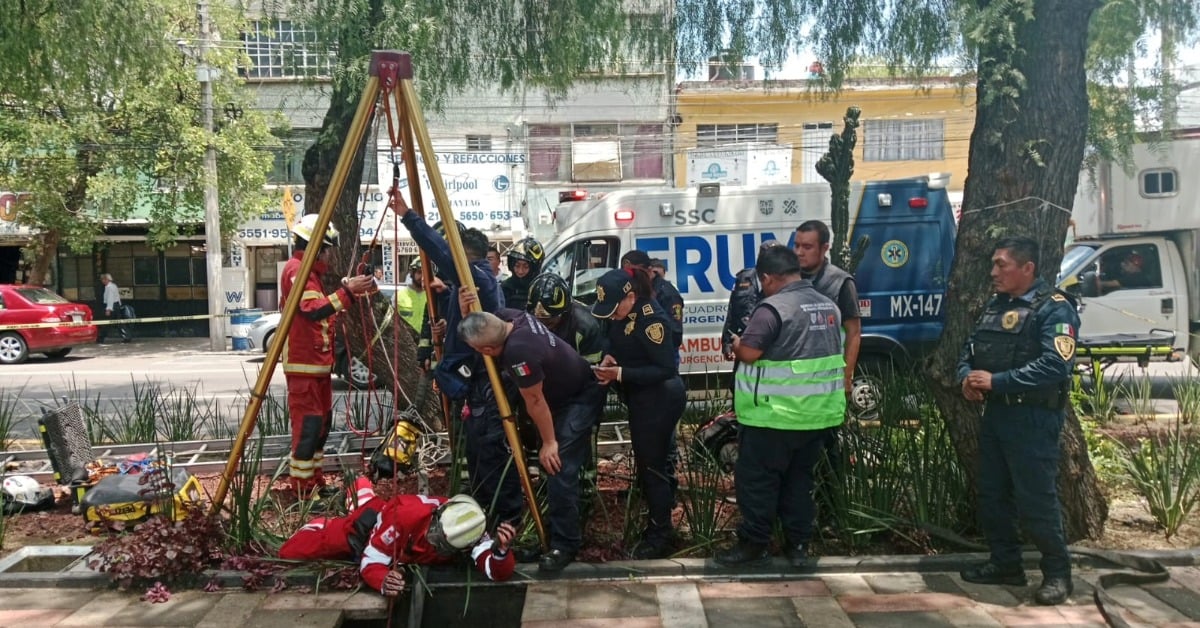
A weekend walk turned dangerous when the ground on Avenida Talismán gave way beneath a woman in the Gustavo A. Madero borough of Mexico City. Firefighters and ERUM paramedics lowered gear, stabilized her, and transferred her to Magdalena de las Salinas Hospital. City water authorities later said a wastewater collector weakened by recent rains caused the collapse. The scene lasted minutes but captured a more prolonged crisis: a capital that floods in storms, sinks from groundwater loss, and struggles with aging drains. The Gustavo A. Madero sinkhole shows how those stresses meet on the sidewalk.
Mexico City sinkhole
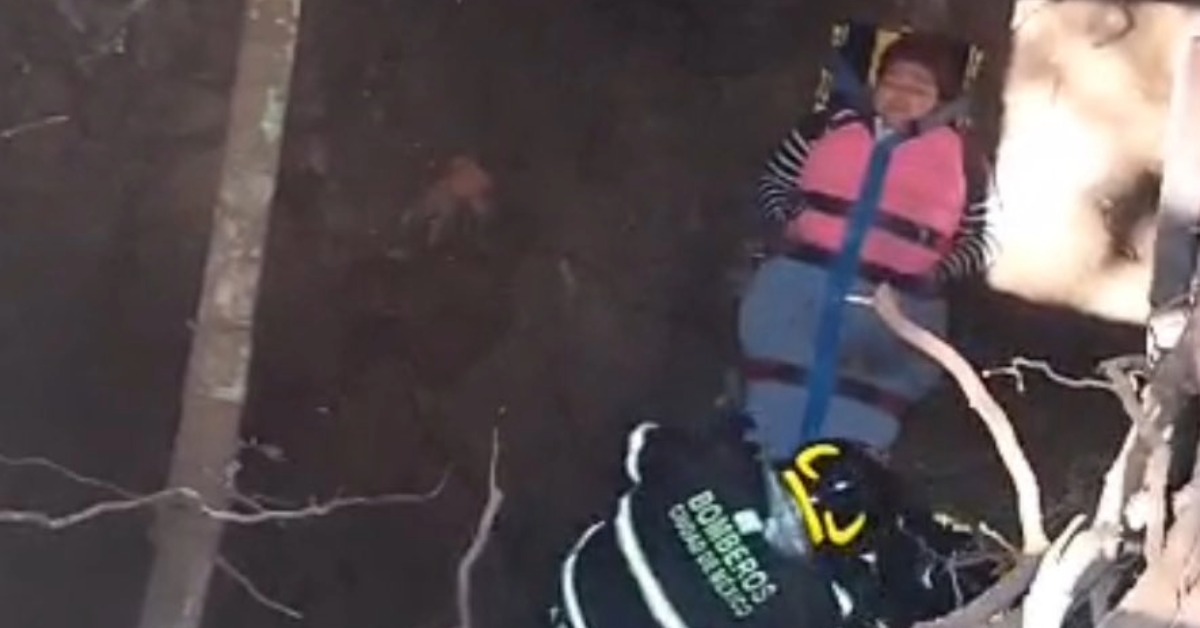
She was crossing the pedestrian path on Avenida Talismán, near Eduardo Molina, in Mexico City, when the pavement opened. Neighbors shouted for help. Firefighters rigged a descent, secured the patient, and handed her to ERUM paramedics, who took her to Magdalena de las Salinas Hospital for evaluation.
City water officials later put numbers to the hole: roughly six meters long by four wide, with a depth of nearly six meters. They traced the failure to a leak in a 1.52-meter wastewater collector, with intense recent rains softening the soil around the pipe.
A rescue done right, and the questions it raises
The rescue ended quickly and by the book, but the location matters. The corner of Talismán and Eduardo Molina sits in a borough marked by stormwater stress and variable ground conditions. Recent mapping of flood-prone areas in the Valley of Mexico flags parts of Gustavo A. Madero as vulnerable during heavy rain events. That vulnerability raises the odds that a hidden leak or void becomes a sudden cavity after a downpour.
Officials have logged a surge of similar incidents this year. By mid-August, authorities reported 153 sinkholes on primary and secondary roads across the capital, already exceeding all of 2024. Each event is local, but the pattern is citywide.
The human story behind the headline
Witness videos show confusion, fear, then routine professionalism: a harness, a stretcher, and steady hands. The woman, described as around 60, was conscious when responders reached her. Coverage varies on the hole’s exact depth, but the direction of travel is clear: the city’s network of pipes, many laid decades ago, is under pressure from rain and ground movement.
SEGIAGUA says it will follow the patient’s care and continue repairs at the scene. The agency also reminded residents to report signs of subsurface problems—standing water where it shouldn’t be, pavement that sounds hollow, or persistent settling—before a collapse forms. That message arrives in a season of intense storms and saturated streets.
Beyond one corner: a capital that sinks and floods
Mexico City’s deeper challenge is mechanical and slow. Remote-sensing studies over the last two years show large swaths of the basin sinking more than 30 centimeters per year, with peaks above 40 centimeters. That differential movement tilts pavements and strains sewers, setting up failures during heavy rain. Engineers warn that without reducing groundwater draw and renewing old collectors, repairs will keep chasing the next hole.
What happens next on Talismán
The first step is stabilization: barricades, soil removal, and then controlled excavation to expose the failed pipe. Crews will replace damaged sections and compact layers in lifts to restore bearing capacity. The city has also announced broader sinkhole response efforts this year, but those programs are racing an old network under a sinking city. For neighbors, the hope is simple: a safe sidewalk and a drain that works when the sky opens.