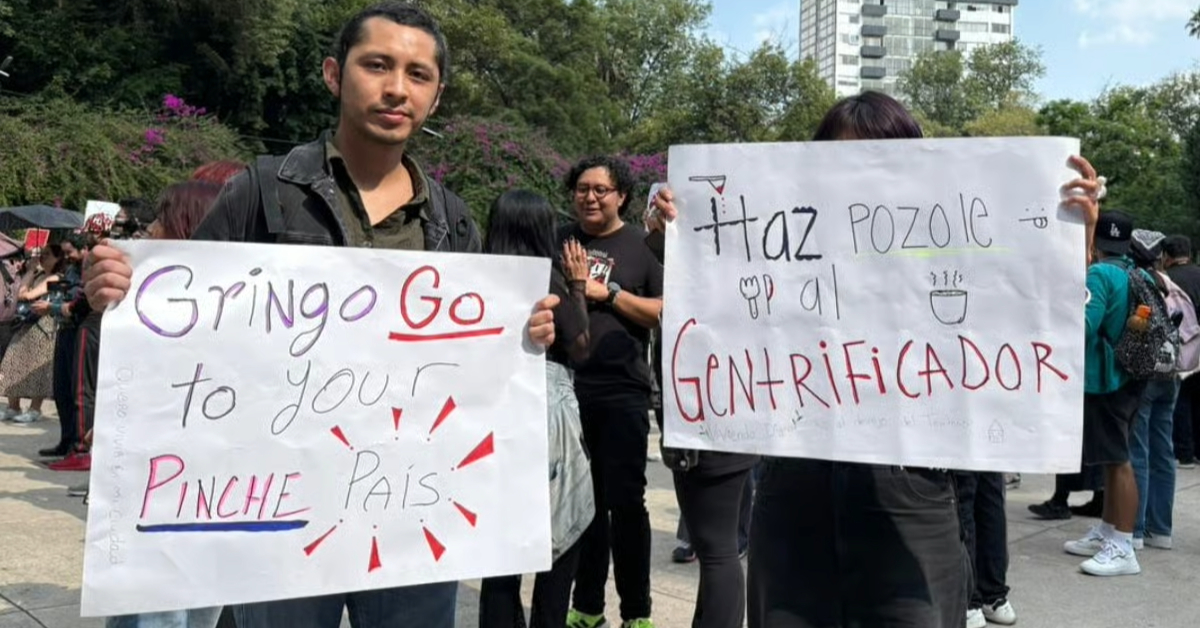
A second anti-gentrification march in Mexico City is set for July 20, this time focusing on rising housing costs in the south. Protestors at the first march became violent and only offered removing Americans from the city as a solution to the problem.
A second anti-gentrification march in Mexico City is scheduled for Sunday, July 20, as public frustration over rising housing costs continues to grow—this time with a focus on the capital’s southern neighborhoods. Organizers have announced that the march will begin at 3:00 PM at the Fuentes Brotantes Metrobús station and head toward El Caminero.
The protest follows the first major anti-gentrification mobilization held in the capital earlier this year. The upcoming demonstration was announced on social media by neighborhood groups and housing activists who accuse the city’s real estate and tourism sectors of pushing locals out of their homes and communities.
According to organizers, southern areas of Mexico City have become a new front line in the fight against gentrification. They point to a surge in real estate speculation and the rise of short-term rental platforms, both of which have dramatically inflated housing prices in recent years.
In addition to longstanding grievances, the protestors are also highlighting what they call the “touristification” of local neighborhoods. This trend, they argue, is accelerating as Mexico City prepares to host matches for the 2026 FIFA World Cup. Although city officials have not publicly acknowledged these claims, local groups say the global event is only intensifying pressure on the housing market.
Gentrification’s Growing Impact in the South
Gentrification, broadly defined, refers to the socioeconomic transformation of urban neighborhoods as more affluent residents move into traditionally lower-income areas. While some argue the process brings new investment and amenities, critics say it erodes cultural identity and displaces families who have lived in their neighborhoods for generations.
In southern districts of Mexico City—such as Tlalpan, Xochimilco, and parts of Coyoacán—residents say the impact is becoming harder to ignore. Housing prices have spiked, landlords are evicting tenants to convert apartments into Airbnb units, and local businesses are being replaced with high-end shops and cafés aimed at foreign or wealthy customers.
“The city is being sold off piece by piece,” said one protestor in an online post promoting the march. “We’re not against tourism or development, but we need policies that protect the people who live here.”
A Global Pattern with Local Consequences
Mexico City is not alone in grappling with gentrification. Cities like Barcelona, Berlin, Lisbon, and San Francisco have seen large-scale protests in recent years over similar dynamics. Each case, while unique, shares common threads: foreign investment, skyrocketing rents, and the rise of short-term rentals transforming residential neighborhoods into tourist zones.
Mexico City is increasingly appearing on the global radar as a desirable destination for digital nomads and remote workers. While this visibility may benefit the tourism industry, it also raises difficult questions about equity, access, and sustainability.
Experts have warned that without clear urban policies, gentrification can lead to long-term instability. “When residents are pushed out of their neighborhoods, it creates a ripple effect—disrupting schools, social networks, and local economies,” says urban planner Sofía Martínez, who studies housing trends in Latin American cities.
A Call for Policy Action
At the heart of the protest is a call to protect the right to remain. Organizers want city officials to address the escalating costs of living, regulate short-term rentals more strictly, and ensure that new developments include affordable housing. The previous Mayor of Mexico City, now President Claudia Sheinbaum Pardo, entered into an agreement with Airbnb to promote the city as an option for digital nomads.
However, the intent of the organizers may be overshadowed by the actions of protesters, who often chant anti-American slogans, assault foreigners, and cause property damage to businesses.
They’re also demanding transparency in city planning decisions, especially those tied to international events like the World Cup. For many in the community, the fear isn’t just about losing a home—it’s about losing the soul of their neighborhood.
“There’s a sense of grief,” said one activist in a social media post. “We’re watching our city change in ways we didn’t ask for and can’t afford.”
The upcoming march aims to send a clear message: that prosperity should not come at the cost of displacement, and that development should not be confused with dispossession.
As Mexico City continues to evolve, these protests serve as a reminder that urban growth must be inclusive, equitable, and rooted in the people who have built the capital’s neighborhoods from the ground up.