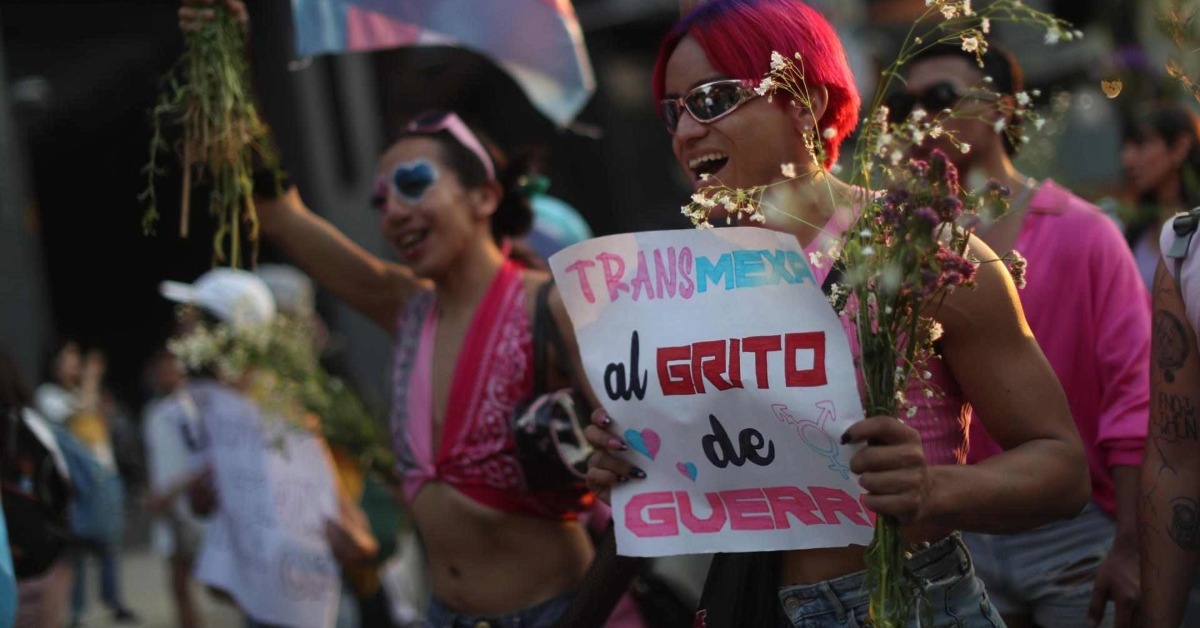
Mexico City Transgender Remembrance Day
Mexico City’s Congress approved a decree setting November 24 as the city’s Transgender Remembrance Day, a local commemoration to honor victims of anti-trans violence and to promote visibility. The measure directs the city government, boroughs, and autonomous bodies to organize activities recognizing the trans community and remembering those killed.
The move formalizes something advocates have pushed for: a date that belongs to the city’s calendar and comes with a mandate to act. In practical terms, that means events and programming rooted in public institutions—museums, schools, health clinics, cultural centers—rather than optional, one-off tributes.
Why November 24 instead of November 20
Internationally, the Trans Day of Remembrance is observed on November 20. In Mexico, that day often competes with Revolution Day parades and official ceremonies. Lawmakers argued a local date would avoid that clash and allow a fuller public focus. They also highlighted proximity to November 25, the International Day for the Elimination of Violence against Women, to create a continuous period of reflection on gender violence. An earlier version of the initiative was floated on November 26 for that reason; the final vote was locked in on November 24.
What the decree requires from the government
The text approved by Congress isn’t symbolic alone. It specifies that the capital’s executive branch, the 16 boroughs, and autonomous public bodies “must promote activities” that recognize trans people and honor those lost to transphobia. That gives public offices a straightforward task—and a date on the calendar—to convene talks, memorials, exhibits, data releases, and training. Expect the first official observance on November 24, 2025, with programming across city venues.
The context that Mexico can’t ignore
Mexico’s record on lethal violence against LGBT+ people remains troubling. The latest Letra S report tallied at least 80 killings of LGBT+ people nationwide in 2024, up from 66 in 2023—figures that reflect documented cases and likely undercount the real toll. Journalism and civil-society observatories have repeatedly warned that trans women are disproportionately targeted.
Local authorities and human-rights bodies have urged better investigation standards and data collection to track anti-trans crimes. The CDMX Human Rights Commission has also flagged political and social violence against trans women, particularly those in public life. The city’s new memorial day could be a lever to publish better data and measure progress.
A city that moved early on legal recognition—yet gaps remain
Mexico City was a regional pioneer. In 2014, it created an administrative process to change legal gender on birth certificates, later expanded to include adolescents. That reform reduced the barriers that many trans people faced in court. Yet legal recognition hasn’t eliminated daily discrimination or violence—something the new day seeks to keep in the public eye.
The Supreme Court and human-rights institutions have built standards for investigating crimes based on prejudice. Those tools exist; the question is consistent use. Visibility-driven dates can push agencies to show their work—publishing case status, training numbers, and outcomes.
What to watch before November 24
Two things determine whether this becomes more than a calendar line. First, implementation: which offices lead, what budgets are assigned, and how programming reaches the borough level. Second, metrics: will the city release homicide and hate-crime data by category, and track complaints and resolutions? The decree creates a hook to do both. Civil society will surely ask for it.
Setting November 24 as Mexico City Transgender Remembrance Day is a practical step with accountability built in. The mandate to run public activities puts responsibility on government desks. If the city pairs that visibility with data and follow-through, this can be a yearly checkpoint on safety, dignity, and inclusion—not just a ceremony.