Mexico condemns Maduro capture after U.S. strikes in Venezuela, calling it illegal under the UN Charter and urging the UN to step in fast.
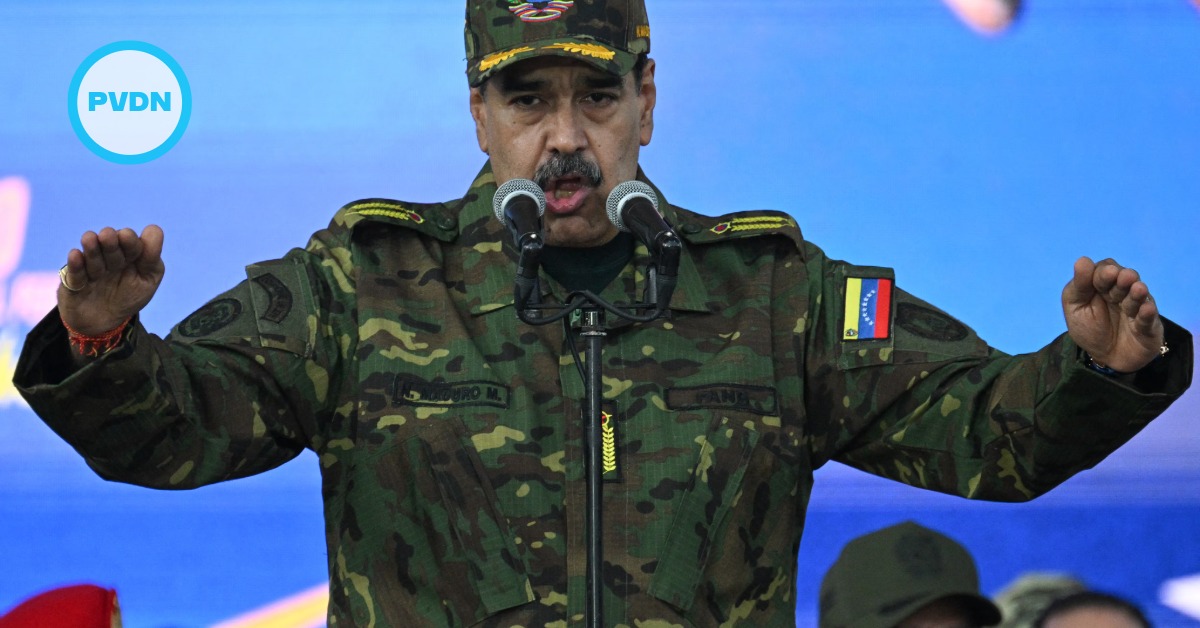
Mexico woke up Saturday to a shock headline from the Caribbean basin: the United States said it had carried out military strikes inside Venezuela, and U.S. President Donald Trump said Venezuelan leader Nicolás Maduro had been captured and removed from the country. Within hours, Mexico’s government issued a formal rejection of the operation, framing it not as a political argument but as a legal line that should not be crossed.
In a statement from Mexico’s Foreign Ministry, the Sheinbaum administration said it “strongly condemns and rejects” unilateral U.S. military actions against targets on Venezuelan territory. Mexico called the operation a clear violation of Article 2 of the United Nations Charter. This section bars the threat or use of force against another state’s territorial integrity or political independence. Mexico also warned that military action of this kind poses a serious risk to regional stability.
The message was blunt, but it was also careful. Mexico did not endorse Maduro, and it did not try to litigate Venezuela’s internal politics. It leaned on a familiar set of principles instead: sovereignty, non-intervention, and resolving conflicts through dialogue rather than force. Mexico urged the United Nations to act immediately to help de-escalate tensions. It said it is willing to support any effort that facilitates dialogue, mediation, or accompaniment aimed at preserving peace.
For a country that shares a border with the United States and a region with Venezuela, the stakes are obvious. When force enters the picture, even far away, it can reshape diplomacy overnight.
Mexico condemns Maduro capture
Mexico’s statement was triggered by an extraordinary claim from Washington: that a U.S. operation on Venezuelan soil ended with Maduro in U.S. custody. Venezuelan authorities denounced the strikes as aggression and said the attacks hit multiple locations, including in and around Caracas and in nearby states. Venezuelan officials also demanded proof that Maduro and his wife were alive and in U.S. hands. On the U.S. side, senior officials offered few public details about the legal basis for the action, while signaling that next steps were still being weighed.
For Mexico, the most important point was not the personalities involved. It was the precedent. By invoking Article 2 of the UN Charter, Mexico was signaling that it sees the issue as bigger than Maduro’s legitimacy or Washington’s grievances. Article 2 is the backbone of the post-World War II rulebook. Its best-known clause tells member states to refrain from the threat or use of force against the territorial integrity or political independence of any state.
That legal framing is also a political choice. Mexico’s government could have reacted by taking sides, praising the removal of an authoritarian leader or condemning it as a coup. Instead, it treated the operation as an act that threatens the regional order. Mexico’s statement included an urgent call to respect international law and to cease any act of aggression against the Venezuelan government and people. It warned that military escalation can destabilize the region, a phrase that reads differently in Latin America than it might elsewhere, given the region’s long memory of outside intervention.
Mexico also pointed the spotlight at the United Nations. The Foreign Ministry urged the UN to act immediately to help de-escalate. That request is not a magic wand, but it is a clear signal about where Mexico wants the argument to be heard. The UN system, in theory, is where claims about the lawful use of force are tested. The Security Council is the body designed to manage crises that threaten international peace, even when politics make action difficult.
In parallel, Mexico offered something practical. It said it is willing to support efforts that facilitate dialogue or mediation. That matters because it keeps a diplomatic door open without pretending diplomacy is easy. If the United States insists its actions were justified and Venezuela insists it was attacked, the space for talks can disappear fast. Mexico’s offer is a bet that some form of mediation, even informal, is still possible before the crisis hardens.
Mexico’s position also made room for a basic humanitarian point without drifting into speculation. Venezuela said there were casualties. The United States said some U.S. forces were injured. Mexico’s call for de-escalation is, at minimum, a call to stop adding bodies to the tally while the region tries to figure out what just happened.
Mexico’s non-intervention doctrine faces a stress test
Mexico’s reaction sits inside a long tradition of foreign policy that treats sovereignty as a hard boundary and prefers peaceful settlement of disputes. Those principles are written into Mexico’s Constitution as guidelines the president must follow when conducting foreign policy. The constitutional language emphasizes self-determination, non-intervention, the peaceful resolution of disputes, and the rejection of the threat or use of force in international relations.
That tradition is often associated with the Estrada Doctrine, articulated in 1930 by Mexican diplomat Genaro Estrada. The idea was simple and, for Mexico, protective: avoid publicly “recognizing” or “not recognizing” foreign governments as a way of judging their legitimacy. The doctrine does not prevent Mexico from speaking, but it pushes Mexican diplomacy toward rules and processes instead of political verdicts.
This Venezuela crisis is a stress test because Mexico is being pulled in two directions at once. It wants to defend the principle that borders matter. It also has to manage a relationship with Washington that touches nearly every part of Mexico’s economy and security. Mexico’s statement tries to square that circle by narrowing the argument to international law and by offering mediation without claiming ownership of the process.
For now, Mexico has put down a marker. It wants de-escalation and UN involvement. It also wants any outcome in Venezuela to come through negotiation rather than force. Mexico is betting the region will demand rules fast.