Mexico City, Mexico, June 19, 2026 – One of Mexico’s most important natural World Heritage sites is facing a sharper UNESCO warning as border security, energy projects, and wildlife conservation collide in the Sonoran Desert.
El Pinacate and Gran Desierto de Altar Biosphere Reserve, a volcanic and dune landscape in Sonora, could move closer to the formal List of World Heritage in Danger if Mexico and the United States fail to restore ecological connectivity for key wildlife populations. The warning is expected to be taken up at the World Heritage Committee’s 48th session in Busan, South Korea, from July 19 to 29.
A rare warning for a Mexican natural landmark
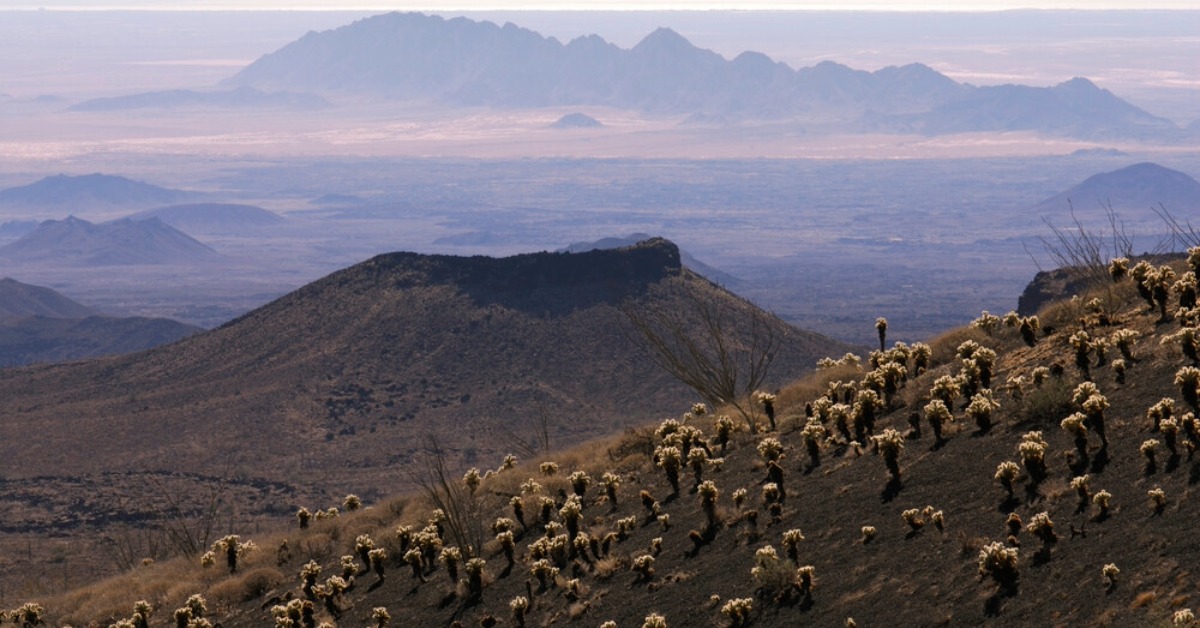
El Pinacate was inscribed as a UNESCO World Heritage site in 2013 for its volcanic shield, massive maar craters, lava flows, and the Gran Altar Desert, which UNESCO describes as North America’s largest active dune field. The protected area covers 714,566 hectares, with a buffer zone of more than 354,000 hectares.
The problem now is not only what happens inside the reserve. It is what happens around it.
The World Heritage Committee has repeatedly warned that the border wall built on the U.S. side has “clear negative impacts” on the site’s integrity and on the wider movement of wildlife. The barrier runs along the reserve’s boundary near Organ Pipe Cactus National Monument and most of Cabeza Prieto National Wildlife Refuge.
The draft decision for 2026 again states that the wall impedes the movement of critical species, including the Sonoran pronghorn. It also calls for an “urgent Action Plan” from the United States, developed with Mexico, to restore ecological connectivity by December 1, 2026.
The pronghorn becomes the test case
The Sonoran pronghorn has become the living measure of whether this landscape still works as a connected desert. Mexico’s 2026 conservation report describes the species as endangered in both countries and notes that it depends on cross-border biological corridors.
The same report estimates the Sonoran population at about 500 animals. Aerial censuses have been suspended since 2023 because of insecurity and limited funds, leaving camera traps and patrols to fill part of the monitoring gap.
That creates a difficult conservation problem. UNESCO and IUCN are not only asking whether the species is in trouble. They are asking whether the evidence is now too thin to understand how much trouble it faces.
The draft decision notes that research by the University of Arizona and the University of Sonora on the wall’s effects on mammal communities is expected in 2027. Until then, the committee is working with partial data, delayed monitoring, and a border barrier that remains in place.
Clean energy adds a second pressure point
The Puerto Peñasco photovoltaic project complicates the story because it sits in a different public frame: renewable energy.
CFE has described the Rafael Galván Maldonado solar plant in Puerto Peñasco as the largest solar project in the Americas. Its first phase began operating in 2023, the second in 2024, and later phases are under development. Once complete, CFE says the project will reach 1,000 megawatts of installed capacity, plus 246 megawatts in battery storage.
UNESCO is not treating the solar project the same way it treats the wall. The draft decision notes mitigation and monitoring measures, including a 7.7-kilometer section located within the property along the right-of-way of an existing highway. But it asks Mexico to keep monitoring impacts during construction and operation, and to ensure the project does not damage the site’s outstanding universal value.
A gas pipeline raises newer questions
The proposed Centauro del Norte “Tramo II” gas pipeline has become a newer concern in the UNESCO file.
The 2026 conservation document says the project is under federal evaluation and would cross 171.86 kilometers of the World Heritage property and its buffer zone, following an existing highway alignment. Seventeen negative impacts were identified within the property.
The World Heritage Centre and IUCN have raised concerns about whether the impact assessment fully considers the site’s outstanding universal value. The draft decision also calls for a participatory process that guarantees free, prior, and informed consent for Indigenous Peoples before any difficult-to-reverse decision is made.
Mexico’s national energy strategy adds another layer. Federal gas infrastructure plans list Centauro del Norte Tramo 2 in Sonora for operation in December 2028, part of a wider gas pipeline buildout meant to support power generation and industrial growth.
Not just a local desert issue
This is a national story because El Pinacate now sits at the intersection of three policy priorities. Border security, renewable power, and gas infrastructure.
It is also part of a wider heritage conversation in Mexico. UNESCO recognition can bring prestige, tourism, and global attention, as seen when PVDN reported on the Wixárika Route’s World Heritage inscription last year. But the same system can also bring pressure when a site’s core values appear threatened.
For El Pinacate, UNESCO’s concern is not that the desert has lost its beauty. The concern is that the desert may be losing its function.
The heart of the warning
The strongest language in the draft decision is about connectivity. If key wildlife populations cannot move through the landscape, UNESCO says the reserve may meet the conditions for inscription on the danger list.
That would not remove El Pinacate from the World Heritage List. It would put the site under a more urgent international spotlight and signal that its long-term integrity is at risk.
The decision in Busan will show how much patience remains. Mexico has documented conservation work, monitoring, and community involvement. The United States still faces pressure over the border wall. Energy projects are moving forward. The desert, meanwhile, has less room for mistakes.