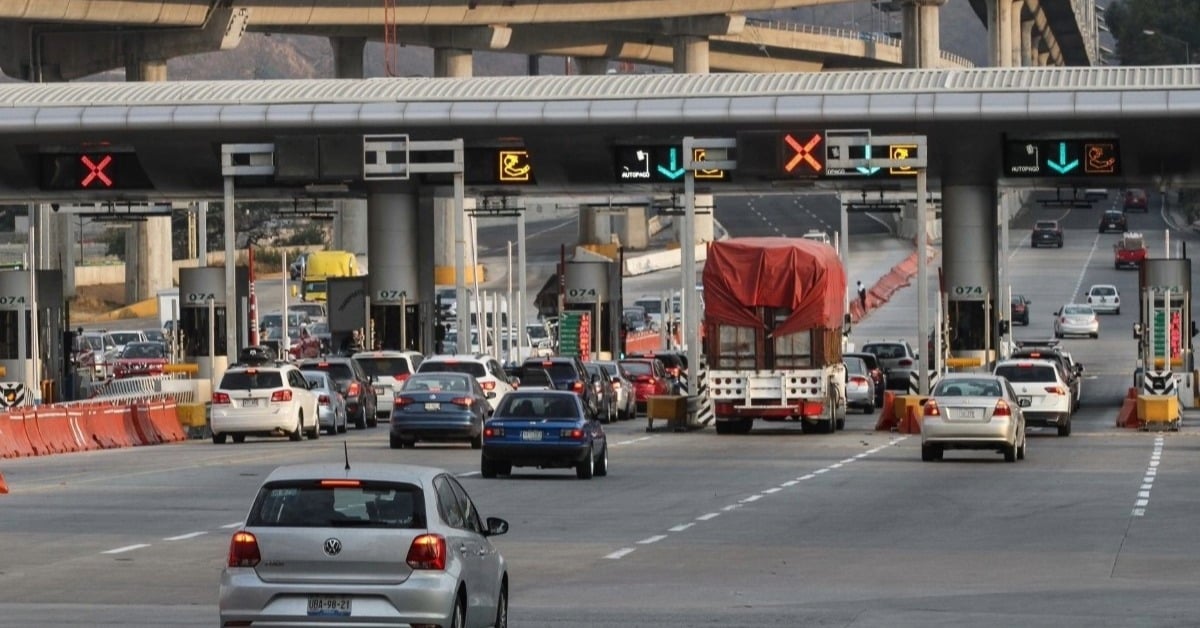
Mexico is moving to cashless tolls on a large share of its federal network. Capufe says that, beginning in January 2026, all plazas it operates will stop taking cash and rely on contactless systems, with the TAG as the primary method. Capufe manages about 35% of the national highway system—more than 3,982 kilometers—and several international bridges. For many travelers, this change will shift old habits at the booth but shorten waits when done right.
Capufe’s timing data shows why the move matters. A TAG transaction averages about a minute, while a tap-to-pay card can clear in roughly nine seconds. Cash can push a single car past 30 seconds, and those delays compound quickly in peak traffic. On busy holiday weekends, shaving seconds per vehicle is the difference between a steady flow and a backed-up plaza.
What this means for your next road trip
If you already use a TAG, you are ahead. If you don’t, there’s time to get one, learn placement, and set up payment. Portable tags work across vehicles in a household. Decal tags bond to a windshield and are harder to lose. Either option fits the new rules; the right pick depends on how many cars you drive.
Behind the scenes, the system is built for interoperability. According to PASE’s director, Alexis Reséndiz, a TAG issued by any participating company—government-operated IAVE, PASE, Viapass, or TeleVía—should work wherever the operator has an agreement in place. In practice, that means you shouldn’t need to swap devices to use Capufe roads.
Getting set up and avoiding the classic headaches
Placement matters. A misaligned TAG is a common reason for a red light at the barrier. Install it where the provider recommends—usually high on the windshield, away from metallic tints and gadgets that can interfere. If a reader misses your device, stop under the sensor and wait a beat; attendants can also scan or assist without breaking rules.
Your payment method is the other choke point. If you use prepaid, top up at least 30 minutes before travel so the balance refreshes across systems. On Mexico City’s urban tollways, minimum balances vary by entrance—from about 61 to 310 pesos—so treat those thresholds as a floor. For highway trips, minimums aren’t always posted. A practical cushion per PASE’s guidance is 400 to 600 pesos, which keeps you from scrambling at the worst moment.
Does every TAG work on Capufe roads?
That’s the plan. Mexico’s toll ecosystem has moved toward interoperability, and Capufe’s network is part of that push. IAVE, PASE, Viapass, and TeleVía issue compatible devices. The key is that the road operator must have an agreement in place. For typical intercity routes operated by Capufe, drivers should be able to use whichever tag they already have.
If you drive across operators in a single day, you’ll notice the same routine: slow to the marked lane, keep a safe gap so your reader detects only your car, and let the system register the pass. If a lane doesn’t open, the most likely culprits are low balance, a misread, or a device mounted in the wrong spot. Attendants can resolve edge cases without forcing you into a cash handoff—because cash won’t be an option.
What to expect as January 2026 approaches
The transition will be gradual in practice. Drivers will still see mixed lanes in the lead-up, and staff will be on hand to help people adapt. But planning now prevents last-minute surprises. Order a device, test it on a short run, and set auto-reload if you travel often.
For households with more than one car, a portable tag can simplify life. For commuters who never switch vehicles, a windshield decal is tidy and reliable. Keep your account credentials handy on the road, especially if you’re heading toward an international bridge where traffic can surge with little warning.
Capufe’s share of the highway network is large enough that the new rules will shape road travel across long corridors. With the right setup, the experience should be cleaner: fewer hand-offs, fewer errors, and more predictable travel times. The real win is at scale. When everyone moves faster, nobody stands still for long.