As Mexico prepares to co-host the 2026 World Cup, an old problem has returned at the worst possible moment. The homophobic chant heard in recent weeks is not just a football controversy. It raises the chance of FIFA sanctions, match stoppages, and a fresh debate over how Mexico handles discrimination in public spaces. For many international readers, the issue also needs context, as this chant has long followed Mexican football and has never fully gone away.
A problem Mexico thought it had contained
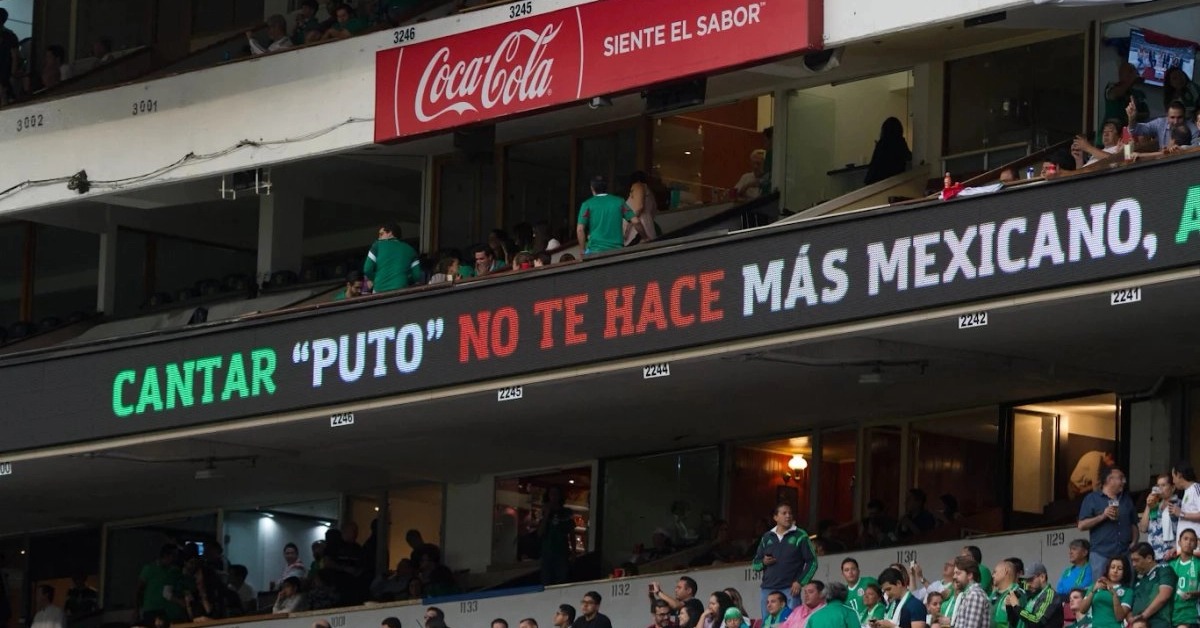
The chant has resurfaced more loudly in recent weeks after a period when it was heard less often. It was reported again during recent matches in Mexico, including a March 2026 friendly against Portugal and April club matches that were interrupted under anti-discrimination protocols. That has renewed concern that the issue could spill into the World Cup itself.
The chant is usually shouted when the opposing goalkeeper takes a goal kick. It has long been defended by some fans as part of football culture, not as anti-gay abuse. That defense has steadily weakened. Football authorities now treat it as discriminatory behavior, and rights advocates say intent does not erase impact.
For Mexico, timing is everything. The country is not just another participant in the next tournament. It is a host nation, and that changes the stakes. Mexico is scheduled to play all three of its group matches at home, with games in Mexico City and Guadalajara. That means any repeat of the chant during the tournament would unfold on one of football’s biggest stages, in front of a global audience.
Why FIFA sanctions are a real risk
This is not a hypothetical warning. Mexico has already been punished multiple times over the chant. The federation has said it has been fined at least 19 times since the 2014 World Cup cycle. It also served a more serious penalty when matches were played behind closed doors during World Cup qualifying. Another FIFA punishment tied to a 2024 match against the United States is still under appeal.
For readers outside Mexico, the important point is that FIFA has a clear anti-discrimination framework. Referees can act during a match, not only after it ends. Under FIFA’s three-step procedure, officials can stop play and issue a warning. If the behavior continues, they can suspend the match. If it still does not stop, they can abandon it.
That matters because World Cup matches draw far more attention than ordinary club games or friendlies. A stoppage during a host nation’s match would become international news within minutes. A harsher sanction would be even more damaging. Mexico has invested years of work and public money in preparing for 2026. Organizers want the story to be about hosting capacity, tourism, transport, and football, not another round of avoidable controversy.
Why activists say this goes beyond the stadium
The latest concern is not only about FIFA discipline. It is also about what public tolerance of the chant says beyond football. Andoni Bello, an LGBT+ activist cited in the latest reporting, warned that treating the chant as normal helps normalize broader anti-LGBTQ violence. His argument is that when insulting language is excused as custom, it becomes easier for discrimination to survive in everyday life.
That warning falls within a broader national context. Official Mexican data has estimated that about 5 million people, or 5.1 percent of those age 15 and older, identify as LGBT+. In that setting, the chant is not just a sports insult heard in a vacuum. It lands in a country where many people still face discrimination in schools, workplaces, public offices, and their own communities.
This is one reason the debate has changed. The question is no longer whether some fans claim a different intention. The question is whether public institutions, football authorities, and other fans are willing to keep treating it as something harmless. Activists say that the answer matters well beyond the final whistle.
Why the chant keeps returning
Mexican football has tried several responses over the years. There have been awareness campaigns, stadium announcements, public pleas from players and officials, and tougher punishment for fans. At one point, authorities even warned that supporters caught using the chant could face five-year bans from national team matches.
Those efforts have not fully worked because the chant tends to return in familiar moments. It often reappears when fans are frustrated, when a team is struggling, or when the crowd turns restless late in a match. That pattern is important ahead of the World Cup, because a home tournament creates exactly those emotional conditions. Expectations will be high. Pressure will be intense. If the crowd turns impatient, old habits may return.
That is why the recent March and April incidents matter so much. They suggest the issue is not settled. They also show that reminders on a stadium screen are not enough on their own.
What Mexico still has time to fix
There is still time before the World Cup begins, but the window is narrowing. The tournament schedule is set. Test events are already exposing weaknesses. Security, logistics, crowd management, and fan behavior are all under closer scrutiny now than they were a year ago.
Stopping the chant will likely require more than another slogan. It will require consistent enforcement inside stadiums, quicker identification of offenders, and a broader public message that the issue is discrimination, not tradition. It may also require more pressure from other fans, because crowd behavior often changes only when the crowd itself decides it has become unacceptable.
For Mexico, this has become a test of more than football governance. It is a test of whether the country can host a modern global tournament without carrying one of its most persistent stadium controversies into the event. The chant has followed Mexican football for years. Whether it follows Mexico into the 2026 World Cup is still an open question.