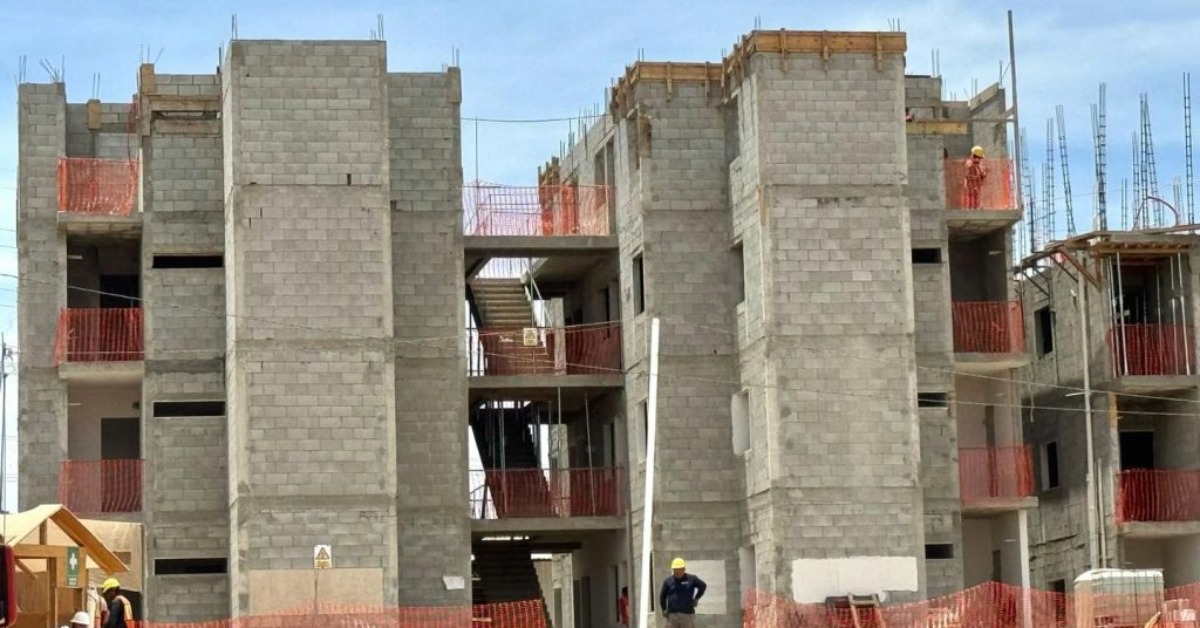
Mexico is building again, and the numbers are the strongest in years. But a bigger pipeline does not automatically mean cheaper homes, easier mortgages, or more supply where people need it most. The rebound is being pushed by a new public housing strategy and renewed activity in lower-cost segments, yet the same problems that have weighed on buyers and renters remain. The latest data show a market improving in volume while still struggling with access, location, and price.
Mexico is building more homes again
Mexico’s housing sector posted its strongest construction year in nearly a decade in 2025. More than 250,000 homes were registered as under construction, a 67 percent increase from the previous year and the highest level seen since 2016. That is a notable shift in a market that has spent years dealing with weak supply, rising costs, and an uneven recovery.
The increase matters because it suggests the market is no longer moving only through isolated private projects or high-end development. It points to a broader rebound in homebuilding, especially in segments tied to lower- and middle-income demand. Inventories also moved higher. The stock of completed homes rose from about 200,000 at the end of 2024 to roughly 269,000 in 2025, showing that the pipeline is beginning to translate into actual supply, even if not all of it reaches buyers at the same pace.
This improvement stands out even more because Mexico’s wider construction sector has not been especially strong. Broader construction activity weakened in 2025, weighed down by declines in civil works, while housing-related building held up better. That makes the housing rebound real, but also more complicated. The headline number is strong. The market around it is still under pressure.
Public policy helped restart the lower-cost segment
A large part of the rebound is tied to Vivienda para el Bienestar, the federal housing strategy that has pushed agencies and lenders back toward lower-cost housing. The program is designed to expand access to adequate housing through new construction, financing, and home improvement support. Its stated federal goal is 1.8 million homes, with special attention to lower-income households and vulnerable groups.
That matters because one of Mexico’s long-running housing problems has been a mismatch. For years, demand has remained high in the social and traditional segments, but supply has often lagged or shifted toward units that are harder for average workers to afford. The renewed policy focus appears to be helping reverse part of that pattern. Analysts tracking the market say public policy and Infonavit activity have helped reactivate construction and rebuild inventories, a development the sector had not seen for several years.
There is also a timing issue. Housing does not move from announcement to delivery overnight. A project can enter the construction pipeline months before it is ready for sale or occupancy. So the rise in projects under construction is important, but it does not mean buyers and renters will feel immediate relief. It means the sector has more volume moving through the system than it did before.
More homes do not automatically solve the shortage
The strongest reason for caution is affordability. Mexico may be building more homes, but access to them remains limited by price, credit conditions, and where the units are located. Home prices continued rising through late 2025. The official SHF price index showed 8.9 percent annual appreciation in the fourth quarter. At the same time, BBVA reported that the mortgage market contracted in 2025, both in the number of loans and in the total amount disbursed.
That combination creates a problem many households already know well. More homes on paper do not help much if wages and financing do not keep pace. The potential housing demand remains large. BBVA estimates it at 7.5 million units, concentrated mainly among low- and middle-income households. In other words, the need remains. The question is whether the homes being built are affordable, financeable, and located where working households can realistically use them.
There is also a geographic issue. Housing growth remains concentrated in major metropolitan areas, which account for a large share of new mortgage lending. That means the country can post a national construction gain while still leaving major shortages in specific cities, corridors, or fast-growing markets. In places where land is expensive, infrastructure is strained, or utilities are limited, supply can stay tight even when national totals rise.
The housing backlog is smaller, but still large
Mexico has made progress on the broader housing backlog, but the need is still substantial. SEDATU’s latest analysis says the number of homes in housing backlog conditions fell to 8.38 million in 2024, down from 9.24 million in 2018. That is a meaningful improvement, and it suggests public policy and private investment have produced some gains.
Even so, the scale of the challenge remains large. Millions of homes still need structural improvement, replacement, or better living conditions. A big share of the unresolved problem is not simply the lack of a roof. It is the lack of safe, well-located, service-connected, and affordable housing for families with limited purchasing power.
That is why the latest construction jump should be read as a strong signal, not a final answer. Mexico’s housing market is moving in a better direction in terms of volume. It has not yet solved the harder questions of price, access, and urban fit.
What readers should watch next
For readers living in Mexico, the practical question is simple. Will this building wave ease pressure on prices and rents where people actually live? The answer is not clear yet. A larger pipeline can help over time, especially if more units reach the lower-cost market and if financing conditions improve. But the relief may come slowly, and it may not arrive evenly across the country.
The next phase to watch is completion and placement. If more of these projects become finished homes in areas with jobs, transit, water, and services, the rebound could start to change the market in a visible way. If not, Mexico could end up with a stronger construction headline while the day-to-day strain on households continues.
For now, the clearest takeaway is this: Mexico is building more homes than it has in years, and that is significant. But the country is still far from resolving the deeper housing gap that shapes prices, rents, and access for millions of residents.