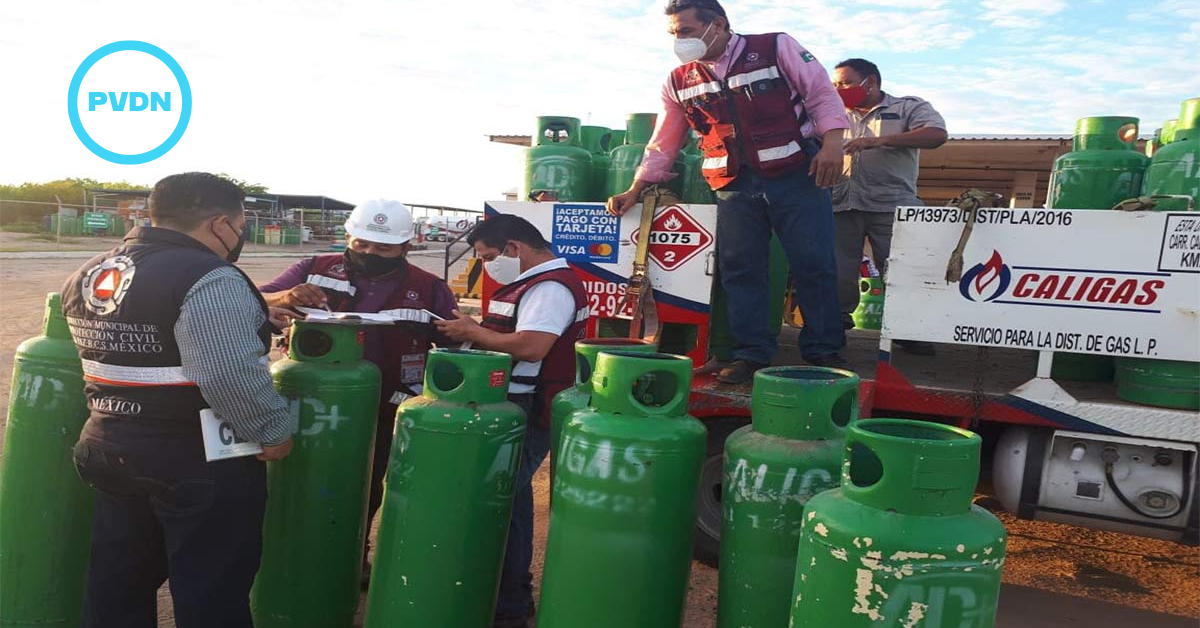
Families across the Valley of Mexico have spent this week listening for the familiar horn of the gas truck and wondering if it will actually stop. In parts of Mexico City, the State of Mexico, and nearby states, distributors say they are loading less LP gas than usual and warn of rationing just as colder weather arrives.
The anxiety is easy to understand. LP gas is the fuel that powers most Mexican kitchens and water heaters. Various official studies estimate that around three-quarters of Mexican households rely on LP gas as their primary cooking fuel, making any disruption feel like a direct hit to daily life.
Against that backdrop, talk of a Mexico LP gas shortage has spread quickly on social media and neighborhood chats. Distributors report long lines at Pemex terminals, trucks leaving only half full, and routes suddenly receiving fewer cylinders.
Mexico LP gas shortage
The phrase “shortage” is doing a lot of work here. The leading gas distributors’ lobby, the Asociación Mexicana de Distribuidores de Gas Licuado y Empresas Conexas (Amexgas), is not saying the country is running out of LP gas. Instead, it warned that consumers in Mexico City, the State of Mexico, Veracruz, Puebla, and Tlaxcala will face about 15 days of rationing while Pemex adjusts how it delivers product.
Amexgas says the problem is rooted in logistics. According to its director, Rocío Robles, Pemex is its dominant supplier and has had “infrastructure challenges” that forced changes to loading points. Those changes, coupled with stricter checks on tanker trucks after a deadly LP gas explosion on the Puente La Concordia in Iztapalapa in September, have slowed down the system.
Smaller companies on the “last mile” side describe the result in harsher terms. The Gremio Gasero Nacional talks about a “calvary” at loading terminals, with trucks queuing for hours and some drivers returning home without enough product to cover their customer list. They blame recent highway blockades and new safety requirements for tankers that are not always in top condition.
Pemex, for its part, is pushing back hard against the word “racionamiento.” On 12 November, the state oil company published a brief statement on its website insisting that reports of rationing in Mexico City, Veracruz, Puebla, Tlaxcala, and the State of Mexico are “false” and that it has enough inventory to meet distributors’ demand in those states.
The release adds that storage, transport, and distribution operations are “normal” and that Pemex is reinforcing deliveries where needed. Federal officials have echoed that message. The Energy Ministry (Sener) and the federal government’s communications arms have stressed that there is no nationwide shortage and urged households to avoid panic buying that could aggravate local bottlenecks.
So which version reflects what people will actually experience at home? The answer lies in the fragile middle ground between abundant supply on paper and the reality of a distribution chain under stress. Amexgas itself acknowledges that there is sufficient gas in the system, but points to a chronic weakness: Mexico has only 1.5 to 3 days of LP gas reserves in storage, so any disruption is felt almost immediately by families and small businesses.
Distributors say they expect the current rationing in the Valley of Mexico to last “around two weeks”. At the same time, Pemex re-routes supply, and more tanker trucks meet new safety and tracking rules.
In the meantime, some households are already seeing the practical effects. In several municipalities of the State of Mexico and in neighborhoods on the eastern side of the capital, distributors say they are limiting the number of cylinders each truck can sell on each route so they do not leave other zones uncovered. Residents report drivers who arrive later in the day, sell out faster than usual, or refuse to fill more than one cylinder per household.
Short term pain or warning sign
Energy specialists caution that what Mexico is seeing now is not a classic supply crunch where refineries or import terminals cannot obtain enough LP gas. Instead, they describe a distribution shock concentrated in central states. One analyst told W Radio that the recent problems appear to be temporary congestion caused by blocked highways and maintenance work at key terminals, not a structural shortage of fuel.
National media have carried similar messages. In parallel to Pemex’s releases, outlets such as Bloomberg Línea and La Jornada have reported that both Pemex and private LP gas companies told the federal government they can cover demand, even in the Valley of Mexico, as long as logistics return to normal. Customers do not rush to hoard cylinders.
There is also a strong political incentive to calm the waters. LP gas prices have been a sensitive issue since 2021, when the government ordered the energy regulator to cap maximum prices by region after a steep rise in international costs. The cap is still in force, meaning distributors cannot easily pass on higher operating costs to consumers, even when their trucks spend hours in line.
At the same time, LP gas distribution is highly concentrated. Previous investigations have shown that a handful of business groups control more than half of the domestic market. When such a concentrated network leans so heavily on a single supplier — Pemex — and carries minimal storage, any accident, protest, or policy shift reverberates quickly across the system.
For households in Mexico City and surrounding states, the short-term picture is mixed. If you live in an area served by a large distributor with its own storage and a newer fleet, you may only notice later deliveries or a different truck on your street. In more vulnerable zones where small commission-based sellers depend on a single Pemex terminal, people are already bracing for days when the gas truck does not arrive or cannot fill every order.
Authorities insist they are closely monitoring that scenario. In its latest bulletin, the Energy Ministry reiterated that there is sufficient LP gas nationwide and said it is working with Pemex and private firms to address bottlenecks.
In practice, the coming two weeks will decide whether this episode is remembered as a brief scare or as a warning about how vulnerable Mexico’s LP gas system has become. If Pemex manages to normalise deliveries and road blockades ease, most families will go back to worrying about prices rather than supply. If not, the phrase “Mexico LP gas shortage” may stick in the public mind long after the official press releases have faded — and pressure will grow on the government and Pemex to invest in more storage, more transparent information, and a distribution network that does not buckle so easily under stress.