A federal passenger train project north of Mexico City has uncovered evidence of a much older route through central Mexico. Archaeologists working in Tula found Teotihuacan-era burials, funerary spaces, and residential remains near the train works. The discovery is now affecting the project’s planned path, adding another layer to a rail line already passing through one of Hidalgo’s most sensitive archaeological areas.
Archaeological finds alter train planning in Tula
Archaeological work in Tula de Allende, Hidalgo, has uncovered funerary structures and pre-Hispanic burials linked to Teotihuacan-era settlements, prompting changes to the Mexico–Querétaro passenger train project.
The findings were made during INAH salvage archaeology tied to the federal rail project. The work is taking place near the community of Ignacio Zaragoza, in an area connected to the train route.
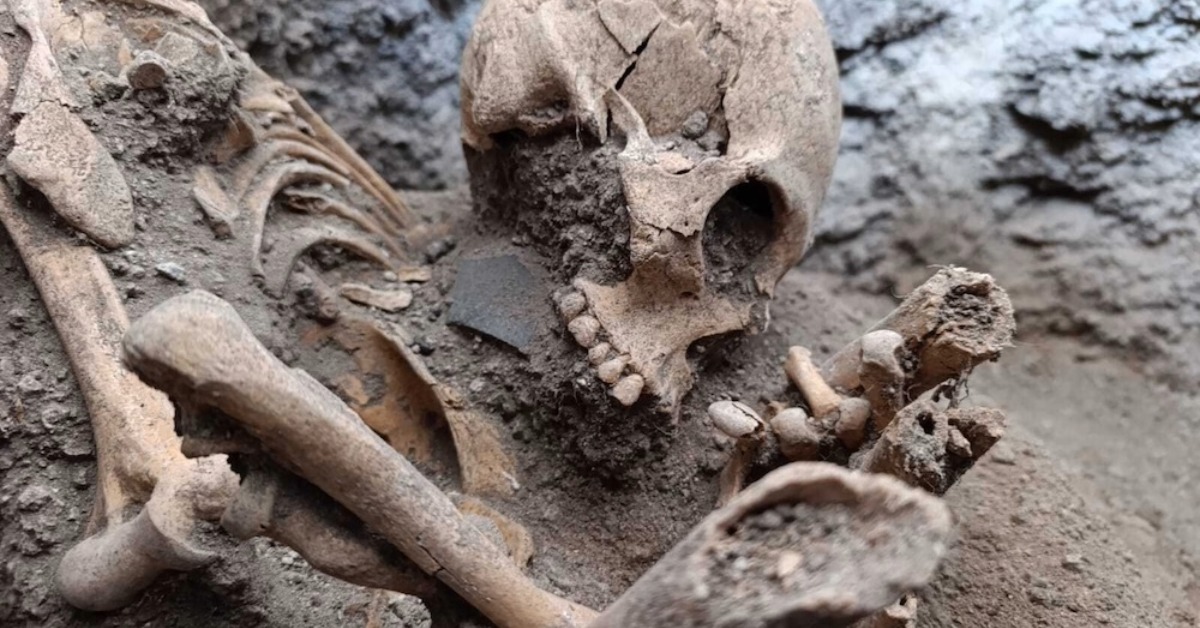
The discoveries include five tombs similar to shaft tombs and more than a dozen individual and collective burials. Archaeologists also found residential remains, patios, and evidence of earlier occupation in the same area.
The burials are associated with the Teotihuacan period, mainly between 225 and 550 AD. That places the site within the period when Teotihuacan’s influence extended beyond the Valley of Mexico.
What archaeologists found
The work began after pottery from later periods was identified near the surface. Further investigation exposed older residential remains below those layers.
The site covers about 2,400 square meters. Archaeologists documented rooms connected by central and side patios. Some structures were aligned north-south and east-west.
Several funerary spaces were found below the floors. One tomb contained the remains of eight individuals, most of them adults. Six were seated.
Objects found with the remains included 47 miniature vessels, small shells, fragments of a mother-of-pearl pendant, and a small plaque made from the same material. Other vessels were removed with the surrounding soil so they can be studied through controlled micro-excavation.
The remains also include adults, young people, and children. One child was estimated to have been between 8 and 11 years old.
A rail project crossing sensitive ground
The Mexico–Querétaro train is planned as a major passenger rail link between Mexico City, Hidalgo, the State of Mexico, and Querétaro. The project includes a stop in Tula de Allende.
The route passes through an area already known for archaeological importance. Earlier INAH work found cultural material at many points along the Mexico–Querétaro corridor, with Tula and El Venado standing out as key areas.
In a separate case, the train route was modified near El Venado, where specialists identified rock art and engravings. That earlier change showed that the project could be adjusted when heritage sites were at risk.
The new funerary discoveries in Tula add to that pattern. They show how large infrastructure projects can expose previously undocumented buried sites.
What the discovery shows about the area
The Ignacio Zaragoza site appears to have been part of a wider network of settlements in northern Tula during the Classic period.
Specialists have linked the area to the extraction of lime, a material used in stucco for buildings in Teotihuacan. Teotihuacan is about 90 kilometers from the site.
Other nearby settlements from the same period include Chingú, El Tesoro, Acoculco, El Llano, and La Malinche. Together, they point to a wider regional system tied to Teotihuacan’s economic and cultural reach.
For readers following public works in Mexico, the case shows how train construction can change once archaeological evidence is confirmed. It also shows why salvage archaeology often continues alongside major infrastructure projects, rather than before all work begins.
What happens next
The recovered objects and human remains are expected to continue through laboratory analysis. That work may clarify the number of individuals, burial practices, and the settlement’s role in the wider Teotihuacan network.
The train project remains active, but the findings mean the route must account for the archaeological area. In practical terms, engineers and heritage officials must balance construction needs with legal protection for cultural remains.
The Tula discoveries are now part of a broader record of archaeological finds associated with new passenger rail routes in central and northern Mexico.