A hidden tunnel in Nogales, Sonora, has put fresh attention on how border smuggling networks still operate in plain sight. Authorities say the passage was tied to contraband and human trafficking, and that one suspect linked to Los Salazar was arrested during the raid. The case matters beyond one property near the border. It offers a closer look at why tunnels, logistics crews, and local support networks remain central to organized crime on Mexico’s northern frontier.
Authorities shut down tunnel toward the US in Sonora and arrest alleged Los Salazar operative
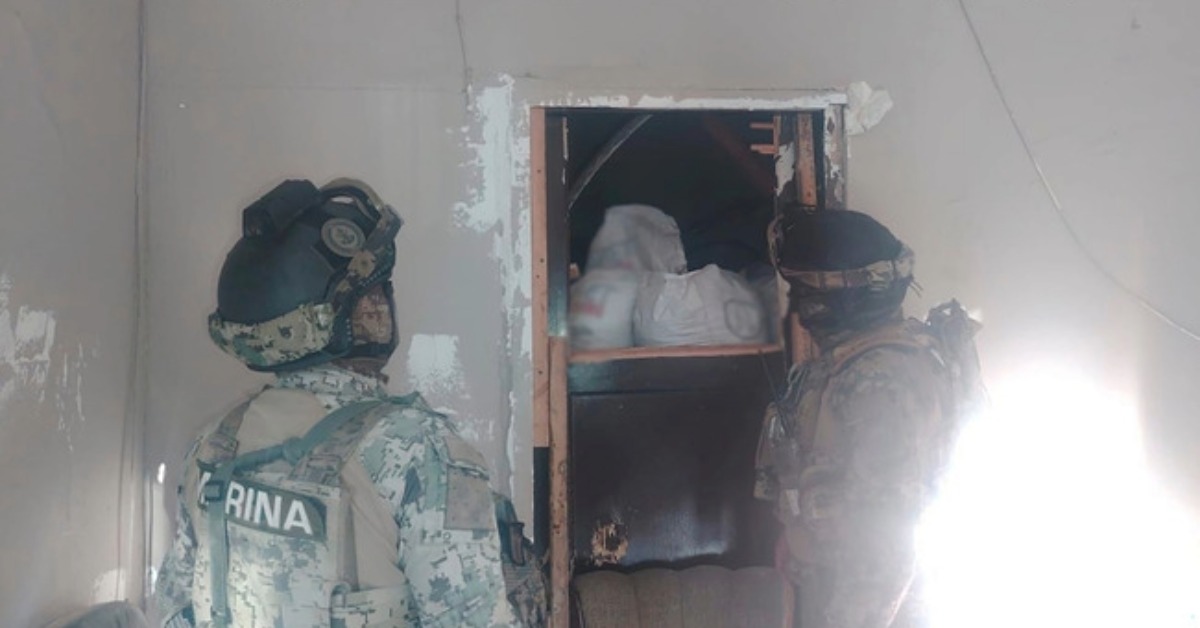
Federal authorities say they found and disabled a clandestine tunnel in Nogales, Sonora, during a coordinated operation near the United States border. The passage measured about 79 meters long and 4.5 meters deep, according to the official account. One man was arrested at the site, and authorities say he was linked to Los Salazar, a criminal group with a long history in Sonora’s border region.
The tunnel case stands out because officials did not describe a remote desert route or a rural stash point. They described an urban property in colonia Centro that allegedly served as part of a hidden border logistics chain. Authorities say the suspect, identified as Luis Fernando Garduño Pérez, was involved in surveillance, contraband movement, and support for human trafficking. They also reported seizing 21 rounds of ammunition during the search.
What authorities have described so far is important. They say the tunnel was directed toward the border, but it had no exit when they found it. That detail matters. It suggests the site may have been incomplete, recently used, or part of a broader system that still needed other access points to function. Even so, investigators treated it as a serious operational asset rather than a simple excavation.
Why Nogales matters in cases like this
Nogales is one of Mexico’s most strategically important border cities. Official customs information shows several points of entry and border facilities there, including Puerta México, Arco de París, and Mariposas. In a city built around legal cross-border movement, criminal groups have long sought to hide illicit activity within the broader flow of trade, travel, and migration.
That helps explain why tunnel cases still matter. A tunnel changes the risk equation. It can reduce exposure to checkpoints, patrol routes, cameras, and street-level detection. It can also move people or cargo with fewer visible signals than vehicles crossing at the surface. For authorities, a tunnel is rarely just a hole in the ground. It usually points to financing, property access, lookouts, local knowledge, and an organized support chain.
This case also shows how border enforcement works on both the physical and intelligence sides. Authorities say the operation came after field and desk investigations, surveillance, and a court-authorized search. That means the tunnel was not found by chance. It was the result of building a case around a property that investigators already believed was tied to criminal activity.
Who are Los Salazar
Authorities in Mexico have repeatedly identified Los Salazar as a criminal group active in Sonora and linked to broader Sinaloa cartel networks. The name has appeared for years in reporting on trafficking, armed disputes, and control of routes in northwestern Mexico. In practical terms, that means the arrest is being treated as more than a local police matter. Investigators appear to see it as part of a larger, organized structure.
Still, one arrest does not answer every important question. Prosecutors now have to prove more than a basic connection to the property. They will need to establish the suspect’s role, the tunnel’s intended use, and whether the site was connected to a wider network that handled movement toward the US side. That is where the case could become more significant.
For international readers, the bigger point is that organized crime on the border often depends on logistics as much as violence. A tunnel, a storefront, a rented building, a lookout, and a local courier can all matter as much as weapons. When authorities say they struck a network’s logistics, they mean they may have disrupted the infrastructure that keeps trafficking routes working day after day.
What happens next
The next phase will likely center on forensic work and follow-up investigation. Authorities sealed the property, and federal prosecutors are expected to keep tracing how the excavation was built, who paid for it, and whether it connected to other addresses, vehicles, or communication records. If investigators can connect the tunnel to a broader smuggling structure, the case could expand well beyond the man arrested at the site.
For now, the operation delivers two clear messages. First, border tunnels remain a live security issue in northern Mexico. Second, even when a passage appears unfinished or partially configured, authorities treat it as evidence of a deeper support network. That is why this case matters. It is not only about one tunnel in Nogales. It is about the hidden systems that can keep border smuggling alive in the middle of a busy city.