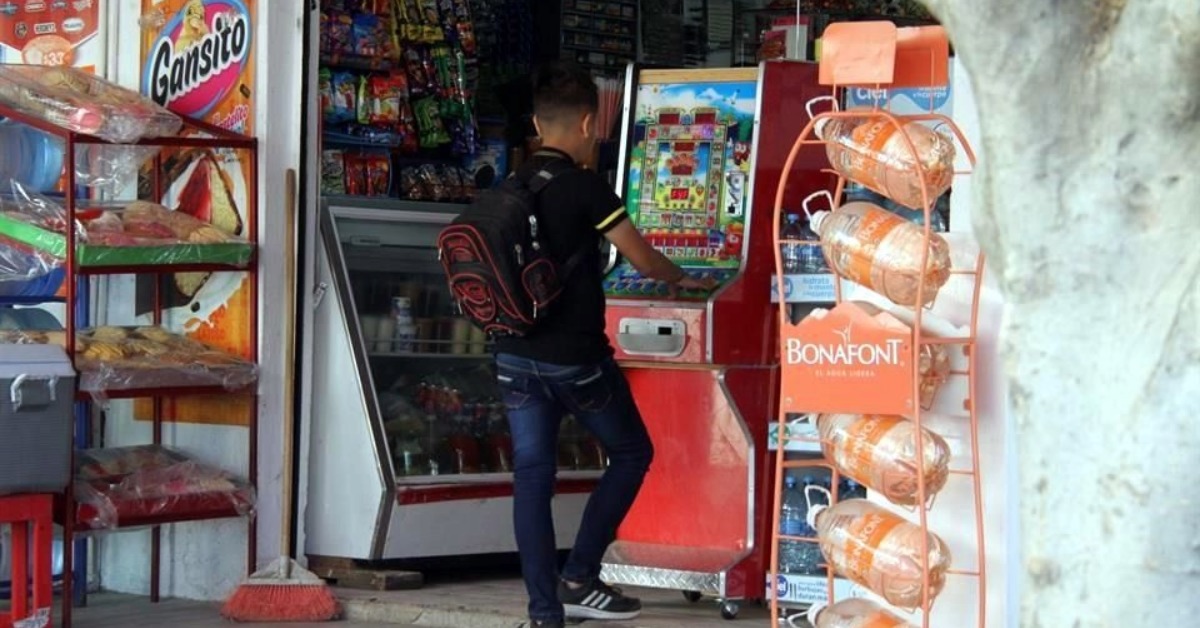
A small machine in the corner of a neighborhood shop can look harmless enough. In parts of Zacatecas, merchants say it has become something else: a demand, a warning, and a source of cash for criminal groups. Federal raids have removed machines, but the pressure on shopkeepers remains ugly and practical. Refuse the wrong people, and there may be retaliation. Keep the machine, and the law may still come through the door.
The Slot Machines Small Shops Are Afraid to Remove
Criminal groups are forcing illegal slot machines into small shops in Zacatecas, turning ordinary corner stores into collection points that owners say they cannot refuse, according to El Universal’s May 26 report. The scheme leaves merchants trapped between criminal retaliation and possible federal legal trouble.
The report centers on municipalities in southern Zacatecas, where shopkeepers described people arriving with machines and making clear they were not offering a business proposal. One merchant told El Universal that the men left the machine and said they would return later to collect the money it had collected. He eventually closed his store after relatives urged him not to keep taking the risk.
A second merchant described the other side of the trap. He had bought machines himself in Guadalajara before realizing, he told the newspaper, that keeping and operating them could violate federal law. Later, a criminal group arrived and took them.
A small machine with a federal problem
Mexico’s federal gambling rules leave little gray area for shop owners. The federal government states that slot machines are prohibited in any modality, while the Federal Games and Raffles Law limits authorized gambling and gives federal authorities oversight over games with bets and raffles.
That is where the pressure becomes especially nasty. Merchants who say they were forced to accept the machines may still be exposed to enforcement under the Ley Federal de Juegos y Sorteos. Refusing the machines can mean crossing people who do not send polite invoices.
Federal actions in Zacatecas show the issue has already moved beyond rumor. NTR Zacatecas reported that the FGR obtained a search warrant for a property in Tabasco, Zacatecas, following an anonymous complaint regarding machines at a local business. Federal ministerial police seized seven slot machines and placed them under the authority of the federal prosecutor’s office. No arrests were reported in that operation.
El Universal also reported recent seizures in Jalpa and Pánuco, including 13 machines in Jalpa and 39 in Pánuco last year, as authorities widened operations against the devices.
Zacatecas operation follows explosive threats
The Zacatecas case has unfolded in a tense security environment. On May 16, authorities closed part of Federal Highway 54 near Tabasco after the preliminary discovery of possible explosive devices, according to Express Zacatecas, which cited the state peacebuilding table. The operation was led by the Army and National Guard.
El Universal later reported that state prosecutor Cristian Camacho Osnaya said intelligence work had detected and disrupted a suspected explosive attack aimed at FGR personnel and soldiers who were expected to participate in operations against slot machines. According to that report, 10 explosive packages were found along a highway stretch and destroyed in controlled detonations.
Those details put the machines in a different category from the old “maquinita” tucked beside a soda cooler. Authorities and merchants now describe a revenue system tied to coercion, local control, and the use of small businesses as convenient storefronts.
A wider pattern across Mexico
El Universal framed the problem as persisting in 10 states, while a companion report said seizures have been recorded in a broader list of entities, including Zacatecas, Coahuila, Aguascalientes, Guerrero, Guanajuato, Morelos, Puebla, Hidalgo, Estado de México, Tamaulipas, Veracruz, Jalisco, Nayarit, Colima, Chihuahua, Baja California, and Durango.
Data cited by El Universal from the Navy showed a sharp rise in confiscations: 309 slot machines seized in 2024 and 1,629 in 2025, a 427% increase. From January 2024 to March 2026, the number of machines without Segob authorization reached 2,147, according to the same report.
Seven states accounted for the largest seizures in those figures: Sinaloa, Michoacán, Nayarit, Sonora, Veracruz, Baja California Sur, and Colima. For readers in Puerto Vallarta and the wider bay region, the Nayarit and Jalisco references are the closest local flags, though the Zacatecas case is the clearest example in this report of merchants describing direct pressure from criminal groups.
The pattern also fits a broader squeeze on small firms. Vallarta Daily previously reported on extortion attempts against small businesses in Puerto Vallarta, mostly by phone, as part of a wider national problem that often goes underreported.
El Universal reported that one machine can collect up to 3,000 pesos a day, according to merchant estimates. That kind of cash flow explains why the devices keep coming back after raids. A corner store takes the risk. Someone else gets the money.